
Last updated: Apr 19, 2026
Dothan is known for hot, humid summers that push asphalt shingles hard, and that pressure doesn't end with July. The heat accelerates the aging process, causing granule loss, curling edges, and accelerated brittleness in a way that can shorten the practical replacement window compared with milder climates. You'll notice(crate) granules in gutters after a sun-drenched afternoon and shingles that look weathered well before their expected lifespan. Pay attention to the felt underlayment showing through at edges or around vent penetrations, and don't ignore shingles that blister or curl upward at the corners. This is a cue to act before a small issue becomes a roof failure.
Frequent summer thunderstorms bring wind-driven rain that can exploit minor defects into active leaks. Small gaps around flashing, nail heads, roof penetrations, and valley transitions can become pathways for water when a gusty storm hits. In these conditions, a routine inspection after a thunderstorm is not a luxury-it's a necessity. Look for half-inch or larger gaps where flashing meets siding, lifted shingles along edges, and any dampness or musty odor in the attic after a storm. If you detect wet insulation or dark stains running down rafters, don't delay in addressing the flashing or shingle delamination. Acting quickly can prevent widespread interior damage and more costly repairs later.
Spring hail activity in southeast Alabama makes it crucial to separate fresh storm damage from older wear before filing a claim. Fresh impact marks may appear as dented granules, shiny citrus-palette dings, or bruised patches that are new to the roof surface. Worn areas from heat exposure, on the other hand, typically show uniform aging patterns: granule loss across large sections, curled edges, and widespread color fading. Document the difference with time-stamped photos, noting the date of the last known hail event and any recent storm you rode out. This distinction helps prevent misreporting and guides a practical repair plan that addresses the most urgent issues first.
Start a storm diary that timestamps weather events and roof observations. After a major storm, walk the roof with a digital camera and a ladder that reaches safe working height. Photograph any lifted shingles, loose flashing, rusted drip edges, and accelerated granule loss. In the attic, look for roof leaks or increased attic humidity, especially around penetrations and along ridges. Keep a log of when you noticed issues, what actions you took, and who you spoke with. This documentation becomes your best ally for timely repairs and for preserving the roof's life under hot, humid, thunderstorm-prone conditions.
Most reroof projects in Dothan are scheduled in spring or fall to avoid peak summer heat and the higher disruption risk from thunderstorms. Those shoulder seasons bring milder daytime temperatures, which helps both crews and attic spaces stay safer and drier. If you're aiming for a smoother tear-off and faster dry-in, target those windows when the sun isn't blazing and pop-up storms haven't yet become a daily pattern. Planning around these seasons also helps you coordinate with weather forecasts and minimize the chance of weather-driven delays.
Summer heat in this region can slow installation pace and make attic spaces and roof surfaces harder to work safely for full-day crews. High heat saps worker stamina and can trigger rapid temperature swings that affect sealants and underlayment. When setting a start date, pick a stretch of consistently milder days, ideally before the peak heat of July or after the first strong rain fronts in late spring. If a storm system rolls through, a flexible schedule that can pause work and protect exposed decking is worth the effort.
Spring is a critical time for storm-driven roofing decisions, and documenting hail and wind events is part of the process. In practice, this means coordinating with your roofer to note any hail damage observed during the tear-off and to photograph before and after shots of vulnerable areas. Dothan's spring thunderstorm activity can accelerate aging of existing shingles, so if damage is present, capturing clear, dated images helps with any future claim discussions. A practical approach is to perform a preliminary rooftop check after a notable storm and log findings while the area is still accessible and safe.
Winter rain and occasional cold snaps in the area can delay tear-off, dry-in, and final completion even though winters are generally mild. If you expect a winter start, plan for potential pauses when rain or colder temperatures threaten adhesive work and roof protection systems. Keep interior access clear for quick ladder setups and ventilation checks, and discuss contingency timing with the contracting crew. Because winter weather can creep into a project timeline, having a defined fallback plan helps keep the project on track without sacrificing safety or quality.
Choose a start date that minimizes disruption for your household and neighbors, especially during thunderstorm season. Shifting work hours to the cooler mornings or late afternoons can reduce heat exposure for crews and lessen interior temperature swings for you. If your roof backs up to tall shade trees or a south-facing slope, plan around afternoon sun exposure to keep decking temperatures manageable and to protect underlayment felt during critical stages of installation.
Coordinate with your contractor to establish a clear sequence: tarp protection for exterior surfaces, tear-off recovery, decking inspection, underlayment installation, and shingle application windows that align with favorable daylight hours. Ensure attic access is clear for material handling, and confirm that temporary ventilation is prioritized on hot days. Finally, document attic and interior conditions at the outset so you have a reliable baseline for any later discussions, especially if storm-season weather has increased wear on existing components. In a climate like this, a well-timed plan that respects local weather patterns can make a big difference in both progress and peace of mind.
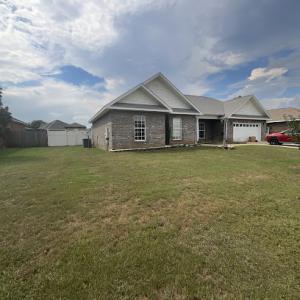
Apex General Construction
(866) 804-0898 www.apexgeneralconstructional.com
2678 Reeves St, Dothan, Alabama
4.9 from 176 reviews
We are roofing specialist
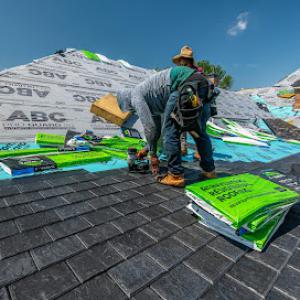
MAC Construction
(334) 726-6401 macconstructionofdothan.com
1881 W County Rd 70, Dothan, Alabama
5.0 from 50 reviews
MAC Construction is a trusted roofing contractor in Dothan, AL, proudly serving the Wiregrass region for over 30 years. Family-owned and locally operated since 1991, we specialize in roof repairs, replacements, metal roofing, storm-damage restoration, and inspections. Our licensed and insured team delivers honest service, upfront pricing, and quality craftsmanship that lasts. Whether you need a small repair or a full roof replacement, we treat every job like it’s our own. Call MAC Construction today for a free roof inspection and discover why homeowners and businesses trust us for reliable roofing solutions across Dothan and the Wiregrass area. Proudly serving Dothan, Enterprise, Ozark, Headland, and nearby Alabama communities.
WeatherProof LifeTime Metal Roofing
(334) 678-7663 weatherproofroofs.com
2975 Ross Clark Cir, Dothan, Alabama
4.8 from 67 reviews
Since 2007, WeatherProof Roof has been a fully licensed and bonded for your protection and is capable of operating anywhere throughout the state of Alabama. We are Accredited Members of the Better Business Bureau serving Central Alabama & the Wiregrass area, members of the Metal Roofing Alliance, listed on Angie’s List and awarded Talk of the Town’s 2012 Award of Excellence and Customer Satisfaction. We want you to enjoy your association with our roofing company Dothan Alabama, from start to finish. Our thoughtful personnel, knowledgeable sales agents and our experienced installers are all working to fulfil your roofing needs. We invite you to become part of our family by allowing us the privilege to serve you.
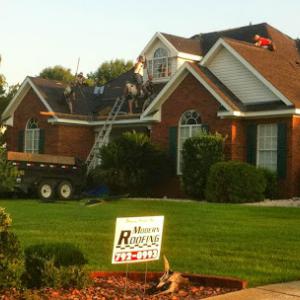
Modern Roofing
(334) 792-0993 modernroofingal.com
1403 Leona St, Dothan, Alabama
5.0 from 19 reviews
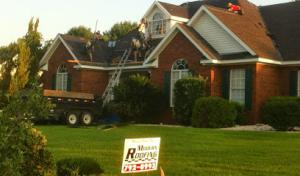
Proudly roofing Albany GA, Dothan AL and everywhere in between for over 30 years.
Best Choice Roofing
(334) 633-6710 bestchoiceroofing.com
550 Bic Rd, Dothan, Alabama
4.7 from 36 reviews
Best Choice Roofing, an Owens Corning Roofing Platinum Preferred Contractor, is a national roofing company dedicated to providing customers with a variety of exceptional roofing services including roof repair and roof replacement.
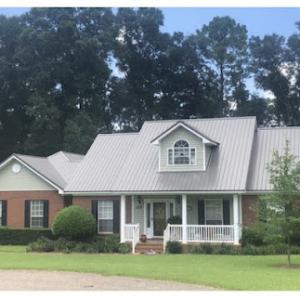
Kenneth Bedsole Roofing
(334) 671-9225 kennethbedsoleroofingcompany.com
7090 W Main St, Dothan, Alabama
4.3 from 40 reviews
With over 40 years of expertise, Kenneth Bedsole stands out as the leading roofing contractor since 1993, proudly serving Dothan, Troy, Eufaula, Ozark, Midland City, Cottonwood, and nearby areas. We specialize in both residential and commercial roofing solutions, ensuring quality and reliability in every project. For more details, reach out to Kenneth Bedsole Roofing, INC. in Dothan today.
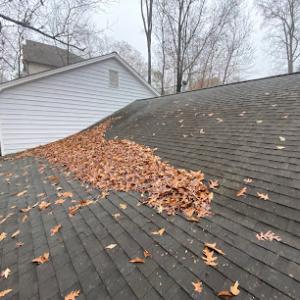
The Roof Company
(334) 350-1205 theroofcompanyllc.com
Dothan, Alabama
5.0 from 6 reviews
The Roof Company, LLC is a family owned and operated company. Our two core values are care and quality! We will always treat each home and family, as our very own! The Roof Company, LLC focuses on three categories maintenance, repair and replacement. Our Professionals will guide you through the best option for you and your home! We are here for you and to give you the knowledge needed for the right decision.
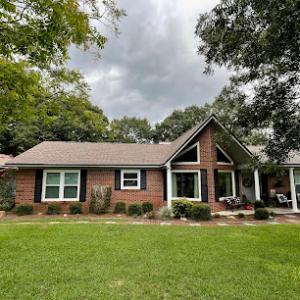
Roof Care Solutions
(334) 764-3415 www.roofcare.pro
Serving
5.0 from 32 reviews
Roof Care Solutions is a trusted, family-owned residential roofing contractor based in Enterprise, AL 36330, proudly serving the surrounding communities, including Daleville, Dothan, Hartford, Geneva, Opp, Samson, Florala, Kinston, Andalusia, and more. We specialize in a wide range of roofing services, including roof repairs, roof replacements, roof maintenance, roof inspections, attic ventilation, leaking chimney repairs, skylight repair and installation, flashing repair and replacement, and pipe boot replacement. Our skilled team works with various roof types, such as shingle roofs, metal roofs, tile roofs, and flat roofs, delivering top-quality craftsmanship and reliable results. We offer free estimates and special discounts.
Voak Construction
Serving
4.3 from 6 reviews
General contractor business specializing in roofing, remodeling, and custom builds.
All-N-Two Construction
(334) 796-9674 www.dothanroofingandconstruction.com
Serving
5.0 from 2 reviews
From roofing and flooring to complete remodeling, the professionals at All-N-Two Construction can transform your house into your dream home. Contact us now to learn more about our services. Our licensed, bonded, and insured company offers its services to commercial and residential clients. We also offer a five-year labor WARRANTY.
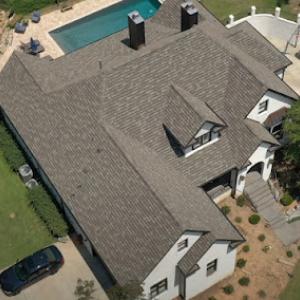
LA Roofing
(334) 339-7077 laroofingco.com
Serving
5.0 from 4 reviews
At LA Roofing we strive to offer the top roofing services available not only in our area, but in the entire industry. We believe in working with each customer one on one to find each customers exact needs and then to offer high quality work and fair pricing both at the same time. We’ve practiced these procedures since the beginning, and we believe it is the reason why we have gained so much traction and worked with so many families with both residential and commercial properties. With each project we take on we are always given a new problem to solve and we believe that’s what we do best, solving problems. We are here to make sure your roof is working properly, doing it’s job, and showing no signs of stopping! Give us a call today!
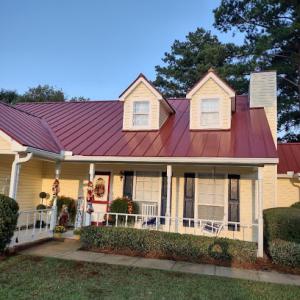
Moore's Roofing
Dothan, Alabama
1.0 from 1 review
Moore's Roofing with over 23 years of experience provides reliable roofing services in Dothan, AL and the surrounding areas. Don't hesitate to contact us now!
Asphalt shingles are the dominant choice in Wiregrass homes, and many local installers are most comfortable with them. In this climate, the heat and humidity speed up aging, so granule loss, curling, and accelerated wear are real concerns. When a roof is already facing repeated spring storms, those early signs of aging can be mistaken for a failure if not checked promptly. If you choose asphalt, look for: a heavy granule-saturated shingle with good UV resistance, edge seal that holds up to afternoon storms, and a warranty that covers heat-related wear. Regular inspections after severe weather help catch curling or loose granules before leaks develop. Because roofs endure long summers here, you may also want a color choice that minimizes heat absorption while still matching your home's appearance.
Metal roofing is strongly represented in the local contractor market and fits the need for durable performance during repeated thunderstorms. In this climate, metal panels offer excellent resistance to wind uplift and fast cooling after a wet spell, which helps prevent moisture infiltration around flashing. Look for a system with standing seams, corrosion-resistant coatings, and proper underlayment to handle humidity. Metal can be a smart choice on homes with attic ventilation challenges or roofs with complex shapes, since it tends to shed water quickly and can seal well at seams. However, verify that the installation accounts for thermal movement and potential expansion in the heat, and ensure panels are attached with the correct fasteners to avoid squeaks or failure in a high-humidity environment. A well-sealed metal roof often ages more gracefully under Wiregrass weather than many other options, provided the roof deck is solid and the flashing is carefully integrated around chimneys, vents, and skylights.
Clay tile and concrete tile appear in the market, offering distinct looks and long lifespans, but their weight can complicate reroofing projects. Heavier systems require a careful assessment of the existing roof structure and framing, especially for a non-standard reroof in which the deck and supports must carry the load. Wood shakes and synthetic shingles bring character and variety, but wood is particularly sensitive to humidity and rapid weather changes; shakes can warp or split if vents and underlayment aren't properly installed, while synthetics vary in how they handle heat and hail over time. When considering these options, conduct a thorough review of roof framing, underlayment choices, and hail resistance documentation. In this market, non-standard reroofs benefit from a close review of the project scope, the weight load on the structure, and how closely the system can handle sudden temperature swings and spring hail events. Ensuring that the chosen material pairs well with existing attic ventilation and waterproofing details will help these alternatives perform reliably under Wiregrass storms.
In Dothan, you'll notice pricing bands that reflect the hot, humid climate and the frequent thunderstorms. For asphalt shingles, expect about $360 to $650 per square. Metal roofs run higher, typically $700 to $1100 per square, while clay tile sits in a broad range from $900 to $1800 per square. Concrete tile often lands around $800 to $1500 per square, and wood shingles or shakes generally come in at $700 to $1100 per square. Synthetic or composite shingles tend to be the most affordable option among roof systems, at roughly $500 to $900 per square. These numbers reflect local labor norms, material availability, and the way crews pace work during storm-driven periods.
Costs in this market can rise when a string of storms creates a surge in reroof demand and compresses scheduling during the preferred spring and fall seasons. When the threat of hail and high winds keeps homeowners up and crews busy, you may see bid timing tighten and material lead times stretch. That pressure can ripple into higher mobilization charges or expedited permit review processes, especially for non-standard installations. If a storm aftermath hits a neighborhood, a temporary spike in prices isn't unusual as contractors juggle close to peak demand with existing projects. Planning ahead and securing a contract before the first big push of spring can help stabilize pricing in these leaner months.
Non-standard materials may add planning friction because some reroof projects require plan review before approval. In practice, that can mean longer lead times to finalize design details, confirm flashing and underlayment compatibility, or coordinate with neighboring structures and drainage work. For clay or concrete tiles, for example, crews must confirm roof deck reinforcement and panel layout to avoid waste, which can extend the bid period even when material costs seem clear. Synthetic options, while often more forgiving on weight and installation speed, can still trigger plan- or specification reviews if the chosen profile differs substantially from the existing roof. In short, expect a longer path from quote to project start for non-standard choices, but the payoffs can be solid long-term durability and a tailored look for the home.
Don't let upfront costs delay a critical repair - these contractors offer payment plans to fit your budget.
WeatherProof LifeTime Metal Roofing
(334) 678-7663 weatherproofroofs.com
2975 Ross Clark Cir, Dothan, Alabama
4.8 from 67 reviews
Best Choice Roofing
(334) 633-6710 bestchoiceroofing.com
550 Bic Rd, Dothan, Alabama
4.7 from 36 reviews
A full reroof requires a permit, and the permit is issued through the city or county building department depending on jurisdiction. That means the process can vary by neighborhood and zoning line, so before any tear-off begins you must confirm where to apply. If a contractor handles the paperwork, you still retain responsibility for ensuring the permit is valid and posted on site. Missing or expired permits can trigger rework, fines, or even denial of warranty claims later on. In practice, this means asking for the permit number, the issuing office, and any inspection milestones in writing before the first pitch of tar or the first bundle of shingles is delivered.
Inspections are not a perfunctory checkbox; they serve as a safety net against weather-driven wear that can accelerate aging in this climate. In this area, reroof inspections are typically performed after underlayment installation and again after final completion. That sequence matters: the underlayment phase gives the inspector a view of deck drainage, venting, and edge detail, while the final inspection confirms everything is sealed and anchored for the next round of spring storms and muggy summers. If cameras or storm-chasing crews show up with a rush to finish, resist skipping the intermediate walk-through. A proper inspection record helps protect your home from moisture intrusion and provides documentation you can lean on when a hail date or wind event tests the roof's resilience.
Many roofing contractors in this area pull the permit for the homeowner, which can streamline the process but creates accountability for timely approvals and adherence to local codes. Non-standard roofing materials may require plan review before work proceeds; this is not a nuisance but a safeguard to ensure that unusual materials or system combinations are permitted and installed to code. If plan review is needed, expect a brief pause for review and a clear path to compliance. Keep a copy of any plan approvals accessible on site, in case questions arise during inspections or after a weather event.
In this part of the Wiregrass, insurers are still writing homeowners coverage, but claims can face closer review since adjusters often examine prior roof condition before approving storm damage. A roof that looks weathered or aged from long-term heat and humidity can complicate the path to approval, even when new damage is clear. The assessment tends to weigh steady wear against the sudden impact of a hail or wind event, so understanding your roof's baseline helps your claim.
Dothan homeowners should document the roof with date-stamped photos of existing conditions and any hail or wind damage before temporary repairs are made. This documentation serves as your story for the insurer, showing what existed before any intervention. Take wide shots of the entire roof, then close-ups of damaged flashing, granule loss, dented metal, and curled shingles. If you can, keep a simple log noting when you noticed issues after a storm, and store those photos in the cloud or a labeled folder so the record travels with the claim.
Because spring hail is a known local issue, claim outcomes may depend on whether damage can be tied to a recent event rather than long-term heat-related wear. Hail tends to leave distinctive bruises and punctures that are easier to document early, while heat aging can mimic wear patterns across multiple seasons. Be mindful that insurers may seek to separate a single storm incident from ongoing deterioration; having precise dates and dated photos helps anchor your claim to a specific event.
If a storm hits, resist the urge to make irreversible changes before your adjuster can assess. Schedule a prompt, careful inspection by a licensed professional who can differentiate hail damage from prior wear. Preserve roof materials removed for temporary protection rather than discarding them, as they can become key evidence. Communicate clearly with your insurer, provide the documented proof, and keep copies of every notice, estimate, and receipt tied to the claim. Being organized in the weeks after a storm reduces friction when insurance decisions arrive.
Connect with contractors who help homeowners navigate the claims process from damage assessment to final approval.
Apex General Construction
(866) 804-0898 www.apexgeneralconstructional.com
2678 Reeves St, Dothan, Alabama
4.9 from 176 reviews
Modern Roofing
(334) 792-0993 modernroofingal.com
1403 Leona St, Dothan, Alabama
5.0 from 19 reviews
Best Choice Roofing
(334) 633-6710 bestchoiceroofing.com
550 Bic Rd, Dothan, Alabama
4.7 from 36 reviews
When a thunderstorm rattles the gutters and leaks show up, neighbors expect a team that can be on site fast. Local homes age quickly under Wiregrass heat and humidity, and a fast dry-in can prevent further interior damage. Look for a crew that can schedule a first assessment within 24 hours of contact and has a plan to tarp, cover, and protect interior spaces while the work is prepared.
In this market, affordable reroofing and cleanup are common expectations rather than deluxe features. Homeowners value clear, down-to-earth scopes of work: a solid repair or replacement path, a straightforward cleanup, and responsible disposal. Ask for a written sequence of steps that shows how the project will proceed from storm assessment to final cleanup, with no unnecessary frills.
Dothan's contractor mix includes long-established and family-owned companies, so experience in the area counts. A company's references should include nearby neighborhoods with the same exposure to heat, humidity, and spring hail. Favor bidders who bring a local track record, transparent communication, and crews that understand what a fast-paced thunderstorm season can do to shingles and underlayment.
Ask how storms have affected recent jobs in the area, request a photo-based timeline of the dry-in and completion, and confirm they document leaks and repairs consistently. The right team will balance quick response with dependable workmanship, so you can move from assessment to protection without delay.
Because spring hail and rapid heat aging are common, keep a file of photos showing roof condition after storms, note dates, and request contractor to annotate damage and proposed timelines. A documented history helps when negotiating with insurers and ensures the dry-in and replacement milestones stay on track during hottest months.