
Last updated: Apr 19, 2026
Spring storms bring a brutal mix of hail and high winds that can lift shingles, bruise edges, and expose underlayment. In this area, a rapid sequence of weather events means damage isn't always obvious at first glance-and that delay in contractor access can leave a roof vulnerable longer than expected. You'll want to perform a careful, targeted inspection after every significant storm: look for lifted tabs, granule loss, and damaged flashing around chimneys and vents. When shingles are compromised, the risk of water intrusion grows quickly, especially with the freeze-thaw cycles that follow. Act promptly by documenting impact with photos, noting dates, and prioritizing sections of the roof that show visible damage or signs of distress on the interior, such as stains on ceilings or walls.
Summer in this climate tests roofs with heat, humidity, and sudden downpours. Hot conditions can soften underlayment and adhesives, making cycles of expansion and contraction more taxing on seals around vents, ridges, and transitions. Thunderstorms bring another round of hail risk and gusty winds, which can aggravate preexisting damage from spring events. The combination increases the likelihood that temporary fixes fail before a full replacement, so expect installation windows to shift as crews chase dry, workable days. Plan for extra time if a roof needs ventilation assessment and careful underlayment checks to avoid trapping moisture beneath the surface. In practice, this means scheduling work in windows with stable temperatures and minimizing delays caused by weather-related setbacks.
The local insurance environment tends to hinge on repeated hail, wind, and seasonal storm claims, shaping how claims are evaluated after a weather event. If damage is evident or suspected, base decisions on a thorough, documented assessment rather than memory of a single incident. Material age and type matter because insurers increasingly weigh long-term performance against today's claim. It helps to have a clear timeline: when damage was first noticed, what internal signs appeared, and whether secondary issues-such as attic insulation compression, fungal concerns, or moisture stains-have emerged. With this context, communicate with the adjuster about immediate protective measures taken and the expected scope of repair or replacement.
Immediately protect exposed surfaces with tarps or temporary coverings to limit water intrusion during storms. Create a damage log: dates, locations, photos, and notes on interior signs of leakage. Prioritize repairs that address vulnerable flashing, vent seals, and roof-to-wall transitions to minimize future leaks. Coordinate with a roofing professional who can perform a rapid assessment after a severe event, prioritizing areas that feed into living spaces. Finally, align timing with favorable weather pockets to reduce risk of rework and ensure ventilation and underlayment are verified as part of the post-storm check.
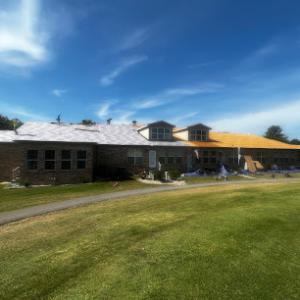
All Tite Roofing
(270) 307-5366 alltiteroofing.net
802 Rhodes Dr, Elizabethtown, Kentucky
4.9 from 115 reviews
All Tite Roofing, located at 802 Rhodes Drive, Elizabethtown, KY, is your go-to expert for roofing solutions, specializing in Roof Repair, Roof Replacement, and Roof Leak Repair. Our skilled team of certified technicians offers comprehensive Residential Roofing services, including thorough Roof Inspections and Roofing Estimates. With over 14 years of experience, we prioritize customer satisfaction through free, detailed assessments. Whether you’re searching for "Roofing Contractors Near Me" or "Roof Repair Near Me," trust us to deliver quality, durability, and aesthetics. Contact us for roofing excellence that stands the test of time.
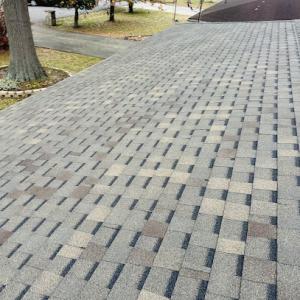
Bourbon Country Exteriors
(270) 304-2449 www.bourboncountryexteriors.com
402 College Street Rd #108, Elizabethtown, Kentucky
4.7 from 45 reviews
Bourbon Country Exteriors is your one-stop-shop for roof replacement, gutter installation, siding installation, and custom home addition installation and repairs in Kentucky! A Locally Owned Company committed to excellence and premier customer service.
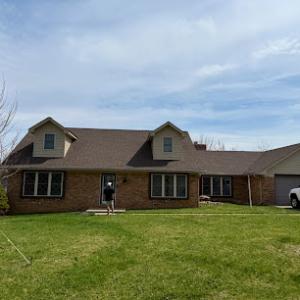
D&C Premier Exteriors
(502) 693-9188 kybestroofer.org
112 Carriage Hills Ln, Elizabethtown, Kentucky
4.6 from 37 reviews
Kentucky’s premier roofing contractor providing the only certified roofing consultants in the state. We provide a free 25 point forensic inspection of your roof in order to determine the course of action in helping your insurance cover the correct scope of damage.
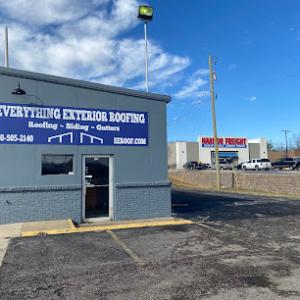
Everything Exterior & Roofing
(270) 505-2140 everythingexteriorroofing.com
1500 N Dixie Hwy Suite 102, Elizabethtown, Kentucky
5.0 from 8 reviews
Everything Exterior and Roofing is the leading professional roofer in Central and Western Kentucky and Southern Indiana. If you are located between Lexington and the west end of Kentucky, we can take care of the largest commercial and residential roof installations or roofing repairs.
Hyper Roofing Elizabethtown
(270) 743-1766 hyperroofing.com
120 Drexler Cir Suite 4, Elizabethtown, Kentucky
5.0 from 5 reviews
Hyper Roofing is a leading roofing contractor in Elizabethtown, KY, established in 2021. Known for outstanding craftsmanship and dependable service, we offer top-notch residential and commercial roofing solutions, including installations, repairs, and maintenance. Our team is dedicated to using premium materials and modern techniques to deliver durable, high-quality results. Choose Hyper Roofing for expertise, integrity, and a commitment to exceeding customer expectations. Your roof, our focus!
Vessels Roofing
(270) 737-7464 vesselsroofing.com
6970 S Wilson Rd, Elizabethtown, Kentucky
3.4 from 32 reviews
Vessels Roofing is a leading roofing contractor in Elizabethtown, KY, offering a wide range of residential roofing services. From flat to sloped roofs, chimney flashing to skylight installation, we have you covered. Our expert team also specializes in gutter, downspout, and vinyl siding installation and repair. Trust us for top-quality work on your roof, eves, and gables. Contact us today for all your roofing needs!
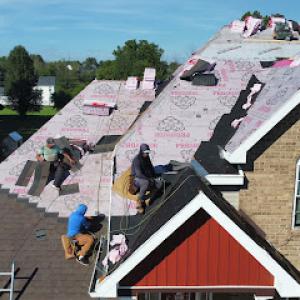
S&H Roofing & Restoration
(270) 390-5551 www.shroofingandrestoration.com
Elizabethtown, Kentucky
5.0 from 1 review
At S&H we’re a women-owned roofing business rooted in Kentucky, built on hard work, honesty, and community. At S&H Roofing, it’s real roofs done by real roofers—because you deserve craftsmanship you can count on.
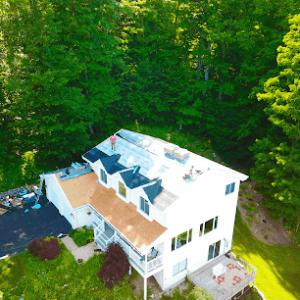
The Roof Smith
Serving
4.9 from 7 reviews
The Roof Smith is the premier roofing contractor in the Elizabethtown area. We can help you with your roof replacement or repair and you can rest assured that our work will exceed any others you could get. We stand by our work - we're one of the only ones in the area that are manufacturer certified by Certainteed.
Legacy Renovations
(859) 368-6701 legacyrenovationsky.com
Serving
5.0 from 108 reviews
Legacy Renovations is a family owned business with more than 15 years' experience! our team of professionals train and stay up to date on codes and regulations and specialize in roof installation including shingle, metal, and tpo for both residential and commercial properties! Legacy Renovations also offers a full selection of related services for your homes exterior needs as well! As Experienced contractors we always provide quality work! Give us a call today and let us be the solution to your home needs. All work guaranteed BBB accredited and GAF certified. "HONESTY FIRST, QUALITY ALWAYS"

Hingle's Roofing
(270) 805-1206 www.hinglesconstruction.com
Serving
5.0 from 51 reviews
We are a small family-owned construction company located in Columbia, KY. We have been in business since 2003. We specialize in roofing, framing, siding, decks, remodeling, additions, and new residential construction.
ReliaBuild Roofing & Construction
(502) 408-3214 www.reliabuild.co
Serving
4.9 from 59 reviews
ReliaBuild Roofing & Construction provides expert roof replacement, storm damage repair, and thorough inspection documentation for insurance purposes in Kentucky & Indiana. Licensed and insured, we deliver quality roofs, gutters, and siding with reliable service you can trust.
A.L.E. Roofing
(859) 402-5211 aleroofingky.com
Serving
4.9 from 36 reviews
For over 50 years Atlas Contracting, Langham And Sons Roofing, and Elleman Contracting, have been serving Central Kentucky’s roofing needs. We are now rebranding as: A-L-E Roofing BBB Accredited Business
After hail or wind events that affect homes in this area, take immediate steps to protect your roof and start the claim. Photograph every accessible angle of the roof, attic, and interior damage as soon as it's safe. Focus on missing granules, lifted shingles, curled edges, dented metal, and signs of leaks inside the attic or ceilings. Keep a dated log of when you noticed each issue and note whether a contractor has already seen or repaired anything. Attach these records to the claim submission, and include a detailed damage note that describes how the storm impacted multiple roof surfaces or flashing areas.
Because adjusters handling local claims may weigh roof age and roofing material when evaluating storm-related losses, collect information that helps establish baseline conditions. Record the age of the roof if known, the type of roofing material, any prior repairs, and the condition of gutters and flashing. If you replaced sections or added vents in the past, note those details as they can influence your settlement. Obtain a professional assessment from a qualified local contractor who can distinguish storm-related damage from wear and tear. A written estimate that itemizes required repairs supports the claim and helps prevent disputes about scope.
In this market, insurers commonly request photo documentation, damage notes, and contractor estimates after hail or wind events affecting homes in town. An adjuster will typically compare the reported damage against the roof's age and material type, so having clear records helps. Be prepared to show evidence of hail impact on shingles, metal panels, or tiles, and to demonstrate how water intrusion has or could occur. If the initial assessment misses a critical area-such as flashing around the chimney or vents-arrange for a supplemental visit or obtain a secondary estimate to ensure those elements are considered.
Because claim frequency is driven by seasonal storm activity here, homeowners benefit from documenting damage immediately after spring and summer events. Quick action reduces the likelihood of further deterioration from sun, heat, or minor leaks evolving into larger water damage. If the storm occurred during peak season, submit the claim as soon as feasible and follow up on any requests for additional photos or notes promptly. Keep all correspondence organized and save every contractor's report, as this can streamline communications during the appraisal or negotiation phase.
Review your policy's coverage for wind and hail, and confirm what qualifies as storm damage versus maintenance. Coordinate with a trusted local contractor who can provide a professional damage note and an accurate, itemized estimate. Schedule any necessary temporary protections to mitigate further harm while the claim is in process, and maintain a clear chronology of all interactions with the insurer and any subcontractors.
Connect with contractors who help homeowners navigate the claims process from damage assessment to final approval.

All Tite Roofing
(270) 307-5366 alltiteroofing.net
802 Rhodes Dr, Elizabethtown, Kentucky
4.9 from 115 reviews
Bourbon Country Exteriors
(270) 304-2449 www.bourboncountryexteriors.com
402 College Street Rd #108, Elizabethtown, Kentucky
4.7 from 45 reviews
D&C Premier Exteriors
(502) 693-9188 kybestroofer.org
112 Carriage Hills Ln, Elizabethtown, Kentucky
4.6 from 37 reviews
Asphalt shingles remain the dominant local choice, favored for their balance of performance and value. In this area, summer heat and humidity push shingles to deal with expansion and granule shedding, while winter freeze-thaw cycles can stress edges and flashing. A high-quality laminated option with good granule adhesion and a robust underlayment stands up better to lifting and wind events common after spring storms. When choosing asphalt, look for products with reflective coatings or cooling granules to help mitigate heat buildup on attic spaces and reduce moisture-driven issues in humid summers.
Metal roofing has strong local relevance because it handles repeated storm exposure well and is actively offered by a meaningful share of area contractors. Metal shows resilience against hail and high-wind gusts, and its smooth panels drain water quickly, which helps during heavy rainfall bouts typical of spring and summer. For Elizabethtown homes, the key is proper panel fastening, adequate attic ventilation to manage condensation, and high-quality flashing at penetrations. If a home has complex roof geometry or existing wood-soffit details, ensure the metal system is complemented with precision seam work and integrated snow/ice considerations as winters can bring rapid temperature swings.
Tile roofs appear in the market, but their success here depends heavily on moisture handling and wind resistance. Clay and concrete tiles offer long life under steady rainfall and moderate cold, yet they can be more prone to breakage in hail and during freeze-thaw cycles if not properly supported and installed. Applications with reinforced battens and solid underlayment help manage rapid temperature shifts. For homes with limited roof slope or older structures, tile can be a good fit when the system is designed to shed moisture effectively and with attention to flashing details at valley and transition points.
Wood shingles and shakes bring a warm aesthetic, yet their performance hinges on moisture management and proper sealing. In humid summers and wet springs, wood must breathe without retaining excess moisture, and rapid drying after rain helps prevent warping. Synthetic or composite shingles offer improved dimensional stability and may reduce maintenance, but the true payoff comes from materials that resist moisture absorption and maintain color and surface integrity through repeated storms. For any wood or composite choice, confirm that the installation emphasizes robust underlayment, accurate ventilation, and flashing that holds up under seasonal temperature swings.
A rooftop decision in this area balances local storm exposure, seasonal humidity, and winter cycling. A contractor with a track record of integrating underlayment, ventilation, flashing, and fastening considerations post-installation will help ensure the roof performs through Elizabethtown's spring severe weather cycle and beyond.
In town, reroof pricing sitting around the per-square ranges listed is a practical starting point. Asphalt shingles run roughly 320-680 per square, metal projects typically 700-1200 per square, clay tile 1000-1900 per square, concrete tile 900-1600 per square, wood shingles or shakes 700-1000 per square, and synthetic or composite shingles 500-900 per square. Those figures reflect the mix of local homes, from modest Cape Cods to taller bungalows with attic venting needs. A full reroof can be a sizable investment, but knowing the material you want helps narrow the path quickly when you're talking with crews.
Spring in this area brings a real uptick in demand after hail or high-wind events. If a storm hits your neighborhood, scheduling an inspection and a full reroof can tighten up fast. In that window, crews may have less flexibility and prices can edge higher as crews shift from routine maintenance to emergency replacements. If you're weighing options, you'll want to recognize that timing matters: a pre-storm plan can avert last-minute price jumps and avoid gaps in coverage if an insurance claim is involved. In practice, you'll often see pricing adjustments tied to the surge in demand right after severe weather, with wait times stretching for full roof replacements in the worst weeks.
Beyond material choice, the overall project price in this market is shaped by how well the attic is vented, how the underlayment is installed, and the flashing and fasteners chosen to handle inland Kentucky winters and humid summers. Replacement decisions commonly hinge on the condition of existing decking and the need to correct ventilation or flashing details identified during inspection. A reroof that properly addresses underlayment, ventilation, flashing, and fastening tends to hold up better under freeze-thaw cycles and spring storms, reducing the chance of early call-backs.
If you own a typical one- or two-story house with standard attic space, expect material choice to drive most of the cost. Asphalt remains the budget-friendly workhorse for many homeowners, while metal offers durability against hail and wind. For clay or concrete tiles, consider long-term durability against storm debris and climate, balanced against higher upfront costs. Wood shingles provide a traditional look but require more maintenance, and synthetic/composite shingles offer a middle ground of performance and price.
Don't let upfront costs delay a critical repair - these contractors offer payment plans to fit your budget.


When a full reroof is necessary, the Building Department treats it as more than routine maintenance. A permit is typically required, and the contractor usually handles the permit application on the homeowner's behalf before work begins. That means you should expect a formal process rather than a casual "just do it" approach. If you are attempting a reroof without a permit, you risk code violations, stop-work orders, and a much longer timeline to finish the project. The permit is not a paperwork nuisance; it's a safeguard that helps ensure the roof is installed to current standards, especially after harsh inland weather.
After the permit is issued, the actual work will proceed with an eye toward proper installation details. Local practice emphasizes verification of underlayment, attic ventilation, flashing around penetrations and edges, and the method of fastening. Inspections happen after the roof is installed to confirm those elements meet code and department expectations. The final sign-off is what closes the permit and clears the project from official records. If anything on the inspection fails, the contractor must correct it before a certificate of occupancy or final approval is granted. This is not unusual, but it can add time and potential rework if components were overlooked during installation.
Spring brings tight windows for reroofing due to storm risk and variable conditions. Because the permit process prioritizes safety and durability, delays can occur if inspections run behind or if underlayment and ventilation details weren't addressed during the initial phases. The timing you choose should align with a forecast that minimizes rain exposure to exposed underlayment and helps crews finish with proper fastening and flashing before winter. If storm events leave you with sudden roof concerns, remember that the permit and sign-off steps still apply; addressing them promptly helps avoid downstream delays when insurance and post-storm repairs come into play.
Keep communication clear between you, the contractor, and the Building Department. Confirm who is responsible for scheduling inspections and whether any corrective work was noted during the last visit. Maintain access to attic spaces during inspections so the inspector can verify ventilation and underlayment without delay. Knowing these steps helps prevent last-minute surprises and helps ensure a smooth path from permit to final sign-off.
Elizabethtown's winter freeze-thaw cycles can push shingle edges upward and loosen flashing even when a roof made it through the warmer storm season relatively intact. Those micro-movements crack sealant around vents and dormers, and over time a small gap becomes a real leak path. The combination of wet snow, ice accumulation, and temperature swings makes this a predictable stress point for many local homes, especially where sun exposure or shading left shingles slightly worn by spring and summer storms.
Homes that entered winter with minor storm damage from spring or summer are at higher risk of leak development once temperatures cycle above and below freezing. Look for water stains that appear after a thaw and re-freeze, damp attic air, or aPersistent drip near chimneys, skylights, or vent pipes. Shingle lifting, curling, or loose flashing at transitions is a red flag, even if the rest of the roof looks sound.
The inspection focus on flashing and ventilation aligns with the failure points most likely to show up during winters. Flashing around vents, chimneys, and skylights can crack or pull away; improper or insufficient attic ventilation allows condensation to condense against cold roof decks, accelerating ice dam risks and uplift. If the roof's underlayment is compromised, a small winter leak can become a larger problem before spring.
If you notice disturbed flashing or lifted shingles, schedule a targeted inspection before temperatures swing back toward extremes. Have a professional confirm that flashing seals are intact and that attic ventilation is balanced-too much or too little intake and exhaust can worsen winter leaks. After heavy ice or snow events, re-check roof edges and flashings while it's safe to access the roof. A proactive, seasonally timed checkup can prevent small winter leaks from becoming bigger headaches come spring.
When you can't wait, these contractors offer fast response times to stop leaks and prevent further damage.
All Tite Roofing
(270) 307-5366 alltiteroofing.net
802 Rhodes Dr, Elizabethtown, Kentucky
4.9 from 115 reviews
When storms sweep through the rolling Kentucky winds and hail, homeowners in this area frequently hire for storm damage and insurance-related reroofing. The focus is on quick assessments, documentation for claims, and a reliable crew that can start repairs promptly so interior spaces stay dry. The typical reroofing job leans toward practical, straightforward systems that hold up under repeat wind and freeze-thaw cycles, with an emphasis on durable underlayment, solid flashing, and dependable fastening. In this market, metal roofing stands out as a common choice after hail damage, paired with proven asphalt or synthetic shingles for value and speed.
Cleanup and quick response are especially visible priorities in this market, reflecting the practical needs that follow severe weather. Homeowners value contractors who answer after hours, stage debris safely, and tarp exposed sections to prevent further water intrusion. Emergency repairs often focus on securing damaged flashings, covering openings, and coordinating with insurance adjusters to document the scene quickly. The most effective responders bring a mobile inventory for temporary fixes and have crews ready to mobilize without delay, so a small leak does not become a larger issue during the next storm.
The contractor mix suggests a residential reroofing emphasis with some established firms that can handle multi-day projects or larger homes. Free inspections and manufacturer certifications appear but are not the dominant hiring driver, so homeowners typically prioritize clear communication, a documented scope, and a predictable timeline. In practical terms, choose a contractor who can walk you through the post-storm assessment, identify actionable repairs, and provide a coherent plan that keeps ventilation, underlayment, and flashing aligned with post-installation checks. This approach helps ensure the roof withstands Elizabethtown's challenging spring weather cycle and the subsequent heating months.