
Last updated: Apr 19, 2026
Valley Center's hot, dry conditions and periodic Santa Ana winds push ember exposure and wind-driven debris to the forefront of roof safety. In this climate, shingles alone won't hold back embers skimming across ridge lines, eaves, and exposed vents. Edge securement becomes a non-negotiable detail. If your roof is aging, upgrade to ignition-resistant materials and install a continuous, wind-tight underlayment paired with properly sealed flashing. Ventilation must be balanced with fire protection: you want enough intake and exhaust to prevent moisture buildup, but not gaps that invite embers to nest. The goal is a roof assembly that resists ignition even when a near-runaway brush fire pushes heat and wind toward your home.
Insurance decisions in this inland San Diego County market increasingly hinge on ignition-resistant roof assemblies, documentation of materials used, and proof that ventilation and flashing were properly installed. You are advised to document every layer of your reroofing plan-from substrate condition and underlayment type to fastener patterns and sealant choices. When you're talking with insurers or their adjusters, show that your selection prioritizes ember screening, wind uplift resistance, and edge detailing. Fixtures that are vulnerable to wind-driven debris-chimneys, vents, skylights, and transitions-should be upgraded to impact- and fire-rated counterparts, with metal flashings and corrosion-resistant finishes. Your project narrative should clearly connect material choices to the specific hazards faced by local Santa Ana cycles and brush-fire scenarios.
The local contractor signal mix strongly favors reroofing and emergency response, which aligns with homeowners replacing aging roofs to improve resilience rather than waiting for visible interior leaks. In practice, this means choosing multi-layer or integrated assemblies that meet ignition resistance and wind performance in our climate. Tile reroofs-whether clay, concrete, or metal over a tile substrate-often emerge as the practical balance between long service life and fire resilience on larger semi-rural homes. If your roof shows exterior cracking, cupping, or granule loss, don't hesitate: proactive reroofing assets your property against escalating fire risk and wind events. Think in terms of a coordinated system-underlayment rated for fire exposure, edge-to-edge nailing schedules, and a sealant plan that keeps moisture out without compromising airflow where needed.
Begin with a targeted assessment of roof geometry, eave overhangs, and any vent or skylight penetrations. Prioritize ignition-resistant options for your region: metal, concrete tile, or fire-rated synthetics that meet local performance expectations. Plan for a robust edge securement system, including apron flashings that extend under roofing materials and continuous eave protectors to reduce ember entry. Coordinate with a contractor who can deliver documentation-ready packages: material lists, installation methods, and a clear ventilation and flashing strategy. If you have mature trees nearby or brush encroachment, align your reroofing timeline with emergency-response readiness and a concrete plan for debris-cleared zones and defensible space.
With hot, dry heat and gusty winds returning, your reroof becomes a frontline defense. Prioritize an installation approach that minimizes ember ingress, resists wind uplift, and maintains structural integrity under extreme conditions. This is not a cosmetic upgrade; it is a strategic shield against seasonal fires and storm-driven debris that threaten homes in this landscape. When you're finalizing choices, bring a clear story to the table for insurers, neighbors, and future buyers: a roof that stands up to Valley Center's toughest weather while protecting the life and value of your home.
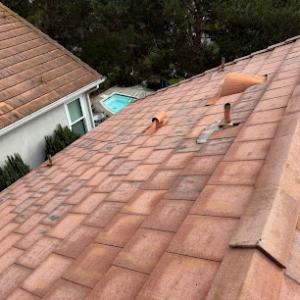
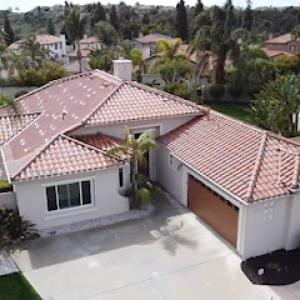
Clay and concrete tile dominate the hillside homes with steep, visible planes that catch sun and wind. In this climate, tile systems often outlive the underlayment, so reroof planning centers on lift-and-reset or full replacement rather than surface wear. The look is unmistakable: broad, sweeping tiles that read as a durable, long-term roof on larger semi-rural homes. When planning, start with the roof's visibility and the way it sits on the slope. A taller, more open ridge line means every tile edge, hip, and valley is exposed to sun, wind, and blowing debris.
Begin by inspecting the tile layer for breakage, but don't stop there. The underlayment and deck condition is often the real limiter in inland heat. Look for signs of moisture intrusion around penetrations, chimney collars, and roof-to-wall transitions. In this area, wind-driven dust and Santa Ana gusts can find tiny gaps that quiet tile seams into failure. If tiles are intact but the underlayment shows aging or past water intrusion, plan accordingly. Tile roofing also carries a distinct weight profile; if the deck shows deflection or sag in edge zones, that changes the reroof strategy.
Elevated lots and open terrain expose ridge lines to stronger wind flows. On tile roofs, the ridge cap and hip tiles are critical fastener points. Pay attention to fastener corrosion, improper alignment, and the potential for wind uplift at transitions. In Valley Center's wind pattern, edge tiles often bear the brunt of debris impact, so ensure a secure, continuous seal along the rake and eave lines. If you see loose or cracked edge pieces, treat them as early indicators of a larger wind-resistance concern rather than isolated damage.
If the existing tile surface is still in good condition but the underlayment or deck is compromised, a lift-and-reset can be a cost-efficient path that preserves the curb appeal. However, if the deck is fatigued, warped, or shows signs of rot, full replacement is prudent to restore a solid, wind-ready base. Consider the long-term wind and heat exposure when weighing these options; a higher-performance underlayment and upgraded fastener system can pay dividends in reliability and resist wind uplift. On steeper slopes, ensure the method chosen doesn't leave visible fastener patterns or weak edge supports that could fail under a Santa Ana gust.
Adopt a proactive maintenance rhythm that aligns with Valley Center's climate. Schedule regular inspections after wildfire season and after severe wind events. Watch for lifted edge tiles or minor cracks that can propagate under sun and heat. Keep a clear drainage path along eaves to reduce water pooling near fascia. For hillside homes, stabilize any loose debris around the roof plane and keep the surrounding vegetation trimmed to minimize flame risk and ember collection near the roof edge. The toolkit should include a spare tile inventory matched to the existing color and profile, plus sealant and fasteners designed for high-heat, wind-prone applications.
Find contractors who specialize in clay and concrete tile roofs, known for their durability and curb appeal.

A DUIN-IT Roofing & Construction
(760) 633-2488 aduinitconstruction.com
29115 Valley Center Rd Ste K189, Valley Center, California
4.9 from 24 reviews
Sandoval Roofing
(760) 270-8013 sandoval-roofing.com
15558 Woods Valley Rd, Valley Center, California
4.4 from 29 reviews


A DUIN-IT Roofing & Construction
(760) 633-2488 aduinitconstruction.com
29115 Valley Center Rd Ste K189, Valley Center, California
4.9 from 24 reviews
A DUIN-IT Roofing & Construction, Inc. is your go-to roofing company in Valley Center, CA & North County San Diego, offering a comprehensive range of services. From roof installation and roof repairs to commercial and residential roofing, we handle all aspects of roofing and exterior housing construction. With expertise across all building trades, we are equipped to take on any project, big or small. Our experienced team is dedicated to providing top-notch craftsmanship and customer satisfaction. Let us be your trusted roofing contractor in Valley Center & North County San Diego. Give us a call today to learn more!
Sandoval Roofing
(760) 270-8013 sandoval-roofing.com
15558 Woods Valley Rd, Valley Center, California
4.4 from 29 reviews
Roofing and Repair Specialist. 40 Years in the roofing industry, available for new installs and repairs for your home or business.

Great Western Roofing
28058 Vía Viso, Valley Center, California
4.3 from 4 reviews
Great Western Roofing offers Roofing contractor services in Valley Center, CA and surrounding areas.

Reliable Roofing San Diego
(619) 734-8449 reliableroofingsd.com
Serving
4.9 from 69 reviews
As a proud family-owned business, we’ve spent over 15 years serving San Diego and Riverside County with expert roofing and waterproofing solutions. Our reputation is built on word of mouth, because our work speaks for itself. We offer competitive pricing without ever compromising on quality. Our commitment to craftsmanship and customer service sets us apart. We stand behind every project with a guarantee on materials and workmanship, so you can feel confident from the first call to the final inspection. At Reliable Roofing, you’re more than a client—you’re part of the family. You're always in the best hands.
Millennium Roofing
(760) 658-3908 roofingcontractorsandiego.com
Serving
4.9 from 39 reviews
Millennium Roofing is your go-to choice for affordable residential roofing contractors in San Diego, providing high-quality roofing solutions that ensure durability and protection. Whether you need a new installation or a replacement, our expert team delivers exceptional craftsmanship at competitive prices. We offer commercial roofing installation services in San Diego County, Carlsbad, Vista, Poway, Del Mar, and National City, specializing in a variety of materials to suit different property needs. From flat roofs to traditional shingles, we ensure long-lasting, weather-resistant solutions tailored to your building. If your roof needs repairs, trust the best roof repair company near me in San Diego to handle leaks, storm damage, and gen...

619 Roofing of San Marcos
Serving
5.0 from 138 reviews
Serving San Diego, Orange, and Riverside Counties, 619 Roofing SM is a trusted, family-owned roofing company based in Escondido with over 40 years of combined experience. We’re proud to be both Owens Corning™ Preferred and GAF Factory-Certified contractors, offering expert roofing solutions delivered by a fully bilingual team committed to quality, safety, and exceptional customer care. Whether you need a full roof replacement, emergency repairs, or preventative maintenance, we provide reliable service 24/7 across San Diego County and surrounding areas. Our full-service offerings include re-roofs, roof repairs, drone inspections, roof maintenance, gutter repairs, and more. Choose 619 Roofing for unmatched professionalism and craftsmanship.
Zenith Roofing Services
(858) 900-6163 zenithroofingservices.com
Serving
4.9 from 52 reviews
We take great pride in our work and prioritize extreme professionalism, timeliness, and superior customer service on every job. We strive to develop lasting relationships with all of our customers by getting the job done so well, the next time roofing service is needed, there is is no question who to call.
Roof Pros Roofing & General Construction
Serving
5.0 from 33 reviews
At Roof Pros, we specialize in high-quality roofing and general construction services tailored to meet the unique needs of our clients. With years of experience in the industry, our skilled team is dedicated to providing exceptional craftsmanship and unparalleled customer service.

Summer Roofing
(760) 571-1040 www.summerroofinginc.com
Serving
5.0 from 19 reviews
Summer Roofing offers top-tier residential and commercial roofing solutions, including inspections and repairs, in San Marcos, CA, and nearby regions. With over a decade of expertise, we deliver unmatched craftsmanship and reliability. Our dedicated team ensures your roof's longevity and structural integrity, providing peace of mind for homeowners and businesses alike. Trust Summer Roofing for professional service and superior results, safeguarding your property against the elements with confidence.

Titan Roofing Escondido
(619) 391-4202 titanroofingsd.com
Serving
5.0 from 22 reviews
Titan Roofing Escondido is a trusted roofing company offering high-quality services for residential and commercial properties. Specializing in roof repairs, installations, and maintenance, their team ensures long-lasting results with professional craftsmanship. They work with various roofing materials, including asphalt shingles, tile, and metal roofing, to suit each client’s needs and preferences. Known for their attention to detail and excellent customer service, Titan Roofing Escondido provides free estimates and ensures timely project completion. Whether dealing with leaks, storm damage, or roof replacement, their expert team delivers reliable solutions to maintain the integrity and safety of your roof.
Alfredo's Roofing
(760) 705-7483 www.alfredos-roofing.com
Serving
4.7 from 19 reviews
Alfredo’s Roofing provides roofing services to both residential and commercial buildings. Family owned; we take pride in providing experienced services for all new construction and existing roof installation or repair projects.
Bob Piva Roofing
(760) 745-4700 www.bobpivaroofing.com
Serving
4.6 from 98 reviews
Established in 1963, Bob Piva Roofing is a trusted, full-service contractor serving Escondido and North County. With a legacy spanning over six decades, our team provides expert residential and commercial roofing solutions, including installations, repairs, and replacements. We specialize in using top-quality materials that are proven to endure Southern California’s unique climate. As a local business, we are committed to delivering superior craftsmanship and reliability, ensuring your roofing project is completed with the highest standards of excellence.
Spring and fall are the windows that make sense for most reroofs around here. In spring, you dodge the peak heat of summer while the winter rains have eased, which helps with scheduling tear-off and dry-in work before the Santa Ana winds kick in. Fall brings cooler days and less risk of sudden storms, so you can line up crew time and material delivery with fewer weather interruptions. For larger, tile-heavy homes that are common in the semi-rural parts of the county, those shoulder seasons let crews move more steadily without heat fatigue or rain delays slowing progress.
Winter storms can complicate both tear-off and dry-in steps. Moisture in the underlayment or roof deck can stall inspections and push back critical milestones, especially if a roof is being reroofed in parts rather than all at once. Planning with a clear window that avoids the wettest days helps protect underlayment quality and lets the crew complete a solid dry-in without rework. If a winter storm hits during the project, expect possible short pauses rather than a full stoppage-coordination with the crew to stash materials and protect openings becomes essential.
Extreme summer heat reduces crew productivity and makes material handling more challenging, particularly on exposed inland slopes with little cooling influence from marine air. In practice, that means longer days are common in late spring and mid-summer, with higher risk of heat-related fatigue and stricter safety pacing. Scheduling the most labor-intensive tasks for the cooler parts of the day or shifting to morning-only windows can help maintain quality and safety. For tile and heavier roof systems, heat tolerance matters not only for workers but for materials that can expand, contract, or become brittle if left out in direct sun too long.
Valley Center experiencesSanta Ana winds that can intensify during dry spells. Planning a reroof to minimize wind exposure during the critical tear-off and dry-in phases reduces the chance of debris blow-off and helps protect underlayment edges. In wildfire-prone conditions, choosing faster, well-sealed installation methods and ensuring secure material storage on site becomes a practical priority. Clear communication with the crew about weather-triggered adjustments keeps the schedule realistic and reduces the risk of rushed work that could compromise the roof's wind resistance and overall durability.
Coordinate with the contractor to target three-to-four dry, mild days for the most labor-intensive tasks, and have a contingency plan for sudden heat spikes or a winter storm window. Establish a daily objective-whether it's tear-off, underlayment, or shingle start-and keep a visible checklist to ensure the team progresses without backtracking. On larger, tile-dominant homes, confirm scaffold and debris-control measures early, so weather or wind won't derail the dry-in phase or compromise the sealant performance.
Get a clear picture of your project costs upfront - no commitment required.


For a typical reroof in this inland North San Diego County area, the local cost ranges per square (100 square feet) reflect the mix of housing stock and access realities. Asphalt shingles run about 350 to 800 USD per square, offering the most budget-friendly option with straightforward tear-off and setup. Metal roofing sits higher, at roughly 700 to 1200 USD per square, and brings wind resistance and faster installation into play. Clay tile projects normally fall between 1000 and 1800 USD per square, while concrete tile generally sits from 900 to 1600 USD per square. Wood shingles or shakes range from 600 to 1200 USD per square, and synthetic or composite shingles commonly fall in the 600 to 1100 USD per square band. These ranges reflect typical materials and labor costs seen on Valley Center builds with semi-rural layouts.
Costs in semi-rural properties tend to rise when the home is large or sits on terrain that complicates staging and material handling. Access routes, driveways, and space for delivering heavy bundles can add crew time and equipment needs, which pushes both tear-off and setup costs upward. When a reroof involves multiple levels, steep pitches, or limited turnaround space for waste containment, the price can climb beyond the standard per-square rates. Expect the premium to show up most clearly in larger homes where scaffold setup and cleanup require more careful navigation around outbuildings, fences, and natural landscaping.
Valley Center has a higher incidence of tile-based roof systems on larger homes, and tile reroofs tend to be more labor-intensive. The tear-off and reset work for clay or concrete tiles can drive costs above the asphalt baseline, especially if existing layers are stubborn or require careful removal to avoid breaking tile pieces. Tile systems also generally demand more careful moisture and integration detailing, which translates to longer labor times and, consequently, higher total costs. For homes with a tall or expansive tile roof, budgeting toward the upper end of the local ranges is prudent, and planning for potential contingencies related to tile handling will help keep the project on track.
In this climate, reroofs that emphasize wildfire and wind resilience often pair with premium underlayments, upgraded vents, and stronger fasteners. A metal or concrete tile option can offer superior wind performance, while certain synthetic shingles provide fire resistance without the weight of clay. If insurance considerations or wildfire risk are a priority, you may see added costs for heat- and ember-resistant components and better sealing around the roof edge. Budget planning should include these resilience elements as part of the overall reroof package, recognizing that they can raise the per-square price, especially on larger homes.
The most popular roofing material in the US. Find pros who install, repair, and replace asphalt shingles.
A full reroof project in this area typically requires working through San Diego County's Building Department rather than a separate city building office. That means your project is subject to county-wide rules and plan review, even if the house sits on a rural-leaning parcel or on a larger lot with a tile roof that's common in the region. The permit process hinges on plan check, and the county issues the permit only after that review is complete. Failing to align with this path can cause delays when you're ready to start or when your insurer requests documentation tied to permit compliance.
County inspections occur during and after installation, and they tend to look closely at elements that matter in hot, windy areas with wildfire risk. Underlayment quality, flashing around roof penetrations, and proper ventilation are high on the checklist. In reroof situations, poor thermally driven detailing or inadequate venting can lead to accelerated heat build-up, moisture issues, or trouble with insurance documentation later on. Plan the sequence so that inspections can occur as the crew advances, minimizing rework for noncompliant items.
Before starting, confirm with a licensed contractor that the plans will meet county expectations for both fire-resistive performance and wind resistance. Gather any documentation your insurer requests early, because the county's review and the insurer's requirements can intersect or conflict if not aligned. During the job, keep clear access for inspectors to key areas such as eaves, attic vents, roof-to-wall transitions, and flashing details. If the project involves a large, semi-rural home with a tile reroof, expect additional scrutiny around roof penetrations and roof-vent systems, since these can influence both wildfire readiness and wind performance. After completion, ensure any final sign-offs are secured promptly to avoid surprises or hold-ups in coverage.
California wildfire risk is directly affecting roofing decisions, with insurers increasingly asking for proof of roof material type, ignition resistance, and overall condition. In this inland stretch, Santa Ana events can drive rapid insurance scrutiny after a loss, and reports of ember intrusion can trigger more stringent underwriting. The reroof decision isn't just about appearance or life expectancy; it's about whether the home meets current wildfire and wind resilience expectations that underwriters expect to see documented.
Homeowners in this market should keep pre- and post-installation photos plus detailed replacement cost records because adjusters may request them after a loss event. Track roof age, material type, and any retrofit features like upgraded underlayment, ice barriers, or ignition-resistant coatings. Store these records in a secure digital folder accessible from your phone, and back them up in the cloud. If a claim arises, swift photo evidence can prevent back-and-forth delays that can jeopardize settlement timing.
Recent insurer adjustments in California make proactive reroofing more consequential than a simple maintenance choice, especially for older roofs on higher-risk inland properties. If your roof is approaching the end of its expected life, or you've experienced previous wind or ember exposure, anticipate questions about material class, curb appeal, and overall condition. Thoughtful, documented upgrades that align with wildfire and wind resilience can streamline claims and reduce friction when an event occurs.
Connect with contractors who help homeowners navigate the claims process from damage assessment to final approval.


North County Premier Roofing Escondido
(760) 437-6996 www.premierroofinc.com
Serving
5.0 from 8 reviews
Your reroof plan should start with a clear map of every existing and planned penetrations-rooftop vents, satellite dishes, solar arrays, and inverter boxes. Valley Center's sunny inland setting makes roof penetrations and rooftop equipment coordination important when reroofing around existing solar arrays. Coordinate with the installer so mounting rails, weep holes, and edge clearance align with the new roof deck and underlayment. Plan flashing transitions where panels meet tile or shingle, and confirm that rafter spacing leaves room for sealant continuity without creating hot spots around solar edges.
Local contractor signals show meaningful demand for skylight work and flat-roof expertise, indicating that leak-prone transitions and low-slope sections are a real part of the service mix. When adding or repositioning skylights, verify curb height, insulation at the curb, and flashing compatibility with the primary roof material. For flat or near-flat sections, ensure a positive drainage slope, and check that flashing and curb seals stay intact after expansion and contraction in heat waves.
On mixed-roof homes common in unincorporated San Diego County, the most failure-prone areas are often not the main field of tile or shingles but the penetrations, transitions, and low-slope attachments. Pay special attention to step flashing where tile meets membrane, and use appropriate detailing around penetrations at edges and chimneys. Regularly inspect the low-slope zones after wind events to catch loose flashing or puncture-prone seams before leaks develop.
Maintenance and checks
In this climate, an inspection focused on penetrations, flashing, and seals saves headaches. After Santa Ana winds or intense sun, have a pro inspect roof-to-wall transitions, solar mounting rails, and skylight curb seals for cracks or lift. Watch the metal underlayment where heat accelerates deterioration, and confirm drainage paths remain clear as debris can accumulate in scrubby canyons. This check helps catch issues before they become leaks.
Find contractors who integrate solar panels or solar shingles into your roof for long-term energy savings.
Sandoval Roofing
(760) 270-8013 sandoval-roofing.com
15558 Woods Valley Rd, Valley Center, California
4.4 from 29 reviews