
Last updated: Apr 19, 2026
Clay and concrete tile dominate the roofscape of planned hillside neighborhoods with Mediterranean-inspired architecture. In these settings, the tile itself tends to outlive the underlayment and the flashing, especially where Santa Ana winds press against ridge lines and eaves. The climate's dry summers and sudden storms can accelerate underlayment fatigue. In practical terms, that means many projects in this market are not full tile replacements but lift-and-reset jobs: the tiles are removed, the underlayment and any failed deck components are replaced, and the tiles are reset. This approach preserves the distinctive look while addressing the actual aging drivers beneath.
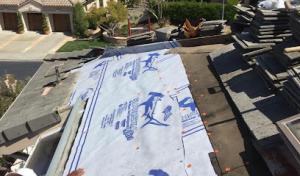
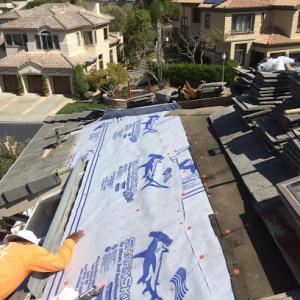
When a tile roof is aging, the underlayment is often the first weak link. The underlayment protects the roof deck from wind-driven rain, and in hillside homes with long, exposed ridges, that protection can wear out faster than the tiles. In a typical lift-and-reset scenario, the tiles are carefully removed, allowing access to the underlayment and any damaged decking or flashing. New underlayment is installed, along with any necessary ridge venting or drip-edge upgrades to improve wind uplift resistance. The tiles are then reset to maintain the same Mediterranean profile and color, improving weather performance without altering the overall look of the home. This approach also minimizes the chance of future tile cracking that can occur if the roof deck is left with degraded support or questionable sealant at penetrations.
Homes perched on hillsides experience more north-south wind exposure, which concentrates stress at ridges, hips, and around plumbing vents. The original underlayment and flashings around these details often age out first. In Laguna Niguel, ridge lines are prominent design features, and the interplay of sun, shade, and reflected heat can make certain roof zones more vulnerable. When planning work, expect attention to hip-and-ridge details, step flashing where the roof meets walls, and any solar or HVAC penetrations that add to heat load and movement. A careful lift-and-reset plan will address these stress points, reduce the chance of future leaks, and maintain the home's visual rhythm.
The hillside climate with Santa Ana winds favors proactive scheduling before the winter rains. Acknowledge that underlayment aging can precede tile failure, so tracking roof age in a house-by-house calendar makes sense. A practical approach is to pair a lift-and-reset cycle with a mid-life inspection after the first decade, then every 15 to 20 years, depending on exposure and workmanship. In between, keep an eye on flashing seals around chimneys, vents, and skylights, and note any dusting of sand or granules near gutters-these can signal wear on the protective layers rather than the tiles themselves. Regular inspections in late fall allow a homeowner to address issues before the rains arrive.
If the decision leans toward changing materials or addressing structural concerns beyond underlayment, the structural footprint matters. Heavier assemblies-like certain concrete or clay tile configurations-change the roof's dead load and may trigger a review of roof framing, fastener patterns, and attic ventilation. Before committing to a replacement strategy, assess the balance between preserving the original clay or concrete tile aesthetic and upgrading to a newer underlayment system or a lighter alternative if a retrofit is contemplated. The goal is a durable, weather-resilient roof that honors the hillside home's character while minimizing future maintenance surprises.
Find contractors who specialize in clay and concrete tile roofs, known for their durability and curb appeal.

Rod's Roofing Company
(949) 212-3557 www.roofingsanclementeca.com
Laguna Niguel, California
4.7 from 14 reviews


Rod's Roofing Company
(949) 212-3557 www.roofingsanclementeca.com
Laguna Niguel, California
4.7 from 14 reviews
If your roof is in a state of disrepair or looking worn-out, you need a local roofing company you can trust to restore it or replace it. That's where Rod's Roofing Company comes in. We offer professional roof replacement, repair and reroofing services to homeowners throughout San Clemente, CA and the surrounding areas.

B.P. Custom Roofing
(949) 390-3627 www.bpcustomroofing.com
Serving
5.0 from 75 reviews
Quality residential roofing company in business since 1992 (License #652641 C-39)

Crown Reconstruction Services
(866) 702-7696 crownreconstructionservices.com
Serving
5.0 from 16 reviews
We are a full-service general contractor based in Laguna Beach, CA, offering comprehensive project management and skilled workmanship for residential and commercial construction. From initial design and planning through to construction and finishing touches, we coordinate every aspect of your project with licensed, insured professionals. Whether you’re remodeling a kitchen, repairing a foundation, or renovating an entire home, we ensure quality, reliability, and open communication throughout. With over 70 combined years of experience in coastal Orange County communities, we understand local codes, climate challenges, and design tastes — delivering durable and attractive results that increase your property’s value.
Laguna Beach Roofing
(949) 528-7663 www.ocstaydryroofing.com
Serving
5.0 from 8 reviews
Stay Dry Roofing Company is a commercial and residential roofing company serving the Orange County and Los Angeles County Areas. Stay Dry Roofing provides top quality roofing installation, maintenance and repair services. Building strong relationships has been our key to success. Our mission is to deliver the best possible roof at the lowest reasonable price with quality and customer service in mind. Why Choose Us 1. 3rd Generation Roofer 2. Family Owned & Operated 3. Licensed Insured & Bonded 4. Workers Compensation 5. 2 Million Dollar General Liability 6. Contractor Supervising All Projects
JRT Roofing & Waterproofing
(949) 749-2721 www.jrtroofing.com
Serving
4.7 from 36 reviews
JRT Roofing & Waterproofing provides complete roofing, waterproofing services in and around the Capistrano Beach, CA area.

South County Roofing
(949) 597-0192 southcountyroofing.com
Serving
4.7 from 27 reviews
South County Roofing is a roof repair–only company located in Lake Forest, California, specializing in tile roof leak repair and tile roof maintenance for homeowners throughout Orange County. We focus on identifying the source of roof leaks and performing permanent, targeted repairs rather than recommending unnecessary roof replacement. Our work commonly addresses leaks caused by localized issues in valleys, skylights, chimneys, roof transitions, and field areas where water is concentrated. Services include professional roof inspections, roof leak detection, broken tile roof repair, flashing repair, and preventive roof maintenance. Our approach is based on experience, clear evaluations, and practical repair solutions tailored to each roof’s
Pacific Roofing Systems
(949) 495-4200 pacificroofingsystems.com
Serving
4.7 from 47 reviews
For over 25 years, Pacific Roofing Systems has been Orange County's trusted roofing expert. Specializing in all roofing types, from classic tile and composite shingles to modern metal and innovative green roofing solutions, they deliver premier roofing services for every need. As a VELUX 5-Star certified installer, Pacific Roofing Systems expertly installs and services the complete VELUX product line for both residential and commercial properties. Experience the difference of superior craftsmanship and dedicated customer service; Pacific Roofing Systems takes pride in using only the best products to exceed your expectations with every project.
J L Ray
Serving
4.7 from 120 reviews
J.L. Ray has been a professional roofing contractor in San Clemente since 1989. We can reroof, restore, fix virtually any roof type for residential homeowners, commercial businesses and even work with planned developments. We have a dedicated team of highly skilled Roofers, full-service Roof Repair contractors that serve Orange County CA, Newport Beach, Dana Point, Laguna Beach, Irvine, Laguna Niguel and surrounding areas. We are committed to getting the job done right, on time and with the highest level of customer satisfaction. We are a Roofing Company that produces the highest quality roofing work through uncompromising workmanship; building long lasting relationships with our customers through honesty, forthrightness, and integrity.
Di Rock GC & Roofing
(949) 545-1976 www.dirockgc.com
Serving
5.0 from 49 reviews
Established in 2010, DiRock General Contracting & Roofing safeguards Orange County homes with expert roof care. Their licensed and insured team offers a complete range of services, from inspections and repairs to replacements. DiRock prioritizes client collaboration and utilizes skilled craftsmanship to ensure your roof's long-lasting protection. Please reach out and make the call!

City Roofing & Maintenance
(949) 500-3980 www.cityroofingandmaintenance.com
Serving
5.0 from 31 reviews
The integrity of your roof, on a personal residence, rental property or business, is vital. Choosing the best roofing contractor should be simple. At City Roofing and Maintenance, (CR&M) our philosophy is also simple: "Your satisfaction is our priority." We ensure our clients a seamless and professional experience regardless of job size, material installation, timeline or price. CR&M clients always feel respected and appreciated.

RESCUE ROOFER Laguna Beach
(949) 497-7663 www.rescueroofer.net
Serving
5.0 from 3 reviews
Rescue Roofer is proud of two, very important things: The industry’s most top-notch people, and policies and procedures to offer the industry’s most thorough and proactive communication. Rescue Roofer's mission to change the construction experience has cemented the company as Laguna Beach's premier roofing service. We've expanded into our second market in Texas and are growing into neighborhoods across the nation. License #: 1137524

Beach Cities Roofing
Serving
5.0 from 17 reviews
We install FiberTite roofing, known for its leak-proof and energy-efficient design. Our skilled roofing contractors handle installations and roof repair services for residential and commercial properties. Need solar? Our solar panel installers provide professional installation and solar panel repair to keep your system running smoothly. We also offer construction services, including siding, windows, and masonry work. Whatever your project, we’ve got the expertise—get started today!
In Laguna Niguel, the Mediterranean pattern shapes every tear-off and dry-in decision. Dry summers clean the slate, but they also bake asphalt-based roofing components, accelerating aging even when leaks aren't active. Wet winters interrupt work plans, turning a straightforward replacement into a race against rain. This city's hillside homes often rely on tile or composition assemblies that respond to sun, wind, and moisture in distinct ways, so timing your project around seasonal patterns isn't optional-it's a safety and performance issue.
Wetter winter periods commonly interrupt tear-off schedules and delay the dry-in phase, which means crews may have to pause mid-project. When rain comes, exposed underlayment and roof deck are at risk of saturation, and delaying the dry-in increases the chance of moisture intrusion behind the new materials. If your plan shows potential rain windows, you should build in buffer days for rescheduling and protect vulnerable facets of the roof with temporary coverings. Early coordination with your contractor to identify likely rain days helps avoid back-to-back delays and keeps critical materials from exposure during prolonged periods of wet weather.
Fall Santa Ana wind events are a real local staging and material-handling issue. Gusts can loft exposed underlayment and lift light debris from the jobsite, creating safety hazards for workers and immediate neighbors. Tile stacking, especially on hillside lots, becomes a high-stakes exercise as pallets shift and tiles rattle in the wind. On days forecast to bring strong downslope winds, work should be paused during peak gusts, and secure staging areas must be established to prevent tiles from tipping or sliding. Keeping roof access clear and reinforcing edge protection for crews reduces the risk of wind-driven damage to underlayment and tile while maintaining a safe site for residents below.
Even when the calendar is dry, the sun's energy saturates the roofing components. UV exposure accelerates aging of asphalt-based underlayment and exposed fasteners, and this wear compounds when a project drags into late summer or early fall. If a replacement starts in peak sun and heat, plan for midday shaded work windows, frequent hydration for crews, and protective measures for underlayment and fasteners exposed during the tear-off. A proactive approach minimizes heat-related degradation and preserves the integrity of the new layers once the rains return.
Your project should align with the typical seasonal rhythm: target a dry window after summer, but anticipate Santa Ana events and their impact on staging and safety. Have a clear contingency plan for rain interruptions, including material protection strategies and a defined resumption process. Communicate with your contractor about wind-sensitive staging practices and ensure temporary enclosure measures are in place to shield underlayment and tile, especially on hillside sites where wind effects are amplified. Acting now to align timing with these local patterns reduces risk, protects your investment, and speeds a reliable, durable roof that stands up to Laguna Niguel's unique blend of sun, wind, and rain.
Find local contractors experienced in assessing and restoring roofs after hail, wind, and severe weather events.

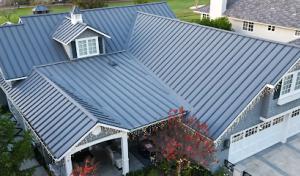
Provided local cost ranges run from about $350 to $700 per square for asphalt shingles, $700 to $1200 for metal, $900 to $1600 for clay tile, $900 to $1800 for concrete tile, $520 to $900 for wood shingles or shakes, and $600 to $1100 for synthetic or composite shingles. In practice, these ranges reflect the mix of tile-heavy housing stock and the variety of roofline complexities found in hillside neighborhoods. A straightforward, low-slope section will rebound toward the lower end, while a multi-level, articulated rafter system with visible ridge details and terraced eaves can push the total well into the higher end. When you're comparing quotes, ask for per-square pricing and clearly defined line items for underlayment, tile handling, and staging, since those are the parts most sensitive to local conditions.
Costs in Laguna Niguel are often pushed upward by tile-heavy housing stock, steeper or more articulated rooflines common in planned communities, and the labor involved in handling fragile tile systems. Tile roofs demand careful removal, temporary containment, and precise reattachment to maintain wind resistance and long-term performance. Steep pitches increase safety gear, crew time, and the risk of broken tiles during installation, which translates into higher labor costs. If a project involves reworking underlayment in addition to tile replacement, expect a noticeable bump in price, but this step is essential for protecting against Santa Ana winds and winter rains.
Seasonal weather affects pricing and scheduling locally because winter rainfall can delay projects and Santa Ana wind periods can complicate staging, delivery, and dry-in. Fall and early winter are the windows when you'll see both higher demand and tighter crews, so plan ahead and request firm start dates with contingencies for weather. If a project spans multiple phases-removal, underlayment replacement, and tile reinstallation-coordinate them to avoid mid-winter exposure. Contractors may offer limited off-season slots, but those can come with premiums for rushed delivery or reduced crew availability.
For a clear budget, get written estimates that separate underlayment, tile handling, and waste disposal, and confirm that the quote includes a comparable underlayment material for your climate. Because tile roofs in this area often require specialty fasteners and careful waterproof detailing at ridges and hips, insist on a warranty that covers underlayment and tiled surfaces for at least 10 years. If you're upgrading to a heavier tile type, budget for potential structural checks or reinforcement, especially on older hillside homes with mixed roof geometries. Finally, schedule utility and drainage considerations so staging does not block driveways or landscape beds during a Santa Ana period.
Roof replacements generally require a permit through the City of Laguna Niguel Building & Safety. Before any tear-off or new installation begins, your contractor should file the permit package with the city and pull the necessary approvals. In hillside neighborhoods, where access can be tighter and roof geometry more complex, the permit process helps ensure the work aligns with fire safety clearances, neighbor setback rules, and fall protection requirements during construction. The permit notice will outline required inspections and any special conditions tied to the property's slope, tile type, or underlayment system.
A plan review checks compliance with the California Building Code and local amendments that affect roofing assemblies. Heavier systems, such as tile, may receive added structural scrutiny because of wind loads, weight distribution, and retrofitting needs on older homes. If the plan review flags a concern, be prepared to provide add-ons like updated nailing schedules, fastener corrosion protection, or reinforcement details for ridge lines and hip roofs. For hillside homes with Mediterranean tile profiles, expect reviewers to pay close attention to underlayment continuity, drip-edge placement, and venting compatibility with tile geometry to prevent wind-driven rain intrusion.
Inspections are scheduled as work progresses, with rough-in and final inspection checkpoints used to verify code compliance. Rough-in inspections typically verify scaffold safety, underlayment installation, roof-to-wall transitions, and flashings around penetrations. Final inspections confirm that materials used match the permit scope, that the roof structure and fasteners meet wind and seismic requirements, and that coatings or sealants are compatible with the chosen tile or shingle system. In areas with Santa Ana wind events, inspectors may scrutinize securement at ridges and hips and the integrity of terminations where wind uplift could be a concern. Plan for potential re-inspections if any adjustments are made on-site to address code notes.
Tile systems demand careful coordination between underlayment, battens, and tile placement, especially on sloped lots where wind exposure is higher. The plan review may emphasize underlayment type, overlaps, and drainage paths to prevent water intrusion behind tiles. Structural checks can extend to verify sufficient deck framing to support the tile weight, particularly when replacing older materials with heavier concrete or clay options. Ensure that any retrofitting for seismic or wind resistance is reflected in the permit and documented for the inspection sequence. Clear communication with Building & Safety and your contractor helps keep the project on track through each checkpoint.
Laguna Niguel homeowners are operating in California's tighter insurance environment, where insurer pullbacks and non-renewals in wildfire-prone areas can affect roofing decisions after a loss. When a storm or Santa Ana gusts expose worn underlayment or aging tile, the decision to reroof is scrutinized not just for weather resilience but for long-term risk. In this setting, every roof replacement can become part of a larger conversation about coverage continuity and preferred material types.
Detailed roof condition records and clear post-loss documentation are especially important locally because adjusters may scrutinize pre-existing wear versus sudden damage. Photograph damaged areas from multiple angles, keep inspection reports, and note any prior repairs. A well-documented history helps prevent disputes about what caused a failure and can influence which components are deemed recoverable through your policy.
Material choice can become part of the insurance conversation in this region, particularly when a claim leads to re-roofing decisions on older homes with aging roof systems. If a claim triggers a replacement, discuss with the adjuster whether the chosen material affects future eligibility for discounts, wind mitigation credits, or hail resistance endorsements. For hillside homes with higher exposure, insurers may favor products with proven performance and longer lifespans, but each carrier weighs risk differently.
Before you file, compile a concise summary of roof age, known issues, recent maintenance, and any previous weather-related damage. Work with a contractor who can provide an objective assessment and a written scope that aligns with your insurer's expectations. In a community with Santa Ana winds and seasonal rain, timely, well-documented decisions can smooth the path from loss to approved repairs.
Your agent is a bridge between policy language and the realities of a hillside home. Keep them copied on every inspection report and quotes. A proactive agent can help you anticipate whether a new roof package aligns with coverage timelines, depreciation rules.
When a loss triggers a re-roof, the decision set expands beyond weatherproofing. Insurers may require upgraded underlayment, improved fasteners, or lighter tiles, especially on aging systems. Understand how aging components interact with your selected material, and document any changes in warranty terms or maintenance expectations that accompany the new roof.
As winter rains approach, the conversation shifts to preparedness and system resilience. Ensure attic ventilation supports reducing condensation under warm coastal nights, check ridge and valley metal details for wind uplift, and verify that any recent underlayment work has a durable, code-compliant installation. A well-prepared roof reduces future claim friction. This small planning step saves stress later.
Connect with contractors who help homeowners navigate the claims process from damage assessment to final approval.

Laguna Niguel's mix of tile and shingle roofs means roof penetrations often require material-specific flashing details rather than one standard repair approach. When planning a penetration retrofit, identify the surrounding roof type for each penetration (tile vs. shingle) and match the flashing materials and bedding to that surface. In tile areas, use a step-down flashing approach with a tile-appropriate base or clamping ring, and ensure the underlayment beneath the tile can shed water toward the valleys and eaves. In shingle sections, select flashing that sits flush with the shingle line and seals against wind-driven moisture. Coordinate fastener placement with the roofing substrate to avoid creating new leak paths around nails or screws.
Skylights are common on hillside homes where daylight and views matter, but the slope and Santa Ana winds can stress flashing, sealant, and curb details. During replacement or resealing, inspect the curb flashing for wind uplift resistance and ensure the pan flashing integrates with the roof's drainage plane. If the skylight sits close to ridge lines or transitions between tile and shingle, plan for a hybrid detailing that bridges the different flashing standards without gaps. Re-seal with a compatible, flexible sealant rated for high UV exposure and heat cycles typical of South Orange County.
Homes in sunny South Orange County frequently pair roof replacement planning with solar considerations, making sequencing and flashing compatibility a local concern. When a roof is being replaced, coordinate the solar array layout with the new roof-line to avoid re-flashing the same penetration twice. Use flashing pieces that accommodate the exact layout of rails, racking, and conduit paths, and consider a continuous underlayment layer beneath penetrations to improve drip-edge performance. Verify roof-to-penetration transitions align with the slope and direction of prevailing winds to minimize wind-driven leaks.
If an existing solar or skylight penetration shows signs of aging or improper previous flashing, plan to rebuild that transition during the re-roof project. Leaving a compromised penetration can become a leak-prone point after the new surface is installed. Ensure fasteners and sealants are compatible with the roofing material being installed and that the flashing detail clears the edge of tiles or shingles to prevent water intrusion around the perimeter. Finally, document every penetration with a clear path for drainage and future maintenance access.
Find contractors experienced in skylight installation, flashing, and leak repairs to bring natural light into your home.
City Roofing & Maintenance
(949) 500-3980 www.cityroofingandmaintenance.com
Serving
5.0 from 31 reviews
Although pitched tile and shingle roofs dominate a hillside neighborhood, some homes and mixed-use properties include low-slope sections over patios, additions, or architectural transitions. In Laguna Niguel's inland-coastal climate, these zones can act like pressure points during wetter winters, with drainage errors showing up quickly once seasonal rain returns. The wetter months magnify any misalignment, clogged gutters, or pooling that wasn't obvious during dry spells.
Low-slope transitions often sit near exterior walls, skylight surrounds, or porch corridors. Flashing where the low-slope meets the main roof can suffer from improper laps, aged sealants, or fastener corrosion. Underlayment beneath the flat or near-flat areas may degrade faster if debris blocks drainage or if slope is insufficient. You'll notice staining, soft spots, or damp odors after a storm, especially where valley and parapet details funnel water toward a single point.
You need a contractor who can assess both the visible main roof material and the less-visible low-slope transitions on the same property. Start with a careful inspection after a substantial rain event: look for standing water, pooled runoff along the edge of low-slope zones, and any movement or wrinkling of underlayment in the flash lines. Verify flashing integrity at transitions, confirm appropriate slope and drainage, and check that edge detailing ties securely into the primary roof system. If upgrades are warranted, specify a plan that details replacement or resealing of the low-slope area without compromising the surrounding tile or shingle work.
In hillside homes, proactive replacement or resealing of underlayment and transitions before winter rains minimizes call-backs and interior water intrusion. Align maintenance cycles with a full roof plan so the visible tiles and the low-slope sections are addressed in a coordinated timeline. Regular quarterly checks after heavy winds or storms help catch issues before they escalate, reinforcing long-term performance of both roof surfaces.
Find specialists in TPO, EPDM, and built-up flat roofing systems for residential and commercial properties.

When leaks show up during winter rain or after wind events, response time matters. Look for a roofer who can commit to rapid on-site assessment and a clear plan for temporary protection if needed. In hillside neighborhoods with tile late-life roofs, a proactive approach to dry-in and weatherproofing reduces the risk of interior water intrusion during storms. Consider how the crew will handle an occupied-home scenario if residents are home during work.
Re-roofing is a stronger local service pattern than new construction, so prioritize contractors who routinely perform tear-off, dry-in, and meticulous cleanup. Ask for recent project references in similar hillside homes with tile systems and underlayment concerns. Verify that the crew has experience coordinating work around skylights, chimneys, and ridge details common to Laguna Niguel homes, as these details influence roof longevity and wind resistance.
Tile-heavy properties require careful staging to minimize debris spread. Choose a contractor who documents a staged sequence: tear-off, underlayment inspection, dry-in, and final weatherproofing before winter rains. Discuss how the crew will manage daytime noise, driveway access, and work hours to avoid conflicts with busy street traffic and landscaped lots. A well-planned schedule reduces the chance of delays and keeps neighbors from being disrupted.
Cleanup is a notable local priority. Ensure the bid includes daily debris containment, protective tarps, and a thorough post-job sweep of driveways and landscaping. On hillside lots where wind can carry fasteners and tile fragments, insist on secure containment, responsible disposal, and a full cleanup a day before final inspection. Confirm disposal of broken pieces and the method for handling underlayment scraps to prevent residual debris.
Require a written workmanship guarantee and a clear plan for any issues that arise after completion, especially given Santa Ana wind events that stress underlayment and ridge details. Confirm the contractor's protocol for addressing leaks that may appear after storms or during the first rainfall, and ensure there is a straightforward process for call-backs if adjustments are needed once the roof settles.