
Last updated: Apr 19, 2026
In this South Shore neighborhood, autumn Nor'easters and spring coastal storms push rain sideways under vulnerable shingle edges and flashing details. That wind-driven rain can sneak into attic vents, along chimney joints, and under deteriorated drip edges, turning a small leak into ceiling stains and rotting sheathing in a matter of hours. When a wind event hits, understanding where to look and what to do next is the fastest way to limit damage and protect the rest of the roof system.
After a strong wind event, walk the roof only if it is safe to do so from solid ground or a stable ladder setup. Look for lifted shingles, torn flashing, compromised vent boots, and any signs of water intrusion along walls or ceilings inside the home. Prioritize tarping the most vulnerable areas first-those with visible openings or active leaks-so rain cannot travel from the roof into living spaces. If the attic shows daylight or wind-driven rain, treat that as an urgent red flag and plan for immediate stabilization. Keep a log of where leaks originate and how they change with wind direction; this helps a contractor map the most likely failure points when you call for help.
Tarping is your first line of defense. Use high-grade plastic or reinforced tarps and secure them with roof clamps or battens, ensuring seams are weighted and edge panels extend past the leak area to catch future gusts. Do not rely on temporary coverings alone for long periods; arrange for emergency repair service as soon as possible to prevent further water intrusion. If you hear or see active dripping, place buckets and towels to limit interior damage, and protect valuables from moisture exposure. Keep pets and people away from roof edges during tarping and stabilization. If you need to access attic spaces, ensure electricity is shut off to avoid shock risks in damp conditions, and inspect for any electrical hazards where roof leaks meet ceiling fixtures or wall outlets.
After major storms, insurers tighten documentation requirements and scrutinize whether the replacement scope and materials meet current code expectations. Photograph the roof from multiple angles before and after any stabilization, clearly showing damaged components, flashing, vent boots, and any blown-off sections. Record dates, times, and names of any contractors who supervised or performed stabilization work. Keep copies of all correspondence with the insurer, including letters, approvals, and notes about additional weather events that may affect the claim. When scheduling a contractor, share the storm date, observed damage, and the exact locations of leaks to accelerate approval and avoid gaps in coverage. A clear, detailed report from a trained professional is often key to a smooth claim process and a proper, code-aligned replacement if needed.
When a Nor'easter or coastal wind event hits the South Shore, contractors see demand spike quickly. In Lindenhurst, asphalt shingles typically run from 350 to 650 USD per square, metal from 700 to 1200, clay tile from 1000 to 2100, concrete tile from 800 to 1600, wood shingles or shakes from 600 to 1200, and synthetic or composite shingles from 500 to 900. Those numbers reflect typical local pricing, not every project. If a storm leaves widespread damage, expect lead times to grow and crews to allocate resources toward tear-offs and dry-ins before a full replacement.
Costs in Lindenhurst can rise after major Long Island storm periods when regional demand spikes for tear-offs, emergency dry-ins, and full replacements across the South Shore. The same weather cycle that drives insurance claims also pushes material suppliers and labor to adjust pricing quickly. In practice, a roof that would normally be a straightforward re-cover can become a full replacement project if structural or deck damage is found once shingles come off. In those moments, the price ladder moves up across all material types, with the most pronounced increases seen in higher-end systems like clay and concrete tile.
Material choice matters locally because heavier systems like clay and concrete tile may trigger more structural review on older Long Island housing stock than standard asphalt re-roofing. If the existing deck or rafters aren't built to carry extra weight, a contractor may propose reinforcement or alternate materials, which can add both cost and time to the project. In a neighborhood where second-story homes and older capstock are common, expect extra attention to attic ventilation, lateral bracing, and waterproofing details around skylights and chimneys. When you weigh options, balance initial price with long-term performance against coastal exposure-wind-driven rain and salt air can accelerate wear on flashing and underlayment, regardless of the surface you choose.
After a coastal wind event, a solid documentation routine helps in filing insurance claims. Take clear photos of roof surfaces, flashing, vents, and any visible interior signs of leaks. Note missing shingles, punctures, and interior water intrusion along ceilings and walls. Keep a running log of dates, contractors' names, and deliveries. If a full replacement becomes necessary, the material choice will influence both cost and the scope of the claim, especially when higher-weight systems require structural upgrades. In Lindenhurst, expect to coordinate closely with your roofer on debris disposal, dry-out timelines, and any temporary tarping needed in the immediate aftermath of a storm.
Don't let upfront costs delay a critical repair - these contractors offer payment plans to fit your budget.
Selective Homes Roofing & Siding
(631) 736-5301 www.selectiveremodeling.com
175 S 11th St Unit 4, Lindenhurst, New York
5.0 from 20 reviews
Selective Homes Roofing & Siding is Long Island’s trusted exterior remodeling contractor, delivering expert roofing, siding, windows, and complete exterior upgrades that protect your home and elevate curb appeal. As a family-driven company rooted in craftsmanship and transparency, we specialize in roof replacement, roof installation, siding replacement, siding installation, and energy-efficient window installations. Our exterior specialists focus on durable materials, clean workmanship, and a homeowner-first experience—from initial inspection to final walkthrough. Whether you need a full roof replacement, new siding, upgraded windows, or a complete exterior renovation, we provide reliable, long-lasting solutions tailored to Long Island h...
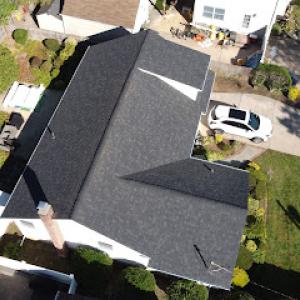
Marvin Construction Services
(631) 639-6419 marvinconstructionservices.com
Serving
4.9 from 250 reviews
If you’re looking for a new roof installation or siding repair for your home, we are the construction company for you! For 15 years Marvin Construction Services has been dedicated to providing superior workmanship that is second to none. We have always been focused on high-quality results, excellent customer service, and reliable work ethic. Customers in Lindenhurst, New York and surrounding areas rely on us for professional roofing, siding, and gutter services. Our team has the experience, skills, and proper equipment to guarantee your home has the best outcome. We ensure all of our customers that we are a trustworthy company and that we always deliver the best results.
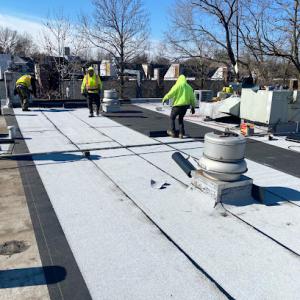
Long Island Flat Roof IslandWide Commercial Roofing
(631) 838-9285 www.longislandflatroof.com
Serving
4.9 from 108 reviews
IslandWide Commercial Roofing is full service commercial roofing company located in Amityville NY and have been proudly serving customers throughout the Greater Long Island Area since over 10 years . From urgent flat roof repairs to complete flat roof replacements, we have become one of the most trusted industrial and commercial flat roofing contractors across the li. We believe that offering quality commercial and industrial roofing systems is simply not enough. We also set out ensure that all of our industrial roofing contractors are highly trained to a standard of excellence, and can offer an unprecedented level of customer service."
Advanced Roofing
(516) 987-7478 advancedroofer.com
Serving
5.0 from 59 reviews
For all your Roofing ,Siding & Gutter needs. From simple repairs to complete installations. Family owned & operated since 1993.
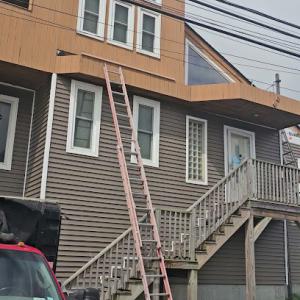
J. Great Roofing
(631) 669-6269 www.jgreatroofing.com
Serving
4.9 from 120 reviews
J. Great Roofing & Siding stands behind GAF roofing products, you can count on consistency and the highest quality the industry has to offer. We are a "full service" roofing company and we will handle everything from a new roof installation, restoration and maintenance to re-roofs and repairs. All with the assurance that can solely come with years of experience.
Clearview Roofing & Construction Babylon
(631) 827-7088 longislandroofs.com
Serving
5.0 from 50 reviews
Clearview Roofing in Babylon, NY, offers top-quality roofing services, including installations, roof repairs, and roof inspections for residential and commercial properties. As a trusted "roofer near me," we use premium materials from leading manufacturers like GAF and Owens Corning to ensure durability and reliability. Our services include siding, gutter installations, skylights and emergency roof repairs. With over 60 years of experience, we provide exceptional customer service and fair pricing. Choose Clearview Roofing in Babylon, NY, for professional and reliable roofing solutions. From asphalt shingles to Flat Roofing. TPO and EPDM roofing repair, Clearview Roofing in Babylon, NY, has you covered!
NY's Finest Roofing & Siding
(833) 476-6369 nysfinestroofingsiding.com
Serving
4.9 from 114 reviews
Roof Repair & Replacement Experts in Long Island & Queens! Worried about leaky roofs or outdated exteriors? NY's Finest Roofing & Siding, Inc. delivers peace of mind, lasting value, and superior craftsmanship for your home. We specialize in: Roof Repair Roof Replacement Flat Roof Repair & Replacement Siding Installation Why choose us? Nearly 30 years of experience serving Long Island, Queens, Brooklyn, Manhattan & Westchester. Skilled and certified roofing contractors who use the best materials. Fast and thorough appointment setting to job completion. Highly recommended by satisfied clients. Let us help you fix your roof leak with our roof repair or roof replacement solutions. Long Island's best roofing & siding Contractor!
JEL Home Improvements
(631) 433-3198 jelhomeimprovements.com
Serving
5.0 from 24 reviews
JEL Home Improvement is a family owned and operated business and plans to stay that way as we look to our future in the Home Improvement industry. We take great pride in the quality of our finished products and are confident that our customers will feel the same way about their projects.
Four Seasons Roofing & Exteriors
(631) 249-3377 fourseasonsroofingny.com
Serving
4.9 from 683 reviews
A Division of Four Seasons Enterprises, Inc.
Marcor Construction
(631) 321-0593 www.marcorny.com
Serving
4.9 from 381 reviews
Marcor Construction Roofing & More has been providing high-quality home improvement services to Long Island for over 30 years. We provide expert roof repair, roof replacement, siding installation, and more, and we can give you the perfect solution for your home's exterior improvement needs. We have installed thousands of roofs over the years, and we service a variety of roofing materials for both residential and commercial properties. We always put customer service first, and we will work with you to ensure that you are completely satisfied.
ML Best Construction
(631) 643-1404 mlbestconstruction.com
Serving
5.0 from 309 reviews
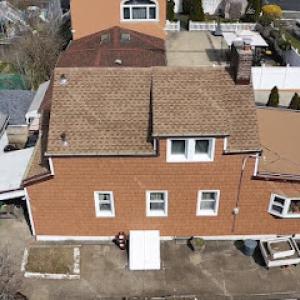
With over two decades of experience, ML Best Construction is a trusted name in residential, commercial, and industrial exterior renovations. Since opening in 2000, this family-owned company has provided top-tier craftsmanship for all roofing, siding, and gutter needs. Their skilled professionals also specialize in skylight, window, and door installations, using premium materials to ensure quality and durability. Their commitment to excellence has earned them a reputation for reliable service and superior results.
Robert Gerard Contracting
Serving
5.0 from 19 reviews
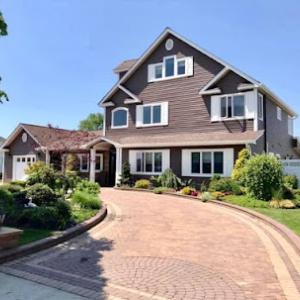
Whether you need a repair, a complete re-roof of your home or office building, or routine maintenance, we have you covered! Give us a call to schedule a consultation!
In this area, roof work is routed through the Town of Babylon building department rather than a separate Lindenhurst city office. When a full roof replacement is in play, a permit is typically required, and inspections are scheduled at key milestones after the new roofing is installed. This setup keeps the project aligned with town-wide standards for safety, wind resistance, and fire protection, and it helps ensure that the installation can withstand the coastal wind forces common to this stretch of Long Island.
Plan review may be required for roof types or configurations that go beyond a straightforward asphalt re-roof. If the project involves multiple layers, an unusual roof pitch, a non-standard ventilation scheme, or structural changes to accommodate heavier materials, expect the plan review step to come into play. In Lindenhurst, more complex roof structures or transitions to materials like metal or tile often trigger this review. Having drawings or a simple schematic ready helps speed the process.
Begin by confirming the scope of work with the building department-specifically whether this is a full replacement, a retrofit, or an upgrade that changes the roof geometry or ventilation. After the permit is issued, the job moves forward through a rough-in inspection, typically focused on the roof deck, flashing details, and any structural attachments. Once the roof is installed, a final inspection verifies that the installation meets code requirements and that all penetrations, flashing, and drainage are properly finished. Keeping a clear log of material choices and installation methods helps during inspections and avoids delays.
Expect to provide project plans or sketches showing the roof configuration, the proposed materials, and any ventilation or structural notes. If a plan review is required, include details about fastener types, underlayment, and any wind-resistance features that are part of the design. Having a record of the existing roof conditions, contractor qualifications, and a detailed installation sequence can streamline the review and inspection process.
One frequent delay is attempting to proceed with a replacement without the required permit or without scheduling the necessary inspections. In areas with storm exposure, inspectors will look closely at how the roof transitions to wall systems, how valleys and hips are flashed, and whether the chosen materials and underlayment meet the town's wind and water-control expectations. Another pitfall is underestimating the plan review for non-standard materials; preparing complete documentation up front reduces back-and-forth with the department.
If a full roof replacement is on the docket, contact the Town of Babylon Building Department to verify permit needs and schedule the rough-in and final inspections. When planning, discuss material choices that align with wind performance and drainage requirements, and gather any plan-review-specific documents early to keep the project on track. In Lindenhurst, this process is the route that keeps a coastal-capable roof compliant and ready to withstand Nor'easters and heavy rain events.
Asphalt shingles dominate locally because they fit the prevailing Long Island residential housing stock and are easier to replace after storm-related damage than heavier premium systems. In Lindenhurst's exposure to Nor'easters and wind-driven rain, a good architectural or dimensional shingle with a strong nailing pattern tends to hold up better against blowing rain and debris. The practical advantage here is repairability: if a shingle is damaged during a coastal storm, patches and matches are more straightforward, and the typical roofing crew on the South Shore is familiar with the installation nuances of this standard material. For longevity, ensure proper attic ventilation and a solid underlayment to reduce moisture intrusion between storms.
Metal roofing is present in the market and can appeal in this coastal climate, but installation quality at edges, penetrations, and fastener details is critical where wind and precipitation are recurring stressors. In storm scenarios, metal panels shed wind efficiently, but improper edge detailing near hips, valleys, and chimney penetrations can become failure points. If choosing metal, prioritize a system installed with continuous sealing along fasteners, corrosion-resistant components, and precise flashing around vents and exhausts. A well-installed metal roof can perform exceptionally in salt-laced air and heavy gusts, but the quality of every seam and transition determines long-term resilience.
Wood shakes, clay tile, concrete tile, and synthetic products exist in the market but are less common choices and need to be evaluated against moisture exposure, wind uplift concerns, and the structure of older homes. Wood shakes can be vulnerable to moisture and mold growth if ventilation is inadequate, and their lighter weights do not automatically translate to easier repairs after a storm. Clay and concrete tiles bring strong weather resistance but add weight and require a robust roof structure to handle uplift in high winds; older homes may need structural checks and reinforced nailing. Synthetic or composite shingles offer versatility and improved moisture resistance, yet they must be sourced from reputable manufacturers to ensure UV stability and wind performance. In homes with long, unbroken rafters and solid decking, premium options may be feasible, but every alternative should be weighed against the typical housing stock in our area and the history of wind-related damage recorded after coastal events.
Long Island winters bring freeze-thaw cycling that can widen small defects around flashing, exposed fasteners, and aging shingle tabs before spring rains arrive. In homes with asphalt or asphalt- fiberglass shingles, that subtle widening shows up as hairline leaks or damp spots after a light thaw then a cold snap. The risk is gradual, but the consequences can feel sudden when a wind-driven Nor'easter arrives and pushes moisture into those vulnerable edges. Inspecting visible flashing around chimneys, vents, and roof-wall intersections once temperatures rise above freezing helps catch trouble before it spreads.
Snow loads and winter moisture can stress roof systems, while autumn Nor'easters add wind-driven rain that often exposes weaknesses at valleys, chimneys, and roof-wall intersections. In Lindenhurst, the combination of heavy wet snow and gusty fall winds can flex metal step flashing and valley linings enough to loosen seals. If shingles are blistering, curling, or cupping from seasonal moisture, those signs should prompt closer evaluation by a pro. Valleys tend to leak first during storms, so pay attention to damp spots along the seam where two planes meet.
Spring storms on Long Island can disrupt replacement schedules, so homeowners in Lindenhurst often need to plan around weather windows rather than assuming uninterrupted install days. After a harsh winter, crews may face several weather delays as crews chase favorable days for patching and full replacements. Keep an eye on storm forecasts and have a contingency plan for delayed work, especially if a roof has exposed fasteners or compromised tabs. A proactive approach-addressing small leaks promptly and coordinating with weather-ready crews-reduces the chance of spring rains turning a minor issue into a larger, more invasive repair.
When a leak appears after a Nor'easter, document with photos and note the date, wind direction, and observed entry points. Targeted temporary measures, such as covering exposed gaps with a durable tarp, can buy time while weather windows open for proper repairs. If a flash line or valley shows persistent moisture after a storm, arrange for a professional inspection before the next round of heavy precipitation. The goal is to reduce the chance of hidden rot and keep the roof structure sound through seasonal cycles.
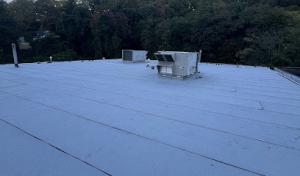
The local contractor market shows meaningful demand for flat-roof and skylight work, signaling that leak-prone low-slope sections and roof penetrations are a real part of Lindenhurst service calls. Expect frequent issues around edge details, transitions to steeper portions, and where older flashing has aged. When assessing a flat roof, focus on membrane integrity, drip edge quality, and proper drainage at scuppers or interior drains. In homes with additions, porches, or mixed rooflines, these low-slope tie-ins often become the first points to leak after coastal rain and wind events.
Chimney-related roofing work is also common in this market, which aligns with older Long Island homes where flashing transitions can become recurring leak points. Inspect the base flashing, cricket or saddle presence, and the upper edge where shingles meet the brick or stone chimney. If flashing shows corroded metal, loose counter-flashing, or gaps at mortar joints, leaks can follow wind-driven rain paths down beams and into attic spaces. A targeted reseal or re-flash may be required rather than a full roof replacement on shorter sections.
On homes with additions, porches, or mixed rooflines, low-slope tie-ins and skylight curbs need close attention because coastal rain and wind can exploit small installation defects. Look for sagging or misaligned skylight curb boots, poorly sealed penetrations, and any deviation in the transition from flat to pitched areas. When evaluating repairs, prioritize continuous weatherproofing along the curb, around skylights, and at perimeters where two roof types meet. Proactive sealing and precise flashing installation can prevent recurring leaks before the next Nor'easter arrives.
Find specialists in TPO, EPDM, and built-up flat roofing systems for residential and commercial properties.
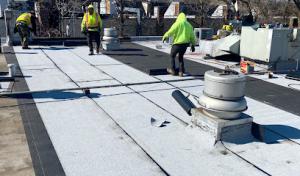
Long Island Flat Roof IslandWide Commercial Roofing
(631) 838-9285 www.longislandflatroof.com
Serving
4.9 from 108 reviews
Clearview Roofing & Construction Babylon
(631) 827-7088 longislandroofs.com
Serving
5.0 from 50 reviews
Lindenhurst sits in a Long Island insurance environment with elevated claim activity after major storms, so roof condition records before and after events are especially important. When a Nor'easter or coastal wind event rattles the area, adjusters look for a clear trail of what happened to the roof and what work was done previously. A simple, well-organized set of documents can mean the difference between a smooth claim and a dispute that drags on.
Adjusters in this region often evaluate wind and hail exposure together with prior roofing work to decide whether damage is covered or attributed to age and maintenance history. That means a roof that appears to have several recent repairs might be weighed against new, unaddressed leaks, or against what the policyholder understood about the roof's expected life. The more detail you can provide about when and how the roof was maintained, the clearer the decision becomes. Honesty about the roof's condition before a storm helps prevent arguments about causation after a claim is filed.
Because carriers may scrutinize replacement scope after major events, homeowners here benefit from keeping permit records, inspection sign-offs, photos, and material documentation in one file. A single, organized package that traces roof materials, installation dates, and repair history can streamline discussions with the insurer and reduce back-and-forth delays. Each photo should be dated and labeled with what it shows and when it was taken. If a wind event injures the roof, this file becomes a practical reference during negotiations and can support a clearer, faster settlement. In areas like this, preparedness isn't just prudent-it's essential.