
Last updated: Apr 19, 2026
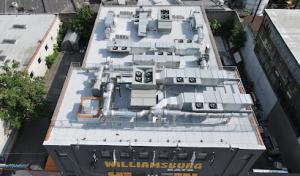
In this neighborhood, low-slope and attached-roof areas dominate, and that changes how leaks behave. Ponding water on a flat or nearly-flat roof is not just a nuisance-it becomes a risk fast when drainage paths are crowded by shared parapets, vents, and HVAC curbs. Because many homes are tightly spaced, leaks tend to reveal themselves first at party-wall intersections, where two buildings meet, along parapets that line narrow roof edges, at rear additions that tuck into the building's footprint, and around roof penetrations like vents, pipes, and skylights. If you own a rowhouse or a small multifamily building, inspect these junctions with the same urgency you'd give a missing shingle on a pitched roof. A slow drip at a seam or a damp halo near a flashing corner is a warning that the whole roof system is fighting drainage, not just a single leak.
The Bronx experiences heavy rain events that overwhelm crowded drainage networks. After a storm, interior drains, scuppers, and gutters can clog with leaves and urban debris until water backs up and seeks the path of least resistance. When that happens, water can pool atop low-slope roofs and push through weak seams or flashing. Pay special attention to interior drains that vent into crowded attic or crawlspace spaces. If a downspout feeds into a clogged interior drain, the excess pressure can force water through joints you thought were sealed. In tight configurations, the most vulnerable points aren't the broad roof field but the connectors-the seam where two sections meet, the edge where a parapet cap sits, and the corners where two different roof planes join. Treat these areas as active risk zones, especially after a storm when debris has had time to accumulate.
Parapets are both a shield and a potential Achilles' heel on these homes. If the parapet cap flashing sits high and dry, it may still fail under pressure from wind-driven rain and thermal movement. Look for rust staining, loose mortar, or any shifting where the parapet meets the roof deck. Seams along the low-slope field can open up, especially where roof sections were joined to accommodate additions or retrofit work. In practice, you'll notice damp patches that streak toward interior walls, or a persistent damp smell in ceilings that align with the parapet wall. The remedy isn't only patching the surface; it requires addressing the cap flashing, resealing the seam where roof planes meet, and ensuring the parapet water channeling is clear and continuous. In tight blocks, even a small misalignment becomes a source of ongoing trouble because there's little room to route water away from the building.
Where two buildings share a party wall, the joint becomes a potential leakage corridor. Water can migrate from one side to the other, finding cracks at the intersection with the roof deck, shared flashings, or the edge of a balcony or deck that sits over a parapet. Inspect every party-wall seam, the mastic or sealant line at the joint, and any penetrations that pass through this shared boundary. Owners should test these seams by applying gentle pressure with a water spray at a low angle, watching for seepage into crawlspaces or into interior plaster and drywall around the wall. If moisture appears, the problem is not cosmetic-it's a water path that needs resealing with compatible flashings and pile-on sealant at the joint, plus reinstallation of any counter-flashings that may have degraded.
Vents, exhausts, skylights, and any rooftop units create focal points for leaks when on a low-slope roof. In Bronx homes, where rear additions and converted spaces are common, penetrations often line up with gutters and interior drainage paths. Inspect flashing around each penetration, confirm the base flashing sits flat against the deck, and replace any compromised membranes. Pay attention to collars and boots that show cracking or uplift. For rear additions, ensure that the transition from old roof assemblies to new penetrations is continuous and that there's no lift where water can catch and peel back sealant. Proactive sealing-and timely replacement of aging flashing-can stop a cascade of failures before it begins.
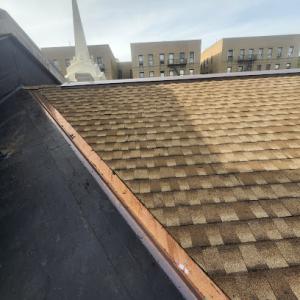
Ak Gatsios
(646) 302-5175 akgatsiosinc.com
1162 Ellsworth Ave, Bronx, New York
5.0 from 316 reviews
At A K GATSIOS INC, we bring dreams to life by shaping the built environment one project at a time. We are a construction company dedicated to transforming ideas into structures, with a strong commitment to excellence, creativity, and the highest standards. With a focus on quality craftsmanship and attention to detail, we deliver exceptional results that leave a lasting impact.
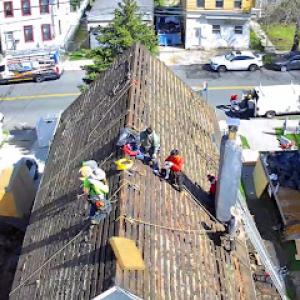
Rh Renovation
(646) 818-4305 rhrenovationnyc.com
1951 Hone Ave, Bronx, New York
5.0 from 304 reviews
RH Renovation is a full-service exterior construction and renovation company serving NYC and surrounding areas. We specialize in residential and commercial projects, including roofing, chimneys, decks, gutters, skylights, flat roofs, sidewalks, drains, and pavers. Our team uses modern, certified, and ergonomic methods to deliver fast, high-quality results while keeping costs efficient. Serving Manhattan, Brooklyn, Queens, Bronx, Yonkers, we provide reliable service and lasting results. Contact us today for your FREE estimate!
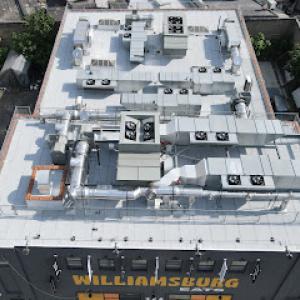
N.V. Commercial Roofing
(646) 717-3737 commercialroofingbronx.com
The bronx, 1961 Yates Ave #2f, Bronx, New York
5.0 from 126 reviews
Established in 1987, N.V. Commercial Roofing stands as a leading roofing contractor in the Bronx. With decades of experience, this professional team provides comprehensive commercial and residential roofing services. From meticulous roof inspections and essential repairs to complete installations, their licensed, insured, and bonded professionals are dedicated to superior craftsmanship. Known for their reliability and expertise, N.V. Commercial Roofing delivers exceptional solutions and lasting quality for every project.
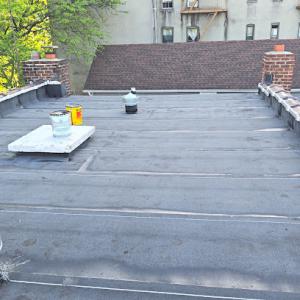
Golden Touch Renovation
(347) 520-8722 goldentouchrenovationllc.com
2077 Hering Ave 2 floor, Bronx, New York
5.0 from 68 reviews
Golden Touch Renovation is a trusted family-owned and operated business providing exceptional roofing, home renovation services, gutter repair, and chimney repair in the Bronx, NY, area. Our experienced contractors are specialists serving Mount Vernon, Westchester County, and other areas. We take pride in delivering top-notch workmanship and outstanding customer service, which is why we are recognized as one of the top roofing companies in Yonkers, White Plains, the Bronx, and other parts of New York. Our team also offers chimney repair and exterior painting services in the Bronx, NY. At Golden Touch Renovation, we understand that home renovation projects can be overwhelming. That's why we are dedicated to guiding you through the process.
FH Renovation
(347) 403-6173 fhrenovationnyc.com
2077 Hering Ave, Bronx, New York
4.9 from 203 reviews
FH Renovation is a family-owned and operated renovation company catering to commercial and residential clients in the Bronx, NY. we deliver cost-competitive painting, roofing, gutter & chimney sweeps services with superior construction in Queens , Westchester , Yonkers , Brooklyn . Contact us for a full range of renovation services, especially if you need Roofing companies near me. We have over 2 decades of home & commercial renovation experience to turn your every dream into reality .We look forward to building long-term relationships with our clients by providing personalized quality services. Contact us to schedule the best roofer services in Bronx, NY and Queens , NY
Royal Roofing & Siding Bronx
(718) 395-5061 www.nycrenovators.com
1231 Lafayette Ave 2nd Floor, Bronx, New York
4.9 from 76 reviews
Royal Roofing Bronx, a division of Royal Renovators, is a trusted roofing company proudly serving homeowners, landlords, and businesses throughout the Bronx. We specialize in roof replacement, leak repair, flat roofing, shingles, siding, gutters, and emergency roof service—always with licensed, insured, and experienced crews. As part of one of NYC’s most respected roofing contractors, we combine local Bronx expertise with the resources of a citywide leader. Our mission is simple: provide honest estimates, top-quality workmanship, and lasting protection for every property we service. With an unparalleled commitment to excellence and customer satisfaction, the reputation speaks for itself. Call today for a free estimate quote!
City Roofing Company NYC
(718) 310-7333 cityroofrepairnyc.com
2203 Hunter Ave, Bronx, New York
5.0 from 49 reviews
City Roofing Company NYC provides reliable roofing services to homes and businesses in the Bronx and across New York City. As trusted Bronx roofing contractors, we excel in roof repairs and waterproofing to ensure your property stays protected from the elements. Our dedicated team is committed to addressing your roofing needs with precision, offering durable solutions for a safer, more secure building. Whether you need a quick fix or a more complex repair, City Roofing Company NYC is here to help. Contact us today to keep your roof in good condition.
TOOR CONSTRUCTION - Roofing Services in New York
2822 Collis Pl, Bronx, New York
4.9 from 87 reviews
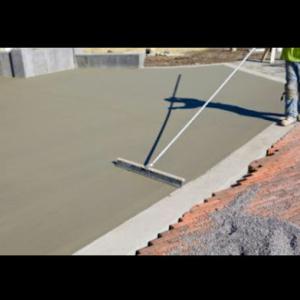
We do all kind of construction work some of them include brick steps,Gutter installation,gutter repair,roof installation , roof repair,skylight installation/repair,water proofing,exterior painting,interior painting,stucco contractor, reconstruction, repairing of all kind,brick&block work,custom masonry,backyard,front yard,sidewalk,remove sidewalk violation,paving,parking lots,foundations, flooring,driveway,stone masonry,remodeling,kitchen & Bathroom.
Crystal Real Construction
(718) 427-6067 www.cr-constructions.com
915 Logan Ave, Bronx, New York
5.0 from 43 reviews
Understand why our trusted general contractor in Bronx, NY, is highly rated. At Crystal Real Construction, we can meet all your needs. Our expertise also covers concrete brick installation and gutter installation near you. We excel in home remodeling, providing top services for any project. Our waterproofing services, roof siding, and tile roofing services ensure your home is protected and looks great. As a leading roofing contractor in Bronx, NY, we offer trusted services including roof maintenance services, new roof installation near you, and roof leak repair services. For reliable roofing and remodeling services in your area, trust Crystal Real Construction Contact us today to experience top service.
R Luis Constructions
(347) 842-9954 rluisconstructions.com
1470 Unionport Rd, Bronx, New York
4.9 from 131 reviews
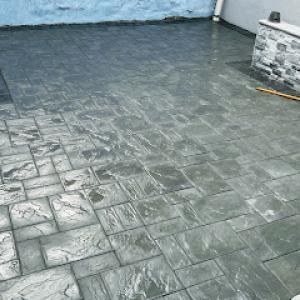
R Luis Constructions is a trusted, full-service construction company serving the Bronx, NY, and surrounding areas. Specializing in roofing, chimney services, and waterproofing, we offer high-quality solutions for both residential and commercial properties. Our experienced team also provides expert kitchen and bathroom remodeling, masonry, and concrete services, ensuring that your space meets both functionality and style. As a reliable general contractor, we handle every aspect of your project, from design to completion, delivering exceptional results on time and within budget. At R Luis Constructions, your satisfaction is our priority.

ARTE Roofing & Contracting
(347) 883-7100 arte-roofing.com
1792 Guion Pl, Bronx, New York
4.9 from 60 reviews
"ARTE Roofing & Contracting is a trusted roofing company proudly serving the Bronx, Yonkers, Queens, Brooklyn, Westchester, New Rochelle, and White Plains. With many years of hands-on experience, we specialize in fast, reliable, and affordable roofing solutions for every type of home. We offer expert roof repair, roof replacement, shingle roof services, flat roof repair (SBS, torch down, EPDM), skylight repair, gutter work, and emergency leak repair. Every project includes clear communication, honest pricing, and professional workmanship. Whether you need a small roof patch or a full replacement, we provide free inspections, same-day estimates, and competitive pricing. Contact ARTE Roofing today for dependable service and a roof built to
Legacy Constructions
(917) 635-5577 legacyconstructionbronx.com
2351 Kingsland Ave, Bronx, New York
4.9 from 76 reviews
Legacy Constructions is a trusted roofing contractor in Bronx, NY, delivering top-quality residential and commercial roofing along with a full suite of construction services. As a versatile general contractor, we specialize not only in durable roof installations and repairs but also in waterproofing, bathroom and kitchen remodeling, home renovations, and property development. Our experienced team of Contractors manages every project from start to finish with precision, safety, and attention to detail, ensuring seamless results that stand the test of time. Whether you need Professional Roofing/Construction Services, We are the best Construction Company in Bronx and Nearby Areas.
Winter in this borough subjects roofs to repeated freeze-thaw cycles that can open flashing joints and underlayment transitions after moisture gets into small cracks. When temperatures swing above and below freezing, water expands in tiny gaps, prying apart seals that were already stressed from prior storms. That subtle widening allows more water to work its way into the roof deck and around penetrations. On low-slope and attached roofs, every misaligned seam or compromised flashing joint becomes a conduit for leaks that can travel long distances before dripping inside, especially through joints near chimneys, skylights, and edge details.
Spring rain and storm periods in New York City commonly expose weak flashing around chimneys, skylights, and roof edges before interior staining becomes visible. The problem isn't always a dramatic leak; it's the slow, creeping seepage that soaks insulation and creates hidden rot. By the time you notice staining or musty smells, the structure may have already suffered damage. In attached configurations, wind-driven rain can push water toward the corners where multiple roof planes meet, stressing the same flashing again and again.
Autumn wind events in the Bronx can push debris onto roofs and into drainage paths, which is a bigger issue on attached and low-slope buildings than on isolated suburban homes. Debris can block scuppers, gutters, and step flashing, forcing water to back up and spill over edges. On low-slope roofs, clogged drainage directly translates to standing water near perimeters and penetrations, accelerating corrosion of metal details and deterioration of underlayment.
Start with a careful walk of the roof after a windstorm or heavy rain, looking for lifted shingles or flashing gaps around chimneys and skylights. Inspect the perimeter edge flashing for a consistent seal and verify that drip edges are free of rust and properly terminated into fascia or joints. Check drainage paths-gutters, scuppers, and downspouts-for obstructions and ensure water can exit freely away from the roof plane. Inside, monitor ceilings and upper walls for signs of moisture near penetrations or along seams, especially after wet weather.
If you identify loose flashing or damp attic insulation, address it promptly to prevent widespread damage. Seal small gaps with a compatible sealant and, where flashing is compromised, consider temporary weatherproofing that directs water away from seams until a permanent repair can be scheduled. For high-risk areas like near chimneys and skylights, plan to reflash or replace damaged sections with materials suited for a low-slope, urban environment where drainage and wind exposure are constant challenges.
Find local contractors experienced in assessing and restoring roofs after hail, wind, and severe weather events.
N.V. Commercial Roofing
(646) 717-3737 commercialroofingbronx.com
The bronx, 1961 Yates Ave #2f, Bronx, New York
5.0 from 126 reviews
Golden Touch Renovation
(347) 520-8722 goldentouchrenovationllc.com
2077 Hering Ave 2 floor, Bronx, New York
5.0 from 68 reviews
FH Renovation
(347) 403-6173 fhrenovationnyc.com
2077 Hering Ave, Bronx, New York
4.9 from 203 reviews
In this neighborhood, you'll notice a practical mix: pitched asphalt shingles remain common on attached rowhouses and-front-facing homes, but many Bronx properties also use low-slope systems on rowhouse tops, porches, extensions, and multifamily sections. The material choice often varies on the same property, so you'll see a patchwork of different roof types side by side. The goal is to match each surface to its exposure, drainage, and the way flashing and parapets are treated around edges.
On pitched surfaces, asphalt shingles still offer straightforward installation and repair access, which matters in a dense urban setting where access to roofs can be limited by stairwells or security measures. When you're dealing with attached sections, keep stormwater movement in mind: gutters and leaders should tie into curbside drainage without backflow risk from nearby alleys. For flat or low-slope portions attached to these homes, prioritize proper scuppers, drip edges, and edge flashing that extends well onto masonry to prevent water from wicking into the wall joints during freeze-thaw cycles.
Low-slope and flat portions-common on rowhouse tops, porches, and extensions-demand careful detailing where panels meet parapets and along transitions to vertical walls. In Bronx conditions, the combination of heavy rain and freeze-thaw cycles makes reliable seam flashing and field sealing essential. Pay attention to penetrations for vent stacks, pipes, and skylights: these entries are frequent leak points when flashing isn't backed by continuous, corrosion-resistant metal flashings and sealants compatible with the underlying deck material. Consider a system that offers integrated drainage and easily inspected seams so that urban debris and seasonal runoff don't back up along the roof edge.
Clay and concrete tile appear on a minority of older or more decorative buildings, where the weight and repair complexity matter. Structural compatibility and flashing execution take center stage here. If the existing structure wasn't designed for heavy tile, you'll need to reinforce or reframe, and you'll want a flashing plan that accommodates tile profiles and mortar joints without creating hard-to-maintain water traps. For those with decorative facades, ensure the tile's color and texture won't trap moisture against masonry, which can accelerate deterioration in cooler months.
Metal roofing and synthetic products are often considered when longer service life or lower maintenance is desired. In practice, the key decision is how these systems detail around parapets, chimneys, and penetrations. Bronx buildings frequently feature complex parapet layouts, and any metal edge or seam can become a leak path if not properly sealed and vented. When choosing metal or synthetic options, prioritize a solution with proven compatibility for vertical transitions and robust sealant systems around all penetrations.
In the Bronx, a roof replacement can resemble a high-stakes puzzle: you're often balancing limited space, nearby sidewalk traffic, and the need to protect neighboring buildings while work happens above. The material chosen directly drives the price per square, but site logistics can add a substantial premium. Asphalt shingles typically land in the mid-range, while metal and tile options push up the cost. Expect a noticeable bump when multiple roof areas are involved or when the work stretches across parapets, chimneys, or skylights.
Pricing is heavily affected by difficult site access and limited staging space. Debris handling in dense neighborhoods demands careful coordination to avoid blocking sidewalks or driveways. Edge protection, material loading, and safe removal on attached rowhouses are more labor-intensive than on detached homes. That extra labor shows up in both the daily crew cost and the duration of the project. If the job requires shoring or special protection for adjacent properties, budgets should include a contingency for extended ramping and material containment.
Projects involving multiple roof areas, parapets, chimneys, skylights, or mixed pitched and low-slope sections are especially common cost drivers here. Each feature adds complexity: parapet copings need flashing detail that stays weather-tight, skylights require careful flashing and interior glazing checks, and chimneys demand reliable side penetrations without leaks. In attached buildings, tear-off and edge protection become more intricate because materials must be hoisted over a boundary, and neighboring units may limit access points. Plan for extra oversight time from installers who coordinate with property managers and nearby residents.
Material costs provide a solid starting point, but installation realities matter. Asphalt shingles remain the most budget-friendly option, while metal, clay tile, or concrete tile escalate the price per square. Wood and synthetic composites sit in between. Typical ranges you'll see include: asphalt shingles around the lower end of the spectrum, synthetic options mid-range, and metal or tile on the higher side. When calculating, use the square footage accurately and factor in waste, edge protection, and disposal with debris handling.
For attached buildings, expect the cost to reflect tear-off complexity and edge protection needs. If multiple roof areas are present, add a contingency for staging and overlapping work zones. Given the local realities, it's prudent to budget for site-specific extras-protection measures for sidewalks and adjacent properties, plus careful coordination with neighbors. With careful planning, a Bronx replacement can meet performance goals without surprises, while aligning with the material choice that best fits the home's style and weather demands.
Get a clear picture of your project costs upfront - no commitment required.
Rh Renovation
(646) 818-4305 rhrenovationnyc.com
1951 Hone Ave, Bronx, New York
5.0 from 304 reviews
Golden Touch Renovation
(347) 520-8722 goldentouchrenovationllc.com
2077 Hering Ave 2 floor, Bronx, New York
5.0 from 68 reviews
Royal Roofing & Siding Bronx
(718) 395-5061 www.nycrenovators.com
1231 Lafayette Ave 2nd Floor, Bronx, New York
4.9 from 76 reviews
A full roof replacement typically requires a permit through the New York City Department of Buildings rather than a separate city roofing office. In practice, the contractor should pull and manage the permit, guiding you through the submission of plans, scope, and any required documentation. If you attempt to handle filings yourself, expect a longer timeline and tighter scrutiny on details like ventilation requirements, head-of-wall flashings, and curb attachments for any skylights. The DOB will want clear evidence of the project scope and compliance checks before any work begins.
Inspections occur at project milestones, with a final inspection required before sign-off. Schedule proactively, because missing a milestone can stall the work and create downstream complications, including potential lien issues or non-compliance flags. Your crew should maintain a DOB-compliant site safety plan, material certifications, and proof of waste disposal. Expect envelope-related checks focusing on flashing at parapets, roof-to-wall transitions, plumbing stacks, HVAC curbs, and drainage performance. Having any corrective actions documented and addressed promptly keeps the project moving and reduces the risk of a rejected final inspection.
Because the centralized building system governs the work, homeowners should verify that permit filings and inspection closeout are completed rather than assuming the job is finished when installation ends. Ask your contractor for the proof: approved final inspection letter, permit closure, and any necessary amendments. If deviations were approved, ensure they are documented and that the final paperwork matches the as-built roof. Keep copies of all permits, inspection tickets, and contractor communications in a safe place. Look for final project approval notes in the DOB portal and stamped versions of the plans in your file.
New York homeowners insurers commonly want dated photos, evidence of pre-existing conditions, and roof reports, which matters in the Bronx where recurring leak history on older buildings can complicate claims. If a storm exposes a leak, have recent photos ready showing the extent of the damage, the roof's current state, and any interior staining or mold. A concise, professional roof report from a licensed contractor can help establish a sudden event versus slow deterioration, which insurers scrutinize closely in this urban setting.
Weather-related roof claims are common during storm seasons, but coverage on older Bronx roofs may be limited depending on policy language and endorsements. When leaks appear, document interior leak paths and exterior damage within 24 to 48 hours if possible. Note where water enters and how it travels inside, so the adjuster can see the direct connection to the roof issue. Drainage-related problems near shared gutters or downspouts require clear photos of clogs, misalignment, and any resulting edge damage.
Bronx homeowners should document interior leak paths, exterior damage, and drainage-related issues quickly because adjusters may ask for proof that damage was sudden rather than long-term deterioration. Keep a running log with dates, times, and weather conditions, and preserve any temporary, emergency repairs with receipts. Ask for a written scope from the contractor that ties every repair item to a specific roof failure, not a generalized claim.
Keep copies of all correspondence and take measurements of stained areas and bulges inside the attic or ceiling. If a contractor identifies pre-existing conditions, attach the report and highlight how the recent event changed the roof's behavior. Avoid delaying fixes that prevent further interior damage, but ensure emergency work is thoroughly documented as temporary mitigation rather than a final solution.
Connect with contractors who help homeowners navigate the claims process from damage assessment to final approval.
N.V. Commercial Roofing
(646) 717-3737 commercialroofingbronx.com
The bronx, 1961 Yates Ave #2f, Bronx, New York
5.0 from 126 reviews
Skyward Roofing Contractor - Bronx
(718) 736-2553 www.skywardroofing.com
3614 E Tremont Ave, Bronx, New York
4.9 from 69 reviews
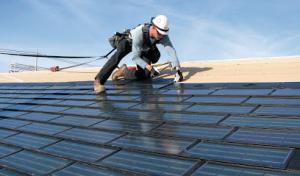
Chimneys on many older rowhouses and multifamily buildings in the Bronx sit on masonry walls that move and spall with freeze-thaw cycles. Flashing and counterflashing around these chimneys frequently fail where the brick or stone meets the roof. When a leak shows up near a chimney, don't assume it's only the flashing at the chimney base-check the step flashing along the rake edge and the upper coping, as masonry accumulation can seep laterally under shingles. A practical approach is to inspect for rusted or lifted metal, missing sealant, and dark stained areas that travel along the mortar joints after a rain.
Skylight leaks in Bronx homes often trace back to curb flashing and the transitions where membrane or shingles meet the skylight, not the unit itself. The curb can settle or twist, causing gaps that let water into the surrounding roof field. Look for loose or cracked curb flashing, torn or oversized counterflashing, and worn sealant joints. Pay attention to the return flashing where the skylight meets the curb and the adjacent shingle or membrane laps. If you see staining spreading away from the skylight, don't assume the skylight unit is the only culprit.
On dense Bronx blocks, repeated patching around penetrations is common, so you need contractors who can diagnose whether the leak source is the penetration, nearby masonry, or the surrounding roof field. A thorough evaluation should map every nearby stack, vent, and chimney, then trace the water path during a controlled rain test or helmet-snap inspection. The real fix often involves adjusting or resealing multiple close-by spots rather than a single flashing repair.
When selecting a contractor, ask for a joint assessment of the penetration and the roof field. Request copper or stainless steel step and counterflashing where needed, and insist on a surface-wide review of the surrounding membrane and shingle transitions. In actual practice, the smart choice is a coordinated repair plan that treats the flashing, the curb, and the adjacent field as an integrated system rather than isolated spots.
Seasonal checks after heavy rain or thaw cycles can catch early signs of failure. Inspect around chimneys, skylights, and penetrations for loose sealant, straightened flashing, and dry rot in fascia or decking. Keep debris out of valleys and gutters, and maintain a clear path for water to flow away from penetrations. In tight Bronx neighborhoods, timely resealing and minor flashing realignments often prevent larger leaks and more extensive repairs.
Find contractors experienced in skylight installation, flashing, and leak repairs to bring natural light into your home.
Rh Renovation
(646) 818-4305 rhrenovationnyc.com
1951 Hone Ave, Bronx, New York
5.0 from 304 reviews
Royal Roofing & Siding Bronx
(718) 395-5061 www.nycrenovators.com
1231 Lafayette Ave 2nd Floor, Bronx, New York
4.9 from 76 reviews
Spring and early fall are the windows that work best for substantial roofing work on a typical Bronx building. These seasons avoid the worst heat of summer on dark roof surfaces, which can push heat-related wearing and blistering, and they sidestep the harsh winter freeze-thaw stress that can complicate flashing details and leak management. In these shoulder seasons, moisture levels tend to be more predictable, helping crews keep membranes clean and micro-porous layers dry during installation. For homes with attached roofs or low-slope sections, this timing also aligns with milder wind patterns and more stable weather, reducing the risk of quick rain setbacks mid-project. If a major repair or reroof is planned, targeting late spring or early fall gives you a gentler cooling-off period before the next heating season and allows for thorough inspection of flashing, joints, and edge detailing.
Summer installation in the Bronx can be slowed by heat on dark roof surfaces, which makes working conditions uncomfortable and can shorten daily crew shifts. Heat also accelerates wear on aging shingles that are already near replacement age, so the chance of incidental damage or accelerated granule loss increases if a full replacement is pursued during a heat wave or prolonged heat spell. If work must happen in summer, schedule cooler parts of the day for any high-traffic operations such as deck or terrace detailing, and plan for extra inspections to catch blistering, lift, or edge issues that heat may aggravate. Consider shade strategies and hydration plans for crews to maintain quality workmanship on sun-baked days.
Winter emergency work is common when leaks suddenly appear or wind-driven rain finds a weakness. In Bronx climates, cold-weather detailing limits and moisture management challenges can constrain full replacement scheduling. In many cases, temporary or partial fixes are prioritized to buy time until milder conditions return. If a full roof replacement is unavoidable during winter, expect longer staging periods for snow and ice removal, careful handling to prevent ice dam problems, and tighter coordination around interior moisture control. When the winter thaw finally arrives, a careful recheck of underlayment and flashing should be part of the plan to ensure there are no hidden leaks.