
Last updated: Apr 19, 2026
Martinsville sits in the south-central Virginia foothills near the Blue Ridge, a setting that channels fast-moving storm systems and repeated wind-driven rain onto residential roofs. That pattern means steep-slope roofs take a constant battering from wind gusts, sudden downpours, and the spray of spray-backed rain. In this climate, aging shingles and flashing don't just fail quietly-they crack, peel, lift, and leak at the worst moments. The result is sudden water intrusions right after severe gusts or heavy downpours, often without obvious warning signs until visible moisture appears inside the attic or ceiling.
The hot, humid summers and cold winters here cause regular expansion and contraction of roofing materials. Over time, this cycles stress your fasteners, seals, and edges. Shingles lose grip, flashing around chimneys and vents pulls away, and ridge caps can loosen after a hard wind or an abrupt temperature swing. In our foothill microclimate, you'll notice wind-driven leaks developing first along the eaves and along roof joints where snowmelt and rain meet. This is not coastal salt exposure or hurricane surge-it's a Martinsville-specific pattern of wind-lift and ridge damage that sneaks up after storms.
Right after a heavy wind or rain event, walk the roof visually from the ground if safe, or schedule a quick exterior inspection by a qualified roofer. Look for lifted or curled shingles, missing granules, and any gaps around vents, chimneys, and skylights. Pay particular attention to ridge lines and edge details, where wind pressure concentrates. Inside the attic, check for damp insulation, dark spots along the rafters, or light showing through roof deck seams. If you detect moisture or suspect lifted shingles, address the risk promptly-delayed response can convert a temporary leak into widespread interior damage.
During shoulder seasons, those rapid temperature swings drive accelerated wear. Expect more fastener loosening and flashing wear after late-summer storms or early winter cold snaps. In spring, heavy rain bursts and thunderstorm activity stress the same vulnerable points. Proactive checks in the weeks following intense weather can catch issues before they escalate into expensive repairs. This climate rewards timely maintenance and early intervention more than any other factor.
Keep an eye on ridge lines, vent collars, and chimney flashing as top trouble zones. Trim back overhanging branches to reduce impact and debris loading on windy days. Ensure attic ventilation stays in balance so condensation doesn't compromise deck integrity after a storm. Establish a routine post-storm inspection habit and have a trusted local roofer on call who understands how wind-driven rain interacts with steep-slope designs common in Martinsville neighborhoods.
Replacement projects in this foothill climate tend to run best when hands aren't tied by extreme temperatures. Spring is favored because installers avoid the brittleness of winter shingle handling and the heat stress of peak summer days on crews and materials. This means your window job can proceed with fewer delays, fewer material handling issues, and steadier workmanship on the roof line above. Fall also offers favorable temperatures for setup and finish work, provided the schedule accounts for early-season weather changes. In this region, you should expect mild days that make ladder work and sealant curing more predictable, which helps long-term performance against the wind-driven moisture that tests steep-slope roofs.
Spring storms and heavy rainfall are common enough to disrupt tear-off or sequencing when a new window involves roof-integrated elements or overlapping flashing strategies. Because rain can stall progress, you should plan for extra lead time, and coordinate with the contractor on a realistic window of dry days. If a storm comes through during a favorable month, the crew may need to pause briefly and resume as soon as the roof and openings are dry. The goal is to keep the exterior exposure limited, especially on a roof that already carries wear from winter and early spring moisture. Prepared homeowners in this area often build a buffer into their schedule so interior work and flashing checks don't stack up behind weather-driven delays.
Fall wind events can push any aging roof over the edge into leak risk territory, making pre-fall replacement timing particularly important for older roofs. A fresh window installation near the ridge line or along slopes can help maintain a tighter seal as humidity rises and winds pick up with seasonal fronts. If an older roof already shows wear, organizing the replacement window project before peak fall wind bursts reduces the chance of weather-related setbacks or ad-hoc repairs that can complicate the window install. A practical approach is to target a window replacement window when the forecast shows a stretch of dry, cooler days that align with a reasonable walk-through of flashing details and drip edge checks along the roof plane.
When selecting windows, prioritize units with durable seals, reinforced frames, and sash configurations that resist moisture intrusion and wind-driven rain common to steep-slope exposure. Look for impact-rated or weather-resistant coatings if the home faces frequent gusts. Installation should align with existing roof flashing plans to prevent pathing for water toward the interior. For homes with older roof compositions, it helps to pair window work with a staged inspection of siding and flashing so the soil line and overhangs shed water away from the openings. In this climate, meticulous caulking and backer rod placement at all perimeters pays dividends in preventing seasonal moisture ingress and preserving the roof's long-term integrity.
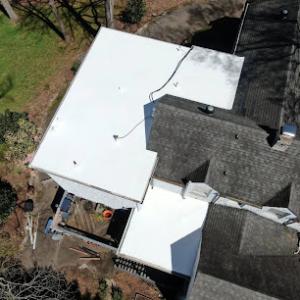
Artisan Enterprise
(276) 790-3769 www.artisanenterprise.com.ai
201 Cleveland Ave, Martinsville, Virginia
4.1 from 15 reviews
Artisan Enterprise provides residential and commercial roofing, gutters, windows, siding, and solar panels to Virginia and the surrounding areas.
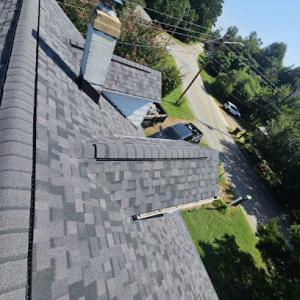
Shane Perkins Construction
(276) 732-2705 www.shaneperkinsconstruction.com
Serving
4.7 from 12 reviews
Locally owned and operated by a husband and wife team. We specialize in metal and shingle roofing.
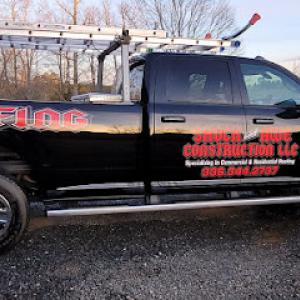
Shock & Awe Construction
Serving
5.0 from 104 reviews
Shock And Awe Construction, led by Jackie and Holly Duncan, leverages 20 years of experience in residential and commercial roofing to provide Ridgeway, VA with quality craftsmanship at competitive rates.
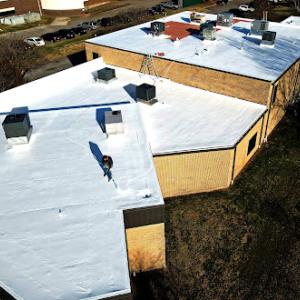
Infinity Roofing, Southeast Virginia
(757) 758-3173 www.infinityroofingva.com
Serving
5.0 from 17 reviews
Factory certified roofing contractor VA Lic # 2705154866 National Roofing Contractors Association Platinum Preferred GAF Master Elite Certainteed Shingle Master Family owned and operated Warrantied work
Shelter Construction Services - Shelter Roofing & Solar
(434) 878-0088 www.shelter911.com
Serving
5.0 from 8 reviews
Shelter Construction Services is a trusted and experienced contractor in Collinsville, Virginia. With a focus on comprehensive roofing solutions, the company offers a wide range of services including roof repairs, replacements, solar installations, metal roofing, and more. Certified by leading manufacturers like GAF, Atlas, Holcium (Firestone), and Durolast, Shelter Construction Services ensures superior craftsmanship and reliable results. From residential to commercial projects, their expertise ensures a seamless and satisfying roofing experience. Free Roof Estimates for Repair & Replacements. Roof Reports available for a fee. Call us today to schedule an appointment.

Provision Roofing & Exteriors
(336) 347-0743 provisionroofingexteriors.com
Serving
5.0 from 33 reviews
Quality affordable roofing and home renovations.
Alvarez Roofing
(336) 623-3970 www.alvarezroofingincnc.com
Serving
4.0 from 43 reviews
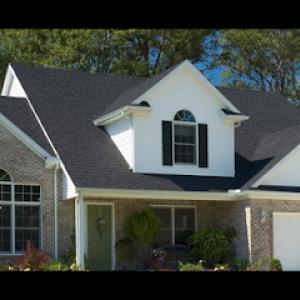
Alvarez Roofing's commitment to providing customer satisfaction has made us the top roofing company in the area. We specialize in all roofing types and offer a 100% satisfaction guarantee on all the work we do. If you're looking for a roofer you can count on to get the job done the right way, the first time, give us a call today.
Moss Home Improvement & Roofing
(434) 792-2030 www.mosshomeimprovement.com
Serving
4.5 from 58 reviews
Quality work at an affordable price with over 54 years in business.
Competitive Edge Metal Roofing
(336) 504-2776 ncmetalroofs.com
Serving
4.8 from 82 reviews
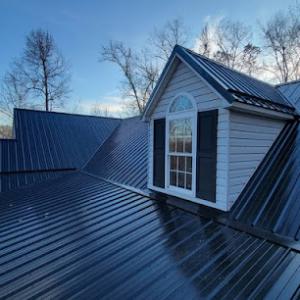
Metal roofing installation at affordable pricing. Excellent warranties, quality and experience. We provide metal roofs at a fraction of the cost of our larger competitors, in fact we guarantee to beat our competitions prices.
AT-TOP Roofing
Serving
4.3 from 12 reviews
With over 35 years of experience, AT-TOP Roofing has provided professional, thorough and reliable roofing services to both homeowners and businesses in the greater Burlington, NC and surrounding areas and Lynchburg, VA and surrounding areas. Our commitment to customer satisfaction has made us the top roofing company in the area. We specialize in all roofing types and offer a 100% satisfaction guarantee on all the work we do. If you're looking for a roofer you can count on to get the job done the right way, the first time, give us a call today.
Shr Roofing
Serving
5.0 from 2 reviews
Roofing company located in Eden North Carolina
Referral Roofing
(434) 483-7055 referralroofing.com
Serving
5.0 from 5 reviews
Proudly serving Virginia and North Carolina more than 40 years, we’re here for all your residential roofing needs. Call today for a free estimate.
In this foothill climate with humid summers, cold snaps, and frequent storm-driven wind, your steep-slope roof endures a steady rhythm of moisture and drying cycles. Asphalt shingles are a practical fit for common Martinsville home designs, but repeated summer heat paired with winter cold can accelerate granule loss and cracking on lower-grade products. The sun exposure on south- or west-facing pitches compounds this wear, so inspect shingle edges and vedges regularly after hot spells and heavy afternoon storms. When granules begin to shed noticeably, the underlying felt and asphalt can deteriorate faster, especially on roofs that see frequent wind-driven rain. If you notice curling, cupping, or patchy granule fallout along valleys and eaves, plan for timely replacement with higher-performance bundles to maintain a watertight barrier on those steep sections.
Metal roofing stands up well to storm exposure, and its shedding action works to move rain quickly during heavy downpours. The performance benefits are clear in the damp months, where wind can slam water against the roof edge and expose fasteners to repetitive movement. Installation quality around fasteners, penetrations, and trim is critical in freeze-thaw conditions; improper sealing or misaligned flashing can become leak paths when temperatures swing below freezing and then rise again. In practice, you want a metal roof that uses a well-sealed panel system with properly seated seams and corrosion-resistant fasteners, plus tailored trim details at perimeters, vents, and chimneys. If your home experiences strong gusts from the hills, confirm that ridge vents and wind-driven edge controls are secured and that fasteners are compatible with the substrate and upcoming freeze-thaw cycles. A high-quality underlayment beneath a metal roof also pays off by reducing edge infiltration on the steeper sections.
Clay and concrete tile are available options but are less typical for the area's housing stock and may require structural review on homes not originally designed for heavier roof loads. The heavier weights demand a careful assessment of attic framing, ridge sheathing, and support into the walls, especially on older or midcentury homes common in the foothills. If tile is under consideration, pay close attention to the roof deck condition, batt insulation, and plan for potential reinforcement to avoid sagging or uneven seating over time. Clay and concrete deliver excellent life when properly supported and kept dry, but improper installation or a mismatch with the home's structure can lead to premature problems in freeze-thaw cycles and high-wind events.
Wood shingles and shakes face added moisture-management challenges in humid conditions, where prolonged humidity can promote edge cupping, rot, or mold if ventilation around the attic is inadequate. Regular cleaning of debris, ensuring proper ventilation, and choosing a higher-grade, treated wood option helps mitigate these risks. Synthetic and composite shingles appeal to owners seeking the look of premium materials with lower weight, and they often offer improved resistance to moisture cycling and fastener corrosion. When selecting synthetics, verify that the product is rated for high-wind environments and that dimensions and warranties align with your roof pitch and local weather patterns.
In homes with steep pitches typical across the area, the choice should balance wind resistance, moisture management, and structural compatibility. Inspect and maintain penetrations, flashings, and trims annually, paying special attention after severe storms and cold snaps. For any material, ensure the chosen system integrates a robust underlayment and compatible ventilation strategy to manage humidity and prevent condensation inside the attic. This is the kind of proactive approach that keeps steep-slope roofs performing through Martinsville's mix of heat, moisture, and wind.
In Martinsville, repeated wet-dry cycles show up first as flashing failures, pipe boot deterioration, and leaks around roof transitions rather than as a sweeping field failure of the main covering. That pattern matters because small gaps concentrate water where the roof meets vents, chimneys, and valleys, and then work their way into attic spaces. When you see moisture appearing after a wind-driven storm, check around penetrations and transitions first, not just under the shingles. The heat of humid summers chasing cold snaps creates cycles that shrink and expand membranes and flashings, so you want mobile, careful maintenance rather than a one-time, "set it and forget it" approach.
Older asphalt roofs in the area are especially prone to wind-lift after years of thermal aging, with the most exposed sections bearing the brunt: ridges, eaves, and edges that catch gusts during a storm. The geometry of steep-slope roofs means wind can get under shingle laps, peel them back, and expose underlying sheathing to moisture. If you regularly inspect these high-risk lines after storms, you'll catch loose or curling shingles before they fail completely. Remember that a single gust can shift months of wear into a small, localized leak if the underlayment has already weakened.
If ventilation is altered during replacement, local permit review can become more involved, which matters because poor attic ventilation in this climate can worsen heat buildup and moisture problems. A tight, poorly vented attic traps humidity that condenses on cool days and elevates attic temperatures on hot ones. That dual stress accelerates the breakdown of underlayment and the fasteners that hold flashing in place. When planning a replacement, ensure the venting strategy suits the seasonal swing-hot, humid summers followed by cold, dry winters-and confirm that intake and exhaust are balanced to prevent stacks of moisture in the attic.
Leaks around transitions-where roof planes meet walls, at skylight frames, or near chimney bases-often hide behind soffits or inside kneewalls. In Martinsville's climate, these spots see repeated wet-dry cycles that loosen sealant and degrade flashed seams over time. The telltale sign is dampness near a seam after a storm, not a broad stain across the field. Address those weak seams promptly, because once water finds a path behind the cladding, it can travel along roof lines and into attic rafters or ceiling joints before a visible drip appears.
Watch for loose or cupped shingles along edges, deteriorated pipe boots, lift at the eaves, and any new damp spots on interior ceilings near the highest points of the roof. A proactive approach-tightening fasteners, resealing penetrations, and replacing aging boot features-reduces the chance of a larger, sudden failure when the next round of storms hits.
Typical Martinsville material pricing runs about $350 to $650 per square for asphalt shingles, $700 to $1100 for metal, $900 to $1500 for clay tile, $850 to $1400 for concrete tile, $600 to $900 for wood shingles or shakes, and $500 to $800 for synthetic or composite shingles. Those figures reflect the local market where steeper lot profiles and older neighborhoods intersect with higher labor intensity. If your home uses standard asphalt, your ballpark is close to the lower end, but don't be surprised if a few local crews quote toward the upper end during a busy season.
Costs in Martinsville can rise on steeper-slope homes common in the region because tear-off, staging, and fall protection become more labor-intensive than on simple low-slope layouts. That extra effort shows up as higher man-hours, more equipment, and additional safety measures. When you compare bids, ask each contractor to itemize tear-off vs. new installation, scaffold setup, and waste disposal on steep sections. If your roof has multiple levels or dormers, those factors compound the cost and extend project timelines.
After severe regional storms, demand spikes can tighten contractor availability in Martinsville and surrounding Southside Virginia communities, pushing scheduling and pricing upward. If an insurer is involved or if your roof has sustained wind-driven moisture, you may see quicker turnarounds on paper but tighter crews in the field. Plan for a window of several weeks from signing to start during peak storm season, and ask about crew rotation if you're aiming for a specific installation date.
A full replacement that changes structure or venting can increase both approval complexity and total job cost. For steep, densely shaded homes with older attic spaces, you may encounter more required venting upgrades or water barrier details. In practice, this means some bids will include upgraded underlayment, additional attic intake vents, or ridge venting to improve long-term performance against moisture and wind, especially after a harsh season. If you're replacing more than the shingles, be sure the quote clearly separates these optional but prudent enhancements from the basic roof replacement.
For a full roof replacement in this market, a building permit is typically required rather than treating the job as informal maintenance. This ensures that workmanship, material choices, and any needed structural adjustments meet local code standards against Martinsville's storm-driven, wind-prone climate. Your project should start with the permit application to keep the process moving smoothly.
Contractors generally handle the permit submission, attaching project details such as scope of work, venting changes, and any structural modifications. Keep communication tight with the contractor so you know what documentation is being provided and what deadlines to expect for plan review and inspections.
Inspections are scheduled at required milestones before final approval is issued. Typical checkpoints cover framing and sheathing integrity if changes are planned, roof deck fastening, underlayment installation, and final installation of shingles or other roofing materials. Expect a mid-build inspection if structural work or ventilation changes are part of the plan. Timely access for inspectors helps prevent delays in final sign-off.
Martinsville inspections focus on installation stages and final sign-off, with emphasis on how the roof handles moisture intrusion and wind loads given the local climate. If a project involves structural changes or ventilation modifications, additional review may be triggered to verify that bracing, attic ventilation, and roof-to-wall connections meet current standards. Prepare for any supplemental requests promptly to keep the project on schedule.
In Martinsville, roof claims are most often tied to covered storm perils such as wind or hail rather than coastal hazards, so post-storm documentation is central to successful claims handling. The steep-slope roofs common on local homes face persistent wind gusts and hail impacts that can compromise shingles, underlayment, and flashings even when the surface looks intact from the ground. Understanding that pattern helps you triage the damage before the phone rings with your insurer.
Virginia insurers generally require photos, contractor estimates, and an adjuster inspection, which makes immediate documentation after storm events especially important. Start by safely photographing the entire roof from multiple angles-front, back, and sides-and then focus on any dented gutters, loose shingles, granule loss, or visible leaks in the attic. Preserve damaged materials if you can safely do so, and keep a dated record of all storm-related symptoms inside the house. Have contractor estimates ready and organized so you can share them without delay when the claim is opened. An adjuster will want to see both exterior signs and interior water intrusion, so provide clear, time-stamped evidence.
Because coverage terms and pricing vary by carrier and local wind or hail risk assumptions, Martinsville homeowners should verify whether depreciation, age limits, or actual cash value terms affect older roofs. If your roof is nearing or past its expected life, the insurer may apply depreciation to the claim, potentially reducing the payout for replacement rather than repair. Knowing how your policy handles wear, age-related depreciation, and any agreed-upon ACV vs. replacement cost language helps set realistic expectations and avoids surprises when the claim is settled.
After you file, keep a running log of every communication with the insurer, including names, dates, and what was discussed. If the adjuster's assessment misses obvious damage, provide your photos and contractor estimates promptly to support a thorough re-inspection. In this climate, where storms are a common seasonal challenge, timely and organized documentation is the difference between a smooth settlement and a drawn-out dispute.