
Last updated: Apr 19, 2026
Chalfont homeowners deal with cold snowy winters and repeated freeze-thaw cycles that can turn minor shingle or flashing defects into active leaks. When ice forms along eaves and in valleys, water can back up under shingles and ice-dam damage compounds quickly. Those small gaps, once opened by a few days of freezing and thawing, become routes for water intrusion that work their way into attic spaces and ceilings. The rule here is simple: if winter conditions are stressing the roof edge, treat every sign of dampness or granular loss as a leak waiting to happen. Do not wait for a full-blown storm to act.
Snow loading in this area isn't just about the weight of the white stuff; it's about how that snow sits, shifts, and finally melts with rising daytime temperatures. On warm afternoons, frozen shingles can surface hairline cracks while the next cold snap snaps them wider. After a storm, inspect exterior flashing and shingle edges for lifted tabs or gaps where wind-driven moisture can intrude. If you notice condensation staining in the attic or musty odors near vent stacks, treat it as an early warning sign. In many homes, dimples or soft spots on the roof deck are the first hard evidence of hidden water damage.
Spring rain and wind events in this part of southeastern Pennsylvania often expose damage that began during winter snow and ice loading. A rainstorm can push through shingle curls, nail-head pops, or loose vent boots that seemed harmless when the skies were dry. Don't assume a leak discovered in March was caused by that month's rain alone; it could be the winter's cumulative damage finally showing up. Conduct a thorough, methodical inspection after the first few sustained storms of spring, focusing on valleys, step-flashing at chimneys, and flashing around dormers where wind tends to peel flashing away from plywood.
The local contractor market shows especially strong demand for emergency response and storm damage work, indicating that weather-triggered roof problems are a major homeowner concern here. If you detect active leaks, pooling water, or ice dam formation, act quickly. Temporary mitigation can buy critical time: install tarps or plywood over exposed zones if you're waiting for a contractor, and clear roof drains to prevent new pooling. When weather allows, prioritize rapid, permanent repairs to stressed edges, vent boot cracks, and compromised flashing. Regular, proactive checks before winter sets in and after the first spring storms are your best defense against escalation into costly damage. Consider coordinating with a trusted local pro who understands the borough's typical weather cycles and can tailor a storm-damage response plan for your home.
Asphalt shingles are the dominant practical choice in Chalfont, and for good reason: they're familiar to local crews, widely available, and relatively straightforward to install on the typical suburban roof. In this climate, where freeze-thaw cycling and humid summers press the roof year-round, the quality of ventilation and underlayment matters as much as the shingles themselves. When you plan a re-roof, focus on a continuous venting strategy, including balanced soffit and ridge vents, and opt for a high-quality underlayment rated for cold-weather performance. Pay attention to nail pattern and proper sealing of starter strips to prevent wind-driven leaks during late-winter storms. Even with asphalt, the local demand for quick, reliable patchwork after a storm means you'll appreciate an underlayment that resists water intrusion and a installation crew that coordinates flashing around chimneys and vent stacks without compromising the shingle integrity. The house stock in this area often carries overhangs and close-adjacent trees, so ensure that gutters and downspouts are integrated with a roof-age plan to manage meltwater and prevent ice dam formation at eaves.
Metal roofing has a clear role in Chalfont for snow shedding and long-term durability, especially on homes with long, open eaves or steep pitches where rapid snow release reduces the risk of ice buildup. Local crews appreciate metal's expansion and contraction under winter and summer conditions, but installation details matter more here than elsewhere. Make sure fasteners are placed to accommodate temperature movement and that sealing strategies account for the tendency of metal to conduct heat into directed melt channels. In areas with heavy humidity, a ventilated attic remains important beneath metal as well, since vapor management still drives long-term performance. If choosing metal, discuss panel profiles, insulation backing, and the placement of snow guards or deflectors with your contractor to align with both winter snow loads and summer heat exposure. For chalfont properties with older insulation layouts, consider retrofit solutions that preserve attic airflow and minimize condensation risk in humid months while benefiting from metal's rugged performance in storms.
Tile, wood shake, and synthetic products appear in the local material mix, and that matters because heavier or specialty systems can affect structural planning, repair complexity, and contractor availability in Chalfont. Tile options bring excellent longevity and fire resistance, but their added weight requires a structural assessment and sometimes reinforcement. Wood shakes offer a traditional look and good insulation value, yet moisture resistance and upkeep become critical in humid summers and freeze-thaw cycles, so ensure proper maintenance and limited exposure to attic humidity. Synthetic or composite shingles can blend the best of both worlds, delivering durability with lighter weight and often better resistance to freeze-thaw stress, though installation details still matter just as much as for asphalt. In all cases, verify that the chosen system has a proven performance record under local winter conditions, and that installation crews are familiar with the nuances of re-roofing older homes where venting and flashing around dormers, gutters, and skylights demand careful attention.
Typical local pricing ranges run about $350 to $550 per square for asphalt shingles, $600 to $1000 for metal, $1000 to $1800 for clay tile, $900 to $1600 for concrete tile, $600 to $900 for wood shingles or shakes, and $500 to $900 for synthetic or composite shingles. Those bands reflect Chalfont's mix of older suburban roofs and newer installations, with pricing shifting based on roof complexity, attic venting, and the workmanship required to address existing underlayment. A re-roof in this area is rarely a simple tear-off; the square footage, chimney or skylight penetrations, and roof pitch all push the job toward the upper end of the range.
Winters in Bucks County bring freeze-thaw cycles that intensify nail heads, flashing joints, and shingle edges. When a winter storm hits, scheduling compresses quickly, and crews often juggle multiple urgent re-roofs. That squeeze tends to elevate labor costs and can shorten the window for proper underlayment installation and ventilation setup. If the project slips into early spring under a surge of demand, materials may also be pricier as suppliers adjust to the faster turnaround needs. Expect costs to drift upward during peak storm seasons, particularly for weather-sensitive systems like ice-damming mitigation and upgraded ventilation.
Chalfont neighborhoods feature a mix of aging underlayment and venting arrangements that don't always meet modern specifications. When a tear-off reveals damaged or mismatched sheathing, or when venting upgrades are needed to satisfy higher airflow targets, the job leaves the realm of a straightforward replacement. The result is added labor and potential material upgrades to comply with the more stringent real-world performance standards. Even when the outer layer is similar, the underlying deck, insulation interface, and flashing transitions can add weeks of careful work and higher material costs.
Clay and concrete tiles offer long life but demand precise structure and a stiffer budget. In this climate, the weight and wind resistance of tile systems make fasteners, battens, and roof-to-wall transitions critical. Metal roofs can resist snow load and freeze-thaw cycling well, but edge detailing, ridge vents, and coating choices push the price higher. Synthetic or composite shingles sit between cost and performance, balancing durability with a more approachable install. The local reality is that the best long-term value considers not only the installed material price per square but the compatibility with existing decking, ventilation needs, and potential retrofit of flashing and underlayment.
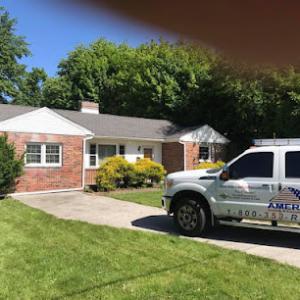
American Roofing & Remodeling Warminster
(800) 353-7663 www.americanroofremodel.net
Chalfont, Pennsylvania
4.9 from 29 reviews
American Roofing & Remodeling Warminster has over 21 years of experience providing top-notch roofing, gutter, and siding services in Warminster, PA. Our team of expert roofers is dedicated to delivering high-quality workmanship for both residential and commercial properties. From roof installations and replacements to gutter and siding services, we offer reliable solutions to protect your home or business. As a trusted roofing contractor in Warminster, PA, we pride ourselves on professionalism and customer satisfaction. Contact us today for a free estimate and let us help you with all your roofing, gutter, and siding needs!
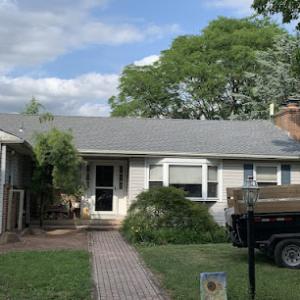
One Day Roof
Chalfont, Pennsylvania
5.0 from 17 reviews
One Day Roof provides the Bucks & Montgomery County area with fast, affordable, and beautiful roofs. With over 25 years of experience in general contracting, we understand how important it is to find an honest and professional roofer. By using One Day Roof, you don't just receive a beautiful roof but also a relationship with our team!
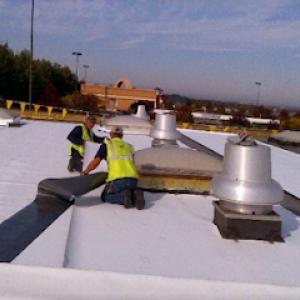
Matrix Roofing
(267) 310-2616 matrixroofing.com
200 Highpoint Dr #201, Chalfont, Pennsylvania
4.8 from 25 reviews
Matrix Roofing Systems, Inc. is a commercial roofing company serving the Mid-Atlantic, including Maryland, Pennsylvania, Delaware, New Jersey, and Northern Virginia. They offer roof replacement, roof maintenance, roof coatings, retrofit roofing, emergency roof repair, and restoration services for commercial, industrial, institutional, and multi-family clients. Call Matrix Roofing today to schedule your consultation and protect your property with quality roofing solutions.
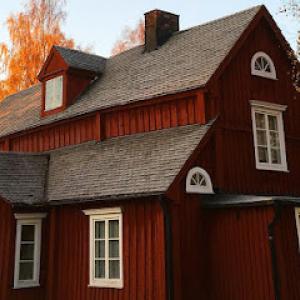
Superior Roofing & Exteriors
(215) 259-3398 www.builtbysuperior.com
Chalfont, Pennsylvania
4.6 from 9 reviews
Welcome to Superior Roofing & Exteriors, your one-stop shop for all your home exterior needs. We are a fully licensed roofing company serving Warminster, Pennsylvania, and the surrounding areas in Bucks County and Montgomery County.
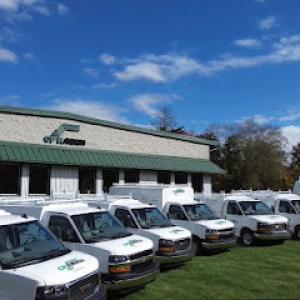
CP Rankin Inc. - Roofing Experts
(866) 766-3322 www.cprankin.com
4359 County Line Rd, Chalfont, Pennsylvania
3.8 from 26 reviews
CP Rankin is the nation's leading commercial roof contracting firm with a special focus on client satisfaction and quality -- covering rooftops from coast to coast. Whether you're a building owner or manager of a large commercial property, place of worship, apartment complex, distribution center, or homeowners' association, CP Rankin will help you get the BEST return on your roofing investment through quality, experienced workmanship, high performance roofing materials, and the best industry warranties. We are committed to bringing our customers the highest quality service at the most cost-effective prices around.
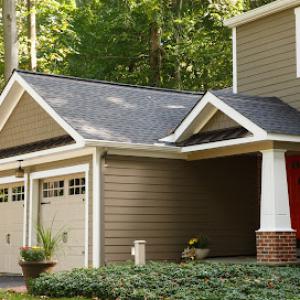
Eiseman Exterior Experts
(215) 345-9159 www.eiseman.biz
Serving
4.7 from 105 reviews
A full-service contractor specializing in roofing and exterior remodeling, Eiseman Construction has served residential clients across Pennsylvania and New Jersey for close to 60 years. From its headquarters in Doylestown, Pennsylvania, Eiseman provides services for a variety of projects, from residential housing and multi-family townhouses to historic repairs and renovations. Eiseman has got you covered, always.

Tufano & Sons Roofing
(215) 645-2964 www.tufanoroofing.com
Serving
5.0 from 212 reviews
Tufano & Sons Roofing provides roofing, siding, and gutter services in Philadelphia, Bucks, and Montgomery counties.
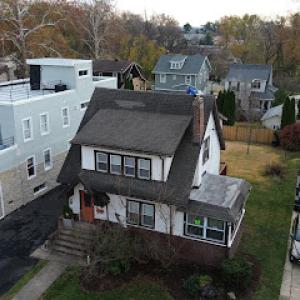
All States Roofing Contractors
(267) 973-3778 www.allstatesroofingcontractors.com
Serving
5.0 from 20 reviews
All States Roofing Contractors specializes in roofing, siding and gutter systems for both commercial and residential properties.
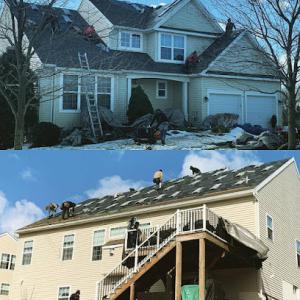
Hulton Contracting
(877) 766-3760 www.hultoncontractinginc.com
Serving
4.7 from 92 reviews
Hulton Contracting is a family owned business. Our team is fully trained with years of experience. At Hulton Contracting we pride ourselves on the customer relations we establish, high quality of our work, and attention to detail. There is never a job too big for us! From a complete home remodel that includes new roofing and new siding to installing windows, skylights and gutters, we are the team for you!
GP Roofing & Gutters
Serving
5.0 from 59 reviews
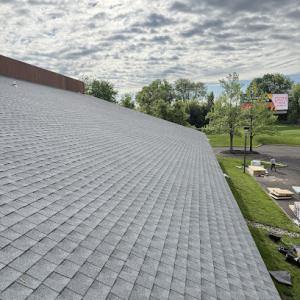
Your Roofing & Gutter Experts in Doylestown, PA Beyond the roof’s practical purpose, your roof can also make a statement about who you are and what you value. It can be a beautiful addition to your home’s aesthetic, enhancing its curb appeal and adding value to your property. That’s why at GP Roofing company, we believe that a great roof is more than just a functional necessity – it’s a source of inspiration. We’re passionate about roofing, and it shows in everything we do.
William Penn Roofing
(215) 977-7663 williampennroofing.com
Serving
4.9 from 127 reviews
Need reliable roofers in Doylestown, PA? William Penn Roofing is the leading roofing company serving Montgomery County and Eastern PA. We're experts with over 20 years in the field, offering professional roofing services such as roof repair, roof replacement, and new roof installation. Serving Doylestown and Bucks County, we provide free estimates for residential and commercial roofing projects. Not all roofing contractors in Bucks County, PA, are on the same level. With 20 years of experience, you can trust our Doylestown roofers to protect and increase your building's value and curb appeal. For your next home improvement project, rely on a professional roofing company. Reach out and let us exceed your expectations!
Restore Roofing
(267) 263-2262 www.restore-roofing.com
Serving
5.0 from 55 reviews
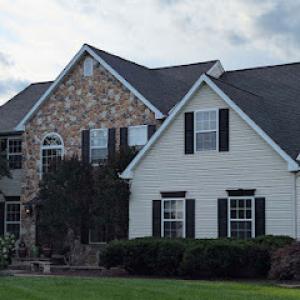
Full service residential & commercial roofing contractor with expertise installing all types of roofing systems. We specialize in total roof replacement with a strong focus on residential work. We serve Bucks County, Delaware County, Montgomery County and Lehigh County.
In Chalfont, most re-roof projects require a building permit rather than treating replacement as informal maintenance. This isn't just bureaucratic red tape-it's a guardrail against frozen-cycle damage, leaks, and later failed inspections that can cost you more time and money. Starting with a permit means the work is reviewed for how venting and underlayment interact with the Bucks County climate, house age, and local roofing quirks. If the permit isn't pulled, you risk a stop-work order and a mess of penalties that can complicate getting your project finished before the next freeze-thaw cycle.
Before any shingle is stripped or a nail is driven, local plan review will zero in on venting, underlayment, and code compliance. Venting matters especially in older suburban homes where attic space may be tight or existing ridge and soffit vents are not up to current standards. Underlayment gets a careful eye because Chalfont experiences freeze-thaw cycles that stress seams and penetrations. A reviewer won't rubber-stamp changes that leave drainage or moisture management to guesswork. Be ready to adjust attic ventilation paths, add or reconfigure venting, and select underlayment that meets or exceeds current requirements for class and installation method.
Inspections in Chalfont happen during and after the job. The initial check typically occurs once roof recovery is underway, confirming that the permit is posted and visible at the job site, and that the plan aligns with on-site conditions. Mid-project reviews ensure fasteners, nailing patterns, and flashing meet code, especially around chimneys, dormers, and valleys where snow load and wind gusts can amplify failures. A final inspection confirms that the venting, underlayment, and overall installation integrate properly with the home's envelope and climate demands. If anything is out of spec, delays or rework can push a project well into the next maintenance window, which is precisely when winter damage risks rise.
The permit must be posted at the job site and remain there until final sign-off. This visibility isn't decorative; it signals to inspectors and neighbors that the project is legitimate and proceeding under the agreed plan. If the permit is withdrawn or not visible, a contractor may face penalties or de-prioritized inspections, which can extend exposure to weather during the re-roof. Keeping the site tidy and accessible to inspectors helps prevent miscommunication and keeps the project moving in a timely, compliant fashion.
After a Bucks County storm, residents in this area often see roofing concerns surface quickly as wind-driven debris and hail test older shingles and underlayment. Your insurer will treat the roof as part of the overall home system, and coverage hinges on the policy language rather than mood or memory. Since the neighborhood mix includes older suburban homes with varied venting and underlayment configurations, adjusters will scrutinize how the roof was installed and how it's been maintained. Expect questions about roof age, previous repairs, and signs of prior storm impact that could affect whether a claim is approved or paid in full. In this landscape, a straightforward claim can become complex if the roof angle or valley work doesn't align with what the adjuster expects for a storm-damaged diagnosis.
Adjusters commonly request photos and evaluations of wind or hail impact. Prompt documentation becomes crucial after Bucks County storm events, when the team is sifting through multiple properties in a narrow window between weather events. Take high-resolution photos from ground level and from the attic if accessible, focusing on arching curls in shingles, lifted edge tabs, missing granules, and any compromised underlayment visible around eaves, ridges, and vent flashings. Note dates and times, and keep a simple log of observed changes, especially after ongoing freeze-thaw cycles that accelerate damage. If a roof has already shown soft spots or water staining inside the attic, capture those moments quickly-these details can steer the claim toward either repair or replacement, depending on the policy's language and the extent of deterioration.
Because coverage terms and deductibles vary by policy, Chalfont homeowners need to compare repair-versus-replacement decisions against actual claim language rather than assuming full storm coverage. Some policies distinguish between cosmetic hail hits and structural damage, while others tie payouts to specific wind speed thresholds or documented impact. When a storm is followed by a rapid thaw and fluctuating temperatures, check how your plan defines damage caused by freeze-thaw cycles versus immediate storm effects. If the roof shows widespread granule loss, curling shingles, or compromised underlayment, base your next steps on documented evidence and the exact wording of repair allowances, exclusions, and endorsements. In practice, that means organizing a clear file of photos, notes, and any independent evaluations to present to the insurer, so decisions reflect the precise language of coverage rather than assumptions about what "should be covered."
Connect with contractors who help homeowners navigate the claims process from damage assessment to final approval.
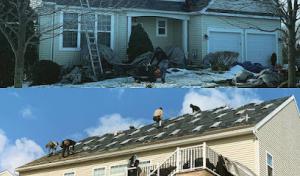

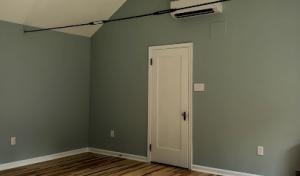
Skylight penetrations are a frequent service item for local contractors, and the reason is plain to see in winter. The combination of Bucks County freeze-thaw cycles and humid summers stresses the sealant and flashing around skylights more than nearby field shingles. In older homes with shallow roof pitches, skylight flashing can pull away sooner, letting water travel along the flashing seam before it reaches the interior. Inspect skylight seals annually, focusing on the corners where condensation can migrate between the curb and the roof deck. When a leak appears after a thaw or during a late-winter storm, start with the flashing-look for lifted metal, cracked sealant, or gaps at the curb pan. Replace any failing sealant with a flexible, weather-rated product and reseal the curb edge to prevent further intrusion.
Chimneys are a meaningful local signal in southeastern Pennsylvania's housing stock, where flashing transitions often outlive the field shingles and age differently. Because chimney flashings sit at a boundary between masonry and roof, they are especially prone to deterioration as mortar joints settle or crack. In Chalfont's freeze-thaw cycle, water can enter through cracked flashing or through misaligned counter-flashing long before a visible water spot appears on ceilings. Inspect the stepping and apron flashing at least once per fall and after heavy storms. If rust or blistering metal shows, or if the chimney cap or mortar joints are loose, plan a targeted flashing repair or replacement before spring rains set in.
Freeze-thaw damage tends to surface in winter and early spring, when water under pressure finds weak spots around penetrations. Pay attention to attic signs of moisture near skylights or chimneys after a cold snap or rapid warm-up. A quick attic check can catch a slow drip before it becomes a ceiling stain. In older homes, pay particular attention to any soft spots around the skylight curb or along the chimney step-flashing.
Keep exterior drainage clear around skylights and chimney sides to reduce ponding near the flashing. Use a pry bar cautiously to check for loose or lifted flashing; do not force materials that could cause more damage. Clean observed debris, reseal where needed, and replace worn flashing components with corresponding flashing styles that fit Chalfont's typical rooflines. If multiple patches are needed or if the chimney mortar joints show significant cracking, coordinate a flashing overhaul with a professional to ensure a watertight transition.
Find contractors experienced in skylight installation, flashing, and leak repairs to bring natural light into your home.

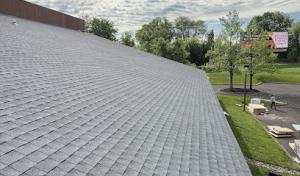
Flat and low-slope roofing is an active specialty in this market, even though pitched residential re-roofing dominates overall. In a neighborhood built for shade and tree-lined streets, low-slope sections-porches, extensions, and daylighted spaces-face unique challenges. The local wet springs combined with repeated freeze-thaw cycles mean membrane wear can advance more quickly than on steeper roofs. Drainage performance becomes a critical factor in Chalfont, where standing water and winter icing can accelerate coatings and membranes. When a low-slope area is planned or retrofitted, matching the roof system to the seasonal realities helps minimize early maintenance and unexpected leaks.
Low-slope systems here are commonly built with single-ply membranes or modified bitumen, chosen for their seam integrity and long-term resistance to moisture. A dedicated coating can extend service life on select low-slope sections, porches, or additions where a complete re-cover isn't immediately necessary. The coating approach is useful in tight spots where the original membrane shows minor wear but still has sound attachment. When considering coatings, aim for products that offer UV stability, good elasticity, and compatibility with the underlying substrate. In areas with intermittent foot traffic or planters, specify a non-skid top coat to preserve safety and performance.
Drainage design cannot be an afterthought on flat and low-slope roofs. In Chalfont's climate, even small deviations in slope or poor scuppers can allow standing water to linger after a rain. Plan for clear, unobstructed flow toward gutters or internal drains, and verify that snow and ice loads won't create damming at transitions or parapets. Regular visual checks after storms help detect early ponding, exposed fasteners, or membrane edge separation. For porches or added low-slope zones, ensure terminations are well sealed and protected from seasonal freeze-thaw cycling, as those details influence long-term performance more than larger, sun-exposed roof areas.
Low-slope sections near chimneys, skylights, or roof-to-wall junctures require robust flashing details. In this market, high-quality sealants and properly integrated edge metals reduce the risk of ice damming and wind-driven uplift. Consider a layered approach: durable edge protection, reinforced seams, and compatible adhesives that hold up through Chalfont winters. When in doubt, prioritize flashing continuity over marginal membrane coverage, since a small edge fault can magnify during freeze-thaw events.
Find specialists in TPO, EPDM, and built-up flat roofing systems for residential and commercial properties.
Matrix Roofing
(267) 310-2616 matrixroofing.com
200 Highpoint Dr #201, Chalfont, Pennsylvania
4.8 from 25 reviews
All States Roofing Contractors
(267) 973-3778 www.allstatesroofingcontractors.com
Serving
5.0 from 20 reviews
The local market is heavily oriented toward re-roofing, so homeowners in Chalfont are usually comparing replacement experience rather than new-construction specialization. When talking with contractors, focus on their track record with tear-offs, deck inspection, and underlayment choices on aging homes similar to yours. Ask for recent projects in neighborhoods with similar roof lines and exposure to Bucks County winters. Look for firms that can demonstrate a clean transition from old to new layers without leaving a mess behind.
Quick response and thorough cleanup are especially prominent local hiring priorities, reflecting how homeowners here value fast scheduling and job-site control after storms and tear-offs. Check expected timelines for a typical re-roof, and confirm how they handle tarping, debris containment, and post-work site tidying. A reliable crew should be able to mobilize quickly after a storm, protect landscaping, and return for a final debris sweep within a day or two. Ask about their on-site supervisor's availability during the project and how calls or updates are handled if weather disrupts the schedule.
Long-established, family-owned, and manufacturer-certified firms all have a visible presence in the area, which makes warranty terms and installation credentials meaningful comparison points. Request current manufacturer certifications for underlayment and any selected roofing system, plus written warranty details that cover labor and materials. Inquire about the crew's training program, lead-worker qualifications, and whether the company assigns the same crew for the duration of the project. A firm with clear credentialing often translates to more predictable performance on a Chalfont roof that endures freeze-thaw cycles and heavy snows.