
Last updated: Apr 19, 2026
Lynbrook sits on Nassau County's South Shore, where coastal nor'easters can push wind-driven rain under aging shingles and flashing details. Those gusty Pacific-influenced storms don't just test the roof for surface leaks; they press moisture against every seam, vent, and edge. When shingles are past their prime or flashing has aged, the wind can funnel water under the surface, finding weakened spots to creep into attic spaces, decks, and ceilings. The result is a slow, creeping moisture problem that undermines deck boards, underlayment, and even the interior finish if left unchecked. You often won't see active drips during a mild shower, but the wind-driven spray can saturate hidden corners and overload the roof deck over time. In this climate, the goal is to reduce opportunities for water to get under layers before the next storm arrives.
The village's cold winters and humid summers create repeated wet-dry cycling that accelerates granule loss, flashing corrosion, and deck moisture problems. Asphalt shingles shed granules faster under freeze-thaw cycles, and metal interfaces can oxidize where salt air meets moisture. Over time, granule loss makes shingles less able to shed moisture, while corroded flashing becomes a preferred path for water intrusion during heavy rain. Even surfaces that look sound from a distance can harbor micro-damage-loose fasteners, hairline cracks in sealant, or worn step flashing at transitions. Those small failures multiply with every passing storm, especially when the roof sits near the edge of a typical Lynbrook lot where wind can whip along siding and overhangs, pulling moisture toward vulnerable seams.
Spring and fall storm periods are especially relevant locally because they combine heavy rain with strong winds, increasing leak calls and delaying replacement schedules. Those windows create a problematic loop: moisture intrusion identified in late winter or early spring converges with renewed wind-driven rain, pushing aging roofs toward urgent repairs just as contractors' schedules fill with storm-related work. Because aging roofs in this area often feature low-slope sections over porches or additions, those transitions are especially prone to trapping water and channeling it toward the deck or substrate. Planning around these peak periods-and prioritizing mitigation before the storm surge of spring and fall-reduces the risk of escalating damage and the cascade of interior moisture problems.
Start with a focused surface-and-flashings check before the next rough-weather window. Inspect shingles for curling, missing granules, or lifting at edges, and look closely at flashing around chimneys, vents, skylights, and along the eaves. Pay special attention to low-slope areas over porches and additions, where wind-driven rain often penetrates first. If you notice any gap, lift, or corrosion, address it promptly with proper sealant or flashing repair to restore the barrier. Inspect attic spaces for signs of moisture or condensation-dading, dark staining, or mold growth signal a path that needs sealing. Finally, establish a conservative maintenance rhythm that aligns with post-winter and post-storm evaluations: repeat inspections after significant weather events and before the spring and fall peak periods.
Asphalt shingles dominate residential roofs in this area, offering a practical balance of cost and ease of repair. But many homes include low-slope sections over extensions, porches, or mixed-use spaces that behave differently when wind-driven rain hits. Those low-slope areas can shed water less aggressively than the main pitched roof, so you want to keep a close eye on flashing, edge details, and any buildup where water can pool briefly during a storm. When a roof is primarily shingle, the field may be fine, yet a seam or transition from the main plane to a low-slope porch roof can become a discreet moisture path if not properly integrated.
Older or higher-end homes in this village may feature heavier materials such as slate, clay tile, or concrete tile. These choices demand attention to structural loading and how fasteners, underlayment, and substrate handle the weight over time. If a retrofit or add-on used one of these heavier products, verify that the supporting structure was evaluated for the load and that appropriate clips or battens are in place. Repairs to these materials are more specialized, and missteps around cracks, fasteners, or broken tiles can quickly create wind-driven leaks, especially where roof lines intersect with chimneys or dormers.
Skylights and chimney intersections are common trouble spots in this market, and many local contractors advertise both skylight and chimney work, signaling how frequently these penetrations develop issues. Skylight flashings can deteriorate, especially if the unit has aged or if sealants were not maintained. Chimneys introduce mortar joints into the moisture equation and can channel rain along flue openings if flashing or step flashing has degraded. Pay particular attention to the transition from vertical walls to the roof deck where the chimney sleeve meets the flashing, and inspect the skylight perimeters for signs of condensation, discoloration, or soft roofing around the perimeter.
Watch for hairline cracks along ridge and hip lines, which can widen after winter freeze-thaw cycles. Look for lifted shingles near eaves or overhangs where wind-driven rain can force water under the edge of the shingles. On low-slope sections, check for consistent drainage at the drip edge and look for sagging or uneven deck surfaces that may trap moisture longer than intended. Flashings around dormers, vent pipes, and transitions to siding are frequent leak paths; if flashing appears pushed out or corroded, moisture resistance drops quickly, especially after a nor'easter.
During dry spells, inspect the fasteners along flashing and edge metal for any looseness or corrosion. Clean debris from gutters and ensure downspouts terminate away from the foundation to prevent basement moisture flow that can accompany roof leaks. For higher-end or older homes, have a tradesperson verify the integrity of ridge caps and ensure that any transitional flashing between materials is compatible with the parent roofing product. If a roof carries a low-slope section, consider a secondary water barrier under the main underlayment and confirm that the transition from low-slope to pitched areas is sealed to resist wind-driven rain entering at the seam. Regular checks after storms help catch issues before they worsen in this coastal climate.
In this area, dry, windless periods are the preferred replacement window window for long-term performance because the climate notes specifically point to moisture-related wear and weather-sensitive installation conditions. When you're replacing a window on a roofline or a high-porch encloser, the moisture control strategy matters most. The goal is to create a tight barrier against wind-driven rain that can seep around edges during nor'easters. Choose a unit with an integrated water management system-triple-flange or flange-plus-nailed flange designs can help channel any incidental intrusion away from the interior. In Lynbrook, where pitched roofs share walls with additions and mixed-use spaces, pay attention to flashing continuity around the window rough opening and ensure there's a continuous drainage path from the sill outward.
Summer heat and humidity can affect asphalt handling and sealant performance, making timing more important here than in cooler inland markets. If sealants are applied during peak humidity, curing can be slower or uneven, compromising long-term adhesion. Plan replacements for the shoulder seasons when the humidity is lower and temperatures are moderate, so the sealants cure properly and the flashing joints sit flush without sagging or buckling as the sun shifts angle. For installations that involve roof sections over porches or low-slope areas, you want dry, settled sheathing and a stable ambient temperature to prevent misalignment as the frame settles. In practice, you'll schedule the work to avoid the hottest weeks, and you'll confirm that the interior side of the install is not exposed to rain during the curing window.
Winter freeze-thaw conditions and snow loads in Lynbrook can stress materials and complicate tear-offs, so homeowners often benefit from planning before the cold season. When you replace a window that sits on or near a roof plane, ensure the sill and surrounding framing are treated for moisture resistance and that the window unit itself has a robust gasket system to handle freeze-thaw cycles. Snow load considerations matter if the window is near trailing eaves or overhangs; verify that the new unit's exterior trim is designed to shed snow rather than accumulate it against flashing. Prioritize fasteners and screws rated for cold temperatures and use foam insulation with a high R-value around the frame to minimize drafts once the wind chill sets in. If a tear-out is required, try to schedule the project to avoid heavy snowfall, so generator-mobilized equipment can access the site without disturbing ice buildup on the roof.
Begin with an on-site assessment that maps moisture sources around existing windows, especially at roof transitions and overhang junctions. Select a replacement window with proven moisture resistance and a dependable water management system. Confirm that flashing details integrate with the existing roof flashing, and request a test closure around all mullions and sashes to ensure a tight seal. Finally, coordinate the installation window to a dry phase within the local climate window, ensuring cure times for sealants and adhesives align with the season's conditions. This approach minimizes moisture intrusion while maintaining performance through Lynbrook's distinctive weather patterns.
Get a clear picture of your project costs upfront - no commitment required.

Royal Roofing & Siding - Long Island
(516) 252-3001 www.gafroofinglongisland.com
Serving
5.0 from 26 reviews
Abraham Roofing
(516) 990-6548 www.abrahamroofing.com
23 Blake Ave, Lynbrook, New York
4.7 from 112 reviews
Located at 23 Blake Ave in Lynbrook, Abraham Roofing serves Nassau County and Queens with over two decades of expert roofing and siding services. Specializing in roof replacement, repair, installation, and more, our certified team provides top-notch solutions for "roofing and siding companies near me" searches. From tackling "roof leak repair long island" to "vinyl siding installation," we emphasize quality, safety, and customer satisfaction. As a GAF Master Elite® Contractor, we offer exceptional roof service repair and leader system installations. For prompt and professional "roofing in New York," choose Abraham Roofing—where your needs always come first.
Island Roofing
(516) 303-7663 www.islandroofingus.com
Serving
5.0 from 190 reviews
With over 25 years of proven expertise, Island Roofing is a roofing company delivering top-tier solutions for commercial, industrial, and residential projects. We serve Long Island, New York, and 30 other states in the Eastern U.S. As a reliable roofing contractor, we’re known for our use of top-grade materials, expert craftsmanship, and honest service. We handle it all, from residential roofing, commercial roofing, multi-family roofing, and preventative roof maintenance to leak repairs and emergency service. We also provide gutter installation, gutter cleaning, and gutter maintenance, all with precision and care. What sets us apart is our commitment to customer satisfaction and our relentless focus on excellence in everything we do.
Roof Eval
Serving
5.0 from 23 reviews
Roof Eval delivers professional roof inspection services based in East Rockaway and serving the whole of Long Island. With a focus on Nassau County, Specially East Rockaway and other neighborhood areas such as Bay Park, Oceanside, Hewlett, Hewlett Harbor, and Lynbrook. We are Infrared Certified, NRCIA, and CCPIA certified, bringing top expertise to residential and commercial properties. Our inspections cover forensic analysis, leak-free assurance, installation oversight, building condition checks, leak detection, and solar panel evaluation. We also offer HVAC mapping, thermal imaging, and moisture scanning for complete roof health assessments. Scheduled your virtual or in person consultations now to insure your roofing safety with us.
Rapid Roofing
(631) 801-4827 www.rapidrestoreny.com
Serving
5.0 from 81 reviews
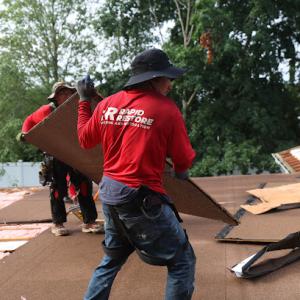
Getting a new roof or roof repair shouldn’t be a headache – that’s why at Rapid Roofing, we make it easy. As a roofing company built on trust, our expert roofer contractors deliver seamless roofing services with zero hassle and no shortcuts. Whether it’s routine maintenance or emergency roof repair, our residential and local roofers get the job done right – every time. We don’t just claim to be the best roofers, we prove it! From affordable roofing solutions to BBB-accredited roofing contractors, we’re the good roofing company homeowners rely on. A roofing business that stands behind its work, delivers results, and redefines what it means to hire top-rated roofers.
Royal Roofing & Siding - Long Island
(516) 252-3001 www.gafroofinglongisland.com
Serving
5.0 from 26 reviews
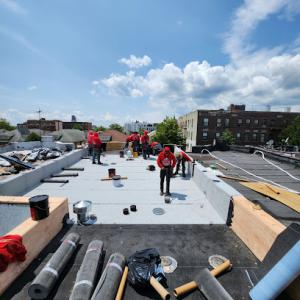
Royal Roofing Long Island, a division of Royal Renovators, provides reliable roofing and exterior services to homeowners and businesses across Nassau and Suffolk County. Our licensed and insured team specializes in roof replacement, flat and shingle roofing, leak repair, siding, gutters, and 24/7 emergency roof service. Backed by one of NYC’s most respected roofing companies, we bring trusted craftsmanship, transparent pricing, and lasting results to Long Island properties. Our mission is to protect homes and businesses with quality roofing built to last. Trust Royal to ensure complete customer satisfaction. Call Royal today for a free estimate!
John G Hubler & Sons
(516) 764-6437 johnghubler.com
Serving
4.8 from 68 reviews
Founded by John G. Hubler Sr. in 1973, we have over 45 years of experience. Our family is from Rockville Centre and we proudly operate our home office on North Park Avenue We strive to run a business that does truly care for our customers by offering professional service throughout every step of every project. Our team’s experience makes us the right choice for your home makeover. From full roof replacements to roof repairs, we are your local GAF Master Elite Roofer. Our family and roots are based in Rockville Centre, New York but our service area extends beyond the village. We are licensed in Nassau County, Suffolk County, Queens, and the Hamptons.
Strong Island Seamless Gutters
(347) 729-9020 strongislandexteriors.com
Serving
4.9 from 43 reviews
Strong Island Seamless Gutters is Long Island’s trusted contractor for roofing, siding, and seamless gutter systems. With over 20 years of hands-on experience, we deliver high-quality craftsmanship, durable materials, and dependable service on every project. We specialize in roof replacements and repairs, vinyl siding installation, and 5” & 6” seamless aluminum gutters, including soffit, fascia, and custom trim work. From small repairs to full exterior upgrades, we work directly with homeowners to ensure every job is completed on time, on budget, and built to last. Proudly serving Nassau and Suffolk County, Strong Island Seamless Gutters is built on strong work, strong values, and long-lasting results. 📞 Call for a free estimate.
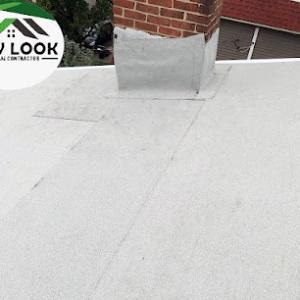
New Look Roofing
(929) 528-1881 www.newlook.nyc
Serving
4.4 from 39 reviews
We are your dependable and trustworthy go-to roofing contractor in Valley Stream, NY. With a legacy of excellence spanning years, our skilled team of roofing professionals brings unparalleled expertise to every project. Whether it’s installing a new roof or repairing a damaged one, we’re committed to safeguarding your property from the elements while enhancing its curb appeal. Moreover, we are also renowned for flawless chimney flashing installation in Lawrence, NY. With meticulous attention to detail, we seamlessly integrate flashing systems that protect your home from moisture and accentuate its architectural beauty. Count on us to secure your chimney and add a touch of elegance. So, if you need our expert assistance, call us today.
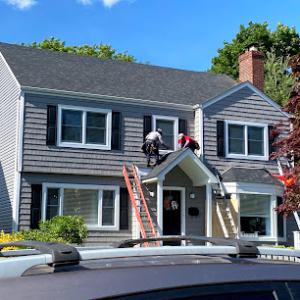
Responsible Remodeling
(516) 481-1723 www.responsibleremodeling.com
Serving
4.7 from 62 reviews
Responsible Remodeling provides roofing, siding, gutters, windows, doors, and decks to Baldwin, NY and surrounding areas.
Citywide Roofing & Gutters
(516) 726-3212 www.citywideroofingny.com
Serving
4.8 from 46 reviews
We are a full-service roofing contractor specializing in residential and commercial roofing solutions. Our scope of work includes complete roof replacements, repairs, leak investigations, preventative maintenance, and roof inspections. We work with a variety of roofing systems such as modified bitumen, EPDM, asphalt shingles, and other flat and low-slope applications. Our team is committed to quality craftsmanship, safety, and project efficiency. We take pride in providing honest assessments, durable roofing solutions, and professional service from project planning through completion. Our goal is to protect our clients’ properties while delivering long-term value and peace of mind.
Prodigy Contracting
(516) 318-0105 www.prodigycontracting.net
Serving
4.9 from 38 reviews
Prodigy Contracting is a Veteran owned business servicing Long Island, New York since 2005. As a GAF Presidential Master Elite Roofer, we offer our clients exceptional quality and a lifetime warranty. Our siding designs feature innovative looks, with rustic contemporary touches and attention to detail service. We use Drone Technology to provide a 360 degree rendering of your project before and highlight your beautiful results after. We look forward to meeting you. Let us transform your home into you Dream Home
Integrity Remodeling Roofing & Siding
(516) 373-0095 integrityremodelingny.com
Serving
5.0 from 99 reviews
Integrity Remodeling Roofing & Siding in Long Beach, NY specializes in roof and siding replacement, residential roofing and siding services designed to protect homes from coastal weather and heavy winds common to the area. Our experienced team provides durable roofing and siding solutions that address salt air exposure, storm damage, and aging shingles while enhancing curb appeal and energy efficiency. From tear-offs to complete replacements, we ensure every roof and siding project is built for lasting performance and local conditions. Homeowners across Nassau rely on our trusted roofing and siding expertise for quality workmanship, honest communication, and professional results that stand the test of time.
When you shop for a roof replacement in this area, the price ladder tracks with material type. Asphalt shingles sit at the lower end of the market, roughly $400 to $750 per square, and they're a common choice on the older, pitched stock found around the village core. Metal roofing runs higher, about $800 to $1,400 per square, offering durability against coastal wind and salt spray. If you're considering higher-end tile options, clay sits around $1,200 to $2,600 per square and concrete from $1,000 to $1,800 per square. Wood shingles or shakes come in roughly $800 to $1,500 per square, while slate leads the pack at roughly $1,800 to $3,200 per square. In practice, a straightforward re-roof with asphalt is the most affordable path, with slate or tile delivering peak long-term resilience and cost in a stormier, moisture-prone climate.
Costs in Lynbrook can rise when older homes require decking repairs after moisture intrusion from repeated coastal storms and freeze-thaw exposure. If the roof deck has softened framing, warped sheathing, or rusted fasteners, those repairs add to the square-by-square price and can extend the project timeline. In many neighborhoods, the presence of low-slope sections over porches or additions means finding compatible flashing and underlayment solutions that minimize wind-driven leaks, which can also nudge the bill upward.
Pricing can move upward during storm-driven demand spikes on the South Shore, especially when quick-response crews are booked after wind and rain events. If you're planning on replacing during a busy season or after a recent Nor'easter, expect tighter labor availability and higher day-rate quotes. A sensible strategy is to secure a bid window when the weather has remained calm for a while and crews can stage material and equipment efficiently.
To estimate a project for your home, start with at least two material quotes aligned to the same square footage. Ask for a transparent breakdown: decking work (if any), underlayment, flashing, fasteners, and waste disposal. If moisture has affected the deck, budget for structural repairs before or during the roofing work. Finally, balance the immediate cost against the long-term playbook: a higher upfront investment in a durable option can better weather the next several coastal seasons.
Don't let upfront costs delay a critical repair - these contractors offer payment plans to fit your budget.
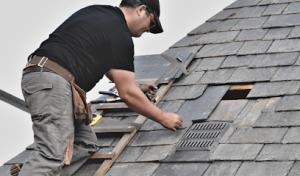
A full roof replacement in Lynbrook commonly requires a building permit issued by the Village of Lynbrook building department. Before any shingle removal or torch-down work begins, you or your contractor should file the permit application, provide project specifics, and schedule a pre-work review if the village offers one. Having the permit lined up ahead of time helps prevent delays when the crew is ready to start, especially during tight windows between storm seasons.
The village typically conducts inspections during the roofing project to verify safety, ventilation, flashing details, and that materials meet code requirements. Expect at least one inspection while the work is underway to confirm that permit conditions are being followed and that drainage and moisture management are properly addressed. Your contractor should coordinate access and ensure that the site is safe for inspectors to evaluate critical junctions, such as valleys, chimneys, and low-slope transitions over porches or additions.
A final inspection is generally required to confirm completion and compliance with all village codes. This final checkpoint is your assurance that the installation meets current standards for wind-driven rain resistance and moisture management, which are particularly important for aging South Shore roofs. Plan to have the site cleaned and all debris removed in advance so the inspector can view all critical details without obstruction. Keep copies of the permit, inspection approvals, and any manufacturer installation affidavits handy for the final signoff.
Processing times can vary with department workload and weather, which matters in Lynbrook because storm seasons can compress contractor schedules and inspection availability. If a major nor'easter or winter thaw affects the timetable, your permit review and final signoff can slide, creating tight windows for material delivery and crew deployment. Work with a contractor who can monitor village calendar notices and coordinate inspections promptly to minimize downtime between steps.
Prepare to present project documentation: permit numbers, approved plans, contractor licenses, and material specifications. Have a clear line of communication with the village inspector and the contractor to address any questions quickly. A well-documented file helps avoid delays at the final signoff and supports a smooth transition to long-term performance, especially on roofs with mixed slope areas and moisture-sensitive details.
In New York's generally stable homeowners insurance market, Lynbrook claims activity is most tied to wind and hail rather than a uniquely local catastrophe program. This means the way a storm unfolds over a South Shore roof can influence your rate and your ability to recover promptly. Older or aging roofs, mixed residential-commercial layouts near the village core, and low-slope sections over porches or additions can attract closer scrutiny after a weather event. Understanding that insurers watch these real-world conditions helps you prepare.
Because Lynbrook is in a coastal-exposed part of Nassau County, insurers may be more selective in high-wind years and may scrutinize roof age, material, and prior claims history. An adjuster will often start with the roof's visible condition, then dig into maintenance history, previous repairs, and whether flashing or penetrations were properly addressed. If a roof shows signs of neglect or accelerated aging, coverage decisions or claim settlements may reflect that context, even when tone in the surrounding neighborhood seems comparable.
Homeowners in Lynbrook should document storm damage promptly with photos, dates, repair invoices, and permit records because adjusters often request roof age and maintenance history. Take clear pictures from ground level and, if safe, from the attic or higher vantage points to capture wind-driven leaks or blown-off components. Collect all receipts for repairs or temporary protections and organize them by date. Having a coherent trail reduces back-and-forth and helps prevent explanations that could undermine a claim.
Delays in reporting damage can raise questions about causality and accuracy of claim timing, especially when roofs have ongoing wear from multiple seasons. If a late report coincides with a lull in severe weather, an adjuster may push back on coverage for pre-existing vulnerabilities. Quick, consistent communication with the insurer is essential, with emphasis on the specific storm event, wind directions observed by neighbors, and any on-site measurements you can provide.
After a wind or hail event, prioritize temporary protections to prevent further water intrusion and document everything. Keep a log of every correspondence with the insurer, including dates and names of representatives. If an inspection is scheduled, prepare to showcase maintenance records and any prior repairs to illustrate the roof's baseline condition. Understanding the likelihood of insurer scrutiny helps you and your contractor align on timely, transparent documentation.
Connect with contractors who help homeowners navigate the claims process from damage assessment to final approval.
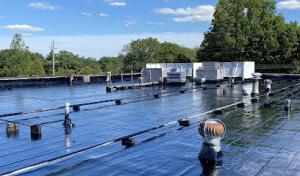
The contractor signal mix in this market shows meaningful demand for flat-roof specialists, indicating low-slope sections are a real part of the local roofing stock even where the main house roof is pitched. Homeowners should expect to encounter these areas on porches, additions, and mixed residential-commercial builds near the village core. That mix means the quality of workmanship on flat and low-slope details matters as much as the main roof.
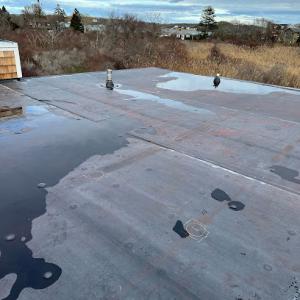
These low-slope areas are especially vulnerable in heavy rain and snow conditions because drainage problems linger longer than on steeper roofs. Water tends to shed more slowly, scuppers and downspouts can clog first, and membrane seams or transitions to higher-slope sections are common failure points. In Lynbrook's climate, it helps to treat any flat section as a potential water trap until proven otherwise.
Expect penny-sized slow leaks around edge detailing, flashing laps at perimeters, and wear at transitions where old coatings meet new materials. Pooled water on porch roofs, mismatched slope at doorways, and corrosion on metal edge flashings are frequent reminders that low-slope sections earn constant attention. When moisture penetrates, signs show up in ceilings and along interior headers first.
Restoration and coating options appear in the local market but are far less prevalent than full re-roofing and repair, so homeowners should expect a narrower specialist pool for those systems. If a coating is chosen, verify compatibility with existing membranes and confirm roof deck condition. In many cases, a targeted repair or re-flash of flashings around low-slope pockets yields longer-term reliability.
Find specialists in TPO, EPDM, and built-up flat roofing systems for residential and commercial properties.
Royal Roofing & Siding - Long Island
(516) 252-3001 www.gafroofinglongisland.com
Serving
5.0 from 26 reviews
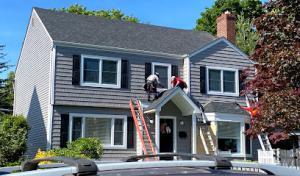
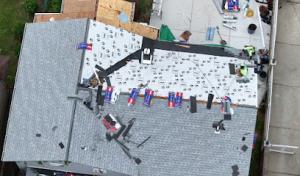
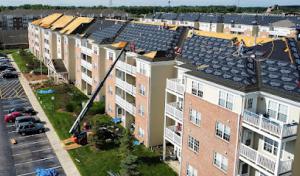
The local market strongly favors re-roofing over new construction, so you should prioritize contractors who bring teardown, replacement, and cleanup experience on occupied homes. A re-roof in a busy Lynbrook street often means coordinating with neighbors, managing ventilation, and preserving landscaping while stairs and entryways stay clear for living spaces. Look for crews who can demonstrate a past job finished with minimal disruption and lasting moisture control on older rooflines. A contractor's ability to handle mixed residential-commercial structures near the village core matters, too, since not every shop or porch roof is equal.
Quick response and cleanup are unusually prominent hiring priorities in Lynbrook, reflecting how homeowners value fast leak control and debris removal after storms. Ask for a clear plan: how soon will the crew tarp active leaks, how they isolate living areas during weather events, and how debris will be contained from the first rung to final walk-around. Confirm a written commitment for site cleanup after each day and for the final handover, including disposal of old materials and removal of every nail and shingle fragment that could foul gutters or lawns.
A notable share of contractors market long-established, family-owned, licensed, insured, and manufacturer-certified credentials, which aligns with homeowner preference for proven local operators rather than one-off storm chasers. Seek a company with verifiable references from neighbors, recognizable brand affiliations, and a history of working on occupied homes without pressure tactics. Ask about crews' familiarity with weather-driven moisture management on aging South Shore roofs, including proper ventilation, underlayment choices, and drip-edge installation that stands up to wind-driven rain.
Visit a current job site when possible to observe how the crew handles access, dust, and neighbor disruption. Request a written project plan detailing sequencing, temporary containment, and a cleanup checklist. Confirm the contractor's willingness to address potential moisture hotspots around low-slope sections and porch overhangs, where rain infiltration can linger long after the storm passes. Remember: the right choice minimizes leak time, debris, and future callbacks.