
Last updated: Apr 19, 2026
A large portion of Jersey City roofs sit low and flat or near-flat on attached rowhouses, brownstones, and mixed-use blocks. This setup means that once a single unit's roof drains poorly, the whole row can feel the impact through shared walls and coping details. The practical consequence is that drainage planning, flashing transitions, and parapet sealing are not optional extras but core elements of a durable roof. The goal is to establish a predictable drainage path that minimizes standing water on every surface and avoids cross-structure water travel along party walls.
On tightly packed blocks, every inch of slope matters. A minor misalignment at a parapet or a clogged internal gutter can create a cascade: water backs up, seeps into the wall through a crack, and travels along the shared wall into the neighboring unit. The most reliable approach is to design for positive drainage away from the party wall, with a back-of-house inspection routine that matches the roof's geometry to the building's rim. Consider a continuous drip edge and properly angled interior scuppers, paired with a deliberate water flow plan that accounts for debris loads from adjoining roofs. Routine maintenance becomes a shared obligation among adjacent owners, so agree on access and inspection intervals to keep the entire row dry.
Hudson waterfront winds and coastal nor'easters impose sustained pressure on low-slope assemblies. This stress concentrates at flashings, parapet transitions, and any roof-to-wall junctions. The typical Jersey City flat roof faces gusts that can lift loose edges, peel back flashing metal, or push water into vulnerable seams. The recommended practice is to treat every transition as a potential failure point: use corrosion-resistant flashings, ensure tight seam closures, and verify that counterflashing seats firmly against the wall. Parapet caps must be continuous and watertight, with well-seated fasteners and sealant that remains flexible in seasonal temperature swings. If a roof relies on a single internal drain, confirm the outlet sits above flood-prone zones and that the downspout path remains clear of obstructions during storms.
Low-slope roofs require reliable drainage details to resist standing water and subsequent membrane damage. In Jersey City, the combination of coastal humidity and frequent precipitation emphasizes a robust membrane system with a proven edge seal. A common pitfall is underestimating the importance of deck slope uniformity; uneven spots become water traps over time, accelerating delamination or membrane puncture near parapets. A practical approach is to grade toward primary drains with a slight bias and to verify that interior transitions to wall planes maintain a continuous seal. For mixed-use buildings, warrant a dedicated edge drain layer at commercial-grade locations where heavy drainage loads occur, ensuring the system remains clear after storm debris.
Flat and low-slope roofs on attached residential and mixed-use structures thrive when the membrane pairing accounts for wind-driven conditions and pedestrian traffic patterns on rooftops. Choose membranes with proven wind uplift resistance and durable seam technologies for the coastal environment. In high-would areas, consider reinforced membranes at critical seams and around penetrations such as mechanical curbs, vents, and skylights. An effective installation emphasizes continuous attachment with staggered seams, mechanical fasteners where applicable, and robust edge details that resist lawn-chair feedback or rooftop equipment movement in gusty weather. For parapet regions, a bonded or mechanically fastened edge system reduces the risk of edge pull-off during high wind events.
Every penetration becomes a potential leak path if not properly flashed and sealed. In rowhouse configurations, penetrations through a shared roof plane must be treated with extra care where adjacent units meet. Use integrated flashing boot systems at vents and curbs, and verify that curb flashings extend above the parapet to prevent wind-driven water intrusion. Mechanical equipment on low-slope roofs should sit on curbs with raised, sealed transition zones that permit drainage away from the wall. When possible, group penetrations to minimize seam complexity and to simplify inspection routines during rapid rain events. Document all flashing details in a roof sleeve log so future owners can trace materials and maintenance requirements.
Seasonal cycles compound the wear on flat roofs near the waterfront. Schedule semiannual inspections that focus on edge seals, flashing integrity, and drainage performance. After major storms, perform a quick walkaround to identify lifted edges or pooled water near parapets and interior walls. Keep a clear path to downspouts and interior drains, and remove debris that can back up the system. A small, targeted maintenance habit can prevent large-scale leakage scenarios that compromise multiple units or neighboring structures. In tight-row environments, coordinate with adjacent owners so that inspections and repairs align and do not leave any unit exposed to a cascading leak situation.
In Jersey City, homeowners face recurring nor'easters and coastal storm bands that can drive wind-blown rain into vulnerable roof edges and wall intersections. When the wind drives moisture into the eaves, parapets, and seam lines on low-slope and flat roofs, the clock starts ticking: water can track along rafter tails, into cornices, and find its way through even tiny gaps. The risk is not just a sudden downpour; it's a sustained push of air and water that presses against every seam, flashing, and transition. Stay alert for damp spots that appear after storm bands pass, especially along the edges where the roof meets brick or siding.
Dense urban access constraints make emergency tarping and rapid leak response critical. In tight rowhouse configurations, damaged or missing flashing at roof-to-wall junctions and along chimney or vent penetrations can unleash leaks that travel horizontally before appearing as ceiling staining. Coastal winds can pry loose sealant and displace caulk in ways that aren't obvious from ground level. If rain pours during a storm while standing water pools near a parapet, that is a cue to inspect for compromised sealant joints and raised shingles or metal edges. A temporary tarpaulin that covers the most vulnerable edge runs and a few feet onto the wall can buy precious hours, but only if it's anchored securely to resisting surfaces and under wind-rated edges.
Winter freeze-thaw cycles in North Jersey can turn minor flashing failures into active leaks as trapped moisture expands and contracts. Even small gaps can widen when moisture freezes and expands, then contracts on thaw, forcing water to advance through tiny seams. Pay attention to ceilings under attic eaves and inside closets beneath exterior walls after temperature swings. Routine checks after heavy wind events or rapid temperature changes help catch problems before they become active leaks. Exterior metal flashings that are loose or corroded should be treated as high-priority repairs, since their failure propagates along the roof edge into interior framing.
Emergency response in a dense urban footprint requires fast, decisive action. Neighborhoods with parked cars, narrow streets, and adjacent buildings limit staging space for tarps, ladders, and portable pumps. Plan ahead by identifying two accessible staging points per block-one near the front of the structure and one at the rear if available. Ensure tarps have secure, wind-resistant fasteners and that crews know how to anchor them safely without transferring weight to compromised parapets. When leaks are active, prioritize sealing the most vulnerable edge first, then address interior damage while minimizing further exposure to the interior and adjacent structures.
When you can't wait, these contractors offer fast response times to stop leaks and prevent further damage.

Elite Roofing Contractor
(201) 436-1011 eliteroofingincnj.com
35 Hudson St #2812, Jersey City, New Jersey
4.9 from 346 reviews

Elite Roofing Contractor
(201) 436-1011 eliteroofingincnj.com
35 Hudson St #2812, Jersey City, New Jersey
4.9 from 346 reviews
Elite Roofing Contractor is your local Jersey City roofing company specializing in roof inspections, roof maintenance, roof repairs, roof replacements, roof deck installations, and all exterior services! With over 20,000 roofs serviced in Hudson County, NJ and over 5,000 roof inspections completed, we are your local, trustworthy, and reliable roofing contractor. Contact us today to see how Elite Roofing can make your roofing dreams come true!
UBL Roofing
(201) 515-1617 www.ublroofing.com
302 6th St, Jersey City, New Jersey
4.7 from 167 reviews
Experienced roofing contractor located in Jersey City providing roof inspections, roof replacements, roof repairs, gutters, siding, and windows.
Roman Commercial Roofing
(917) 440-1800 www.romancommercialroofing.com
Serving
5.0 from 134 reviews
With a legacy spanning decades, Roman Commercial Roofing has been a trusted roofing contractor in the heart of New York City since 1987. This locally owned and operated business is committed to excellence, offering comprehensive services for both commercial and residential properties. Specializing in new installations, replacements, and repairs, their skilled team delivers superior craftsmanship with an unwavering focus on quality. Serving the greater New York City area, Roman Commercial Roofing prides itself on building lasting relationships and ensuring complete satisfaction for every project.
Mighty Roofing & Siding
(718) 873-1236 mightyroofingny.com
Serving
5.0 from 87 reviews
Brooklyn’s Top-Rated Roofer Contractor At Mighty Roofing, we provide expert roof repairs, replacements, and installations to keep your home safe and secure. As experienced roofers in Brooklyn, we deliver top-quality craftsmanship and long-lasting results for every project, whether it’s fixing a small leak or a complete roof replacement. ✅ Fast & Reliable Roofer Services ✅ Free Estimates – No Obligation! ✅ Brooklyn’s Trusted Roofing Professionals Don’t wait for roofing issues to get worse! Contact us today for a FREE estimate and let our expert team ensure your roof is in top condition.
Delta Roofing
(917) 900-9440 deltaroofingnyc.com
Serving
5.0 from 60 reviews
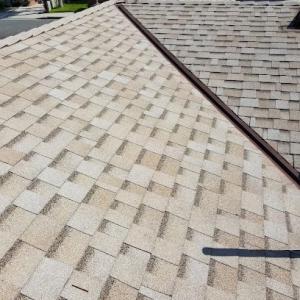
Delta Roofing - The Most Reliable Roofing Contractor in New York! With decades of experience, our roofing company commits to excellence in building and repairing residential and commercial roofs, meeting international benchmarks with precision and care. Is your roof showing signs of wear and tear? Contact Delta Roofing for a free consultation.
Downtown Brooklyn Roofing
(718) 690-9442 downtownbrooklynroofing.com
Serving
4.9 from 65 reviews
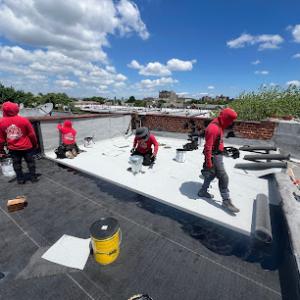
Downtown Brooklyn Roofing, esteemed as New York City's premier flat and shingle roofing contractor, takes pride in boasting the highest third-party verified reviews across the web. With decades of experience, our proficient team specializes in addressing roof leaks, and conducting flawless full replacements and installations. We extend our exceptional roofing services to the entire Downtown Brooklyn, Williamsburg, Dumbo, Brooklyn Heights neighborhoods and all areas within Kings County, ensuring your property receives unparalleled protection and aesthetic appeal. Completing roof replacements as well as roof repairs, skylights, dormers, flashing, and other roof renovations, Downtown Brooklyn roofing is ready to help. Call for a free estimate!
Royal Roofing & Siding NYC
Serving
4.9 from 96 reviews
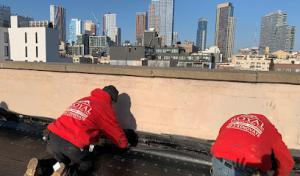
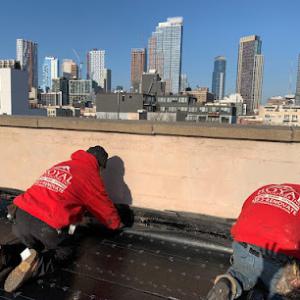
Royal Roofing & Siding NYC is Manhattan’s trusted roofing contractor, serving homeowners and businesses throughout Manhattan and the greater New York City area. Since 1988, our family-owned and operated, BBB Accredited, licensed and insured roofing professionals provide expert residential and commercial roofing services. We specialize in flat roof repairs tailored to dense urban properties, brownstone roof replacements, and EPDM, TPO, & SBS flat roofing systems. We also provide professional masonry, siding, and gutter services, as well as repairs to skylights, parapet walls, coping, and cornices. From condo skyscraper buildings to Manhattan townhomes, we do it all. We offer emergency services for urgent leaks and storm damage. Contact us.
Superior Roofing Pros
(201) 875-7282 www.superiorroofingpros.com
Serving
5.0 from 91 reviews
Superior Roofing Pros is your top choice for all roofing needs, specializing in flat roof solutions and expert roofing services. As a trusted roofing contractor, we serve residential and commercial clients looking for reliable roof repair, replacement, and maintenance. Whether you need a roofer near you for emergency repairs, a flat roof specialist, or comprehensive roofing solutions, our team is dedicated to quality and durability. We use only the highest quality materials and ensure every project is completed with exceptional craftsmanship. Choose Superior Roofing Pros for dependable, professional roofing services that safeguard your property and enhance curb appeal.
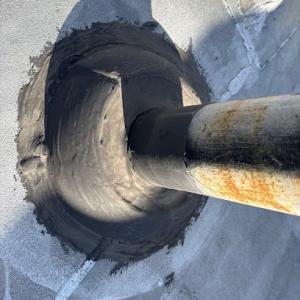
Paragon Chimney & Roofing
(646) 844-2022 www.paragonchimneyandroofing.com
Serving
5.0 from 806 reviews
Since 1994, Paragon Chimney and Roofing has been Brooklyn’s premier choice for expert home exterior and heating solutions. With a skilled team of professionals, they specialize in a full range of services, including meticulous chimney sweeping, masonry work, and comprehensive roofing installations. Paragon is committed to delivering unparalleled craftsmanship and reliable service on every project, whether it involves a shingle, metal, or flat roof. Trust their proven expertise to enhance the safety and integrity of your home's most vital systems.

Lema's Roofing & Siding
(862) 910-4588 lemasroofingandsidingcorp.com
Serving
4.9 from 63 reviews
At Lema’s Roofing & Siding, we provide expert services in roofing installation and repair, damage assessments, skylight and gutter installation and maintenance, as well as professional siding work. We serve both residential and commercial clients throughout key areas of New Jersey, including Newark, Elizabeth, Jersey City, Edison, and surrounding communities. With over 15 years of experience and a highly certified team, we ensure durable, efficient solutions using top-quality materials. Contact us today for your free estimate and discover why we're the trusted choice for roofing and siding services near you.
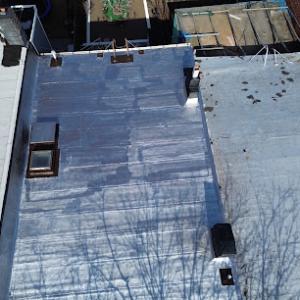
S. Elite Roofing & Construction
(718) 255-5254 www.seliteconstructionllc.com
Serving
5.0 from 69 reviews
Company providing roofing and waterproofing services.
Williamsburg Roofing
(718) 690-7084 www.williamsburgroofingny.com
Serving
5.0 from 55 reviews
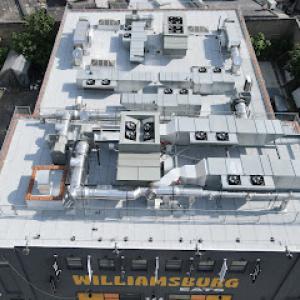
Williamsburg Roofing proudly serves Brooklyn NY and surrounding areas with expert roofing solutions built to last. With over 30 years of experience, we specialize in all types of roof replacements, flat roofs, leak repairs, waterproofing, and routine maintenance for both residential and commercial properties. Our licensed and insured team delivers high-quality craftsmanship using premium materials designed to withstand NYC’s tough weather. Whether you're dealing with storm damage or planning a full roof upgrade, we offer fast turnaround times, honest pricing, and free estimates. Trust Williamsburg Roofing for reliable service and results you can count on—done right the first time. Call us today for a free estimate!
A full roof replacement in Jersey City typically requires a building permit rather than being treated as a purely informal maintenance job. That distinction matters because once a permit is pulled, the project enters a formal review and inspection cycle, with specific checkpoints that can affect your scheduling and contractor workload. If a contractor suggests you can "wing it" or skip permit steps to save time, that impulse should raise a red flag. A replacement that isn't properly permitted can lead to compliance issues, failed inspections, and potential trouble when you try to sell or refinance.
Permit review and inspections are handled through the city's code enforcement and construction review process, with timing that can vary by workload. In practice, that means you're looking at a window where inspections are scheduled as part of the project flow, not as an afterthought. Expect a sequence: plan review, permit issuance, rough inspections during teardown and framing, then final inspections once the roof is installed. Weather windows, neighborhood construction demand, and the complexity of a mixed-use or attached-row site can push timelines longer than a straightforward house replacement. Communicate clearly with your contractor about expected milestones and any seasonal timing constraints-especially in windy months or before nor'easter tides threaten the area.
Licensed contractors are generally expected for permitted roofing work in Jersey City, which matters when homeowners compare low bids. A low bid that omits licensure, insurance, or compliance with city codes can end up costing more in delays, rework, or penalties. The city's code enforcement team will want to see workman licenses, material certifications, and site safety plans, particularly for works that neighbor multi-unit buildings or commercial frontage. Because many roofs here sit at or near sea level elevations with exposure to Hudson waterfront winds, the inspection scope often pays particular attention to proper ventilation, flashing detail, and drainage provisions. Choose a contractor who can provide a transparent permit trail: stamped plans, permit numbers, inspection reports, and a clear schedule aligned to the city's review cadence.
In dense attached housing and mixed-use blocks, access to the roof and staging space can be limited by adjacent structures, fire doors, and shared walls. Your permit path will reflect these realities, requiring careful coordination of scaffolding, debris containment, and work hours to minimize disruption to neighbors and commercial tenants. Expect the city to review drainage plans, overhangs, and edge detailing as part of the permit package, given the coastal setting and the potential for storm-driven debris. If you're replacing flat or low-slope sections, discuss with your contractor how flashing style and run-off alignment will perform during heavy rains and high winds, and ensure those choices are documented in the permit submittals. A well-documented permit trail not only keeps you compliant but also smooths the path when the inevitable weather hiccup delays a portion of the schedule.
In attached homes with limited driveway space, narrow streets, and parking constraints, the logistics of bringing materials and equipment to the roof drive labor time and, by extension, the bottom line. Debris loading on tight streets means crews may need more containment effort and staging space, which can nudge prices higher for every material type. When storms or heavy winter events slam the area, scheduling tightens up and anticipated repair windows compress; that pressure tends to push rates upward during peak periods.
Asphalt shingles remain a practical entry point for many Jersey City homes, especially where a quick, straightforward install matters. The typical cost range is about 350 to 700 USD per square, depending on access and the extent of tear-off. In older rowhomes, if the roof hides multiple existing layers, or if the decking is aged and requires reinforcement, expect the higher end of that range. The compact streets can also slow access for larger crews, adding a modest premium on projects that require additional staging or night work to avoid street congestion.
Metal tends to be favored for its durability and wind resistance, which is valuable along coastal nor'easters. Costs run roughly 900 to 1,600 USD per square. On tight Jersey City lots, the logistics of delivering long metal panels through narrow corridors and lifting onto low-slope roofs can add to labor time, often reflected in the final price. If tear-off reveals aging decking or parapet work, the price can push toward the higher end, especially when careful detailing around chimneys and flashing is needed to avoid leaks.
Clay tile (1100-1900 USD per square) and concrete tile (1000-1500 USD per square) bring long-term resilience but add weight and complexity. In dense urban settings, crane or hoist coordination for tile crews can introduce extra costs. Older homes may show underlayment or parapet issues that require mitigation, which increases both material and labor costs. Expect stiffer pricing if scaffolding, careful debris control, and wraparound drainage considerations become necessary due to the building's footprint or neighboring structures.
Wood options run about 800 to 1,200 USD per square. The narrow streets and parking constraints can complicate material transport and waste removal, especially for thicker shakes. In older neighborhoods, combined with deteriorated decking or flashing near chimneys, crews may need extra care and time, pushing costs up modestly.
Slate roofs, while durable, sit at the premium end: 1,200 to 2,000 USD per square. In Jersey City, the weight and precise installation requirements demand experienced crews and more meticulous staging, which is why slate often incurs the highest labor component. Debris management around parapets and chimneys can further influence overall pricing, particularly after winter damage events when storm debris is heavier.
Get a clear picture of your project costs upfront - no commitment required.

In Jersey City, regular wind, hail, and coastal storm activity makes the insurance part of roof repair a documentation-heavy process. This market often expects a clear trail of evidence from before the damage occurred through the after-work results, especially when wind-driven rain or repeated storm events complicate the damage timeline. The patchwork nature of attached or close-set roofs means insurance reviewers will scrutinize whether issues stem from a homeowner's structure or from a neighbor's, so precise records matter. Without solid photos and notes, it's easy for a claim to drag or for coverage questions to arise when turbines of wind and rain sweep across multiple structures in a row.
Insurers commonly want both thorough pre-work and post-work photos that establish conditions prior to any intervention and demonstrate what changed after repairs or replacements. In a dense rowhouse landscape, aerial or ladder-based perspectives that show boundary lines, alignment with adjacent roofs, and the flow of water onto shared gutter lines help prevent misattribution of damage. When storm sequences are frequent, reviewers may request timelines showing when a leak appeared, when inspections occurred, and how repairs progressed, to separate immediate storm damage from pre-existing wear. Clear labeling of each photo-date, exact location, and a brief description of the defect-speeds the review and reduces back-and-forth.
Start with a dated archive of exterior shots taken from multiple angles, including the street view and ground-level elevations, to establish the roof's footprint and surrounding context. Include further images from the ladder that show roof planes, edge details, flashing, and any visible penetrations. Label photos to indicate which damage belongs to your structure and which belongs to a neighboring unit, and annotate areas where the water path is evident on fascia and soffits. Maintain notes on weather conditions at the time of each photo to contextualize wind or hail impact, and save internal communication with the contractor-scans or screenshots of emails and work orders can become part of the claim file. If a neighboring roof shares a wall or overhang, capture the joint details and any evidence of cross-staining or water intrusion that could complicate attribution. In this market, disciplined, labeled documentation not only supports the claim, it helps avoid delays during those inevitable spring and fall nor'easters when damage timelines are tight. For best results, coordinate with a nearby roofing professional experienced in low-slope and attached systems who can guide the photo set and ensure the documentation aligns with insurer expectations.
Find local contractors experienced in assessing and restoring roofs after hail, wind, and severe weather events.
Elite Roofing Contractor
(201) 436-1011 eliteroofingincnj.com
35 Hudson St #2812, Jersey City, New Jersey
4.9 from 346 reviews

Chavez & Sons Roofing & Construction
(551) 292-7000 chavezsonsroofingconstruction.com
111 River Dr S, Jersey City, New Jersey
4.8 from 78 reviews
UBL Roofing
(201) 515-1617 www.ublroofing.com
302 6th St, Jersey City, New Jersey
4.7 from 167 reviews
In Jersey City, the front-facing pitched sections often wear asphalt shingles, but the flat and low-slope portions on rowhouses and mixed-use buildings tell a different story. Water drainage, wind-driven rain, and rapid runoffs from parapets and dormers demand a system that reliably channels moisture to the gutters and scuppers. A properly chosen low-slope assembly should emphasize a robust membrane, careful drainage detailing, and well-sealed transitions around shared walls to curb leakage during coastal nor'easters and windy autumn storms.
Asphalt shingles remain a practical choice for sloped sections because they weather well and are straightforward to repair in tight urban spaces. For low-slope roofs, especially those visible from the street over multiple units, a modern single-ply or modified bitumen membrane with a reflective top layer often performs better than a traditional shingle approach. In aging structures where the upper mass carries long service histories, slate and concrete or clay tile appear on older and higher-end North Jersey buildings, but weight and repair complexity matter more on those aging frames. If a slate or tile system is used, ensure structural assessment for load, and plan for potential partial replacements rather than wholesale rebuilds.
Metal roofing can perform well in coastal weather, offering durability against wind and salt spray. However, detailing around parapets, chimneys, and transitions is especially important on Jersey City's mixed roof geometries. Pay close attention to seam protection, proper fastener sealing, and integration with drainage elements at every parapet intersection and rooftop projection. Practically, a well-detailed metal system should address edge metal, flashings, and any balcony or rooftop access points to prevent moisture intrusion after winter storms.
The most popular roofing material in the US. Find pros who install, repair, and replace asphalt shingles.
S. Elite Roofing & Construction
(718) 255-5254 www.seliteconstructionllc.com
Serving
5.0 from 69 reviews
Chimneys are a frequent roofing concern in Jersey City because older attached homes often have masonry penetrations that need coordinated flashing work. Start with a close inspection of the chimney flashing where brick or stone meets the roof. Look for lifted or cracked mortar, deteriorated lead or alloy flashing, and gaps between the chimney and the roof deck. In a tight rowhouse, wind-driven rain can push water under poorly sealed joints, so prioritize counterflashing over the masonry seam and ensure the base flashing is tied into the roof's membrane. When you or a pro re-flash, use a compatible sealant and ensure the chimney step flashing transitions smoothly into the base flashing. If the chimney stack shows signs of spalling or brick deterioration, address it before finishing the flashing work to avoid repeat leaks. Maintain a clean chimney crown and keep vegetation away from the flashing line, as roots and moss can worsen the seal over time.
Skylight leaks can be harder to diagnose on Jersey City homes where low-slope rear sections and additions meet older roof framing. Begin with a careful inspection of the skylight curb, flange, and sealant joints. For low-slope areas, ensure a continuous waterproof membrane under the curb and that flashing steps up and over the curb without creating a dip at the periphery. Pay attention to any separation between the skylight frame and the curb, and to drainage around the opening-backed-up water here travels quickly into attic spaces. If an old skylight is in play, consider upgrading to a curb-mounted unit with a properly integrated flashing kit and a cap that sheds wind-driven spray. Regularly check for condensation on the interior surface after heavy rains, which can signal a marginal seal or a compromised roof deck connection nearby.
Parapet walls and coping details are a recurring weak point on urban rooflines common throughout Jersey City. Inspect coping caps for cracks, spalling, or loose bonding mortar, and verify that the sealant at the top edge remains flexible and watertight. Water infiltration often travels along the coping joints into the parapet wall, so keep an eye on vertical joints and any penetrations through the parapet for signs of staining or efflorescence. When repairing, install a continuous membrane beneath the coping, use compatible sealants, and reseat or replace damaged coping stones as needed. At transitions where parapets meet roof slopes or HVAC curbs, ensure proper step flashing and flashed-to-deck sleeves to guard against rising damp and wind-driven leaks. Regular maintenance after heavy storms helps prevent deterioration before it spreads into attic spaces.
Find contractors experienced in skylight installation, flashing, and leak repairs to bring natural light into your home.
Elite Roofing Contractor
(201) 436-1011 eliteroofingincnj.com
35 Hudson St #2812, Jersey City, New Jersey
4.9 from 346 reviews
Chavez & Sons Roofing & Construction
(551) 292-7000 chavezsonsroofingconstruction.com
111 River Dr S, Jersey City, New Jersey
4.8 from 78 reviews
UBL Roofing
(201) 515-1617 www.ublroofing.com
302 6th St, Jersey City, New Jersey
4.7 from 167 reviews
On dense attached homes and mixed-use buildings with flat or low-slope roofs, the decision to replace hinges on how long the current system has left. In this climate, constant exposure to Hudson waterfront winds and coastal weather accelerates wear at the edges and around penetrations. If shingles or membranes show persistent ponding, streaking, or blistering after a full maintenance cycle, plan for replacement sooner rather than later. The goal is to avoid a sudden failure during a nor'easter, when water finds every seam and slow-drying conditions make leaks harder to pinpoint from within attic or ceiling spaces.
Winter snow and ice in Jersey City can delay tear-offs and make leak diagnosis harder on flat and low-slope roofs. If the roof is approaching the end of its service life, expect a window where crews stall due to snow buildup or frozen substrates. Prioritize arranging work when there is a dry period with stable temperatures, so tear-off and installation can proceed without the risk of ice dam formation and creasing in insulation. When scheduling, build in a buffer for temporary leaks that might surface in the first heavy snowfall after completion.
Spring rain and nor'easters can interrupt drying time and scheduling, which is especially relevant for older roofs already holding moisture. A roof that held moisture through winter will take longer to dry and cure after replacement. Plan for a warmer, drier stretch in late spring to finish installation and allow sealing products to cure fully before the next round of seasonal storms. If a replacement is needed during spring, ensure site protection for high winds and shower events that can affect membrane integrity.
Autumn wind events and pre-winter demand often make early fall a strategic time to finish replacement before freeze-thaw stress returns. With attic spaces often more tolerable and outdoor conditions milder, crews can complete under more predictable weather patterns. Finishing in this window reduces exposure risk to cold, wet conditions that complicate sealing and curing. If the roof shows accelerated aging signs and a fall window is available, locking in work before winter can minimize disruption caused by weather-driven delays.
When hiring for a roof access project on flat or low-slope roofs, prioritize contractors who have shown consistent work on attached homes and mixed-use buildings where staging, debris control, and neighbor protection are built into the plan. Ask for recent projects with similar roof lines, proof of safe access routes through hallways or exterior stairs, and clear methods for protecting shared walls from falling debris. During the quote, require a detailed staging diagram that shows drop zones, wheel paths, and storage areas for tools and materials. In a dense rowhouse cluster, crews should arrive with compact equipment and plan to minimize sidewalk obstruction.
Cleanup matters more in dense neighborhoods because debris management affects sidewalks, parked cars, and adjacent properties. Insist on daily cleanup at the end of each shift, with debris bags clearly labeled and removed promptly. Request a policy for tarp usage to contain dust and shingle fragments, and insist on securing loose materials at the end of each day. Confirm who is responsible for protecting neighboring properties and who handles damage claims if a misstep occurs. A written cleanup protocol helps prevent disputes when the project runs through multiple basements or access points.
Quick-response crews are especially valued locally because active leaks in attached buildings can spread damage fast across finished interiors. Look for contractors who advertise 24/7 or same-day contingency crews for emergencies, and verify their on-call contact methods. Ensure access arrangements are clear, including elevator or stairwell restrictions, material hoists, and entry permissions for residents. Finally, establish a point of contact for notifications about weather-related delays or shifts in work order to keep neighbors informed and minimize disruption during nor'easters and coastal winds.
Ask for a concise site access plan and current insurance certificates to verify coverage during high-wind months.