
Last updated: Apr 19, 2026
Linden's hot-summer, cold-winter climate creates repeated freeze-thaw stress that can open vulnerable roof details after winter and again during spring rains. Small gaps around vent flashings, chimney crickets, and along the roof-to-wall transitions are the first places leaks show up when temperatures swing from freezing nights to thawing days. In older pitched homes and mixed-slope roofs, shingle gaps, lifted edges, and cracked sealant are common failure points after a long winter. You'll see more moisture intrusion along the eave line and near valleys where snowmelt concentrates. The critical takeaway is that once a freeze cycle finishes, any persistent moisture becomes a pathway for leaks if flashing or sealants were stressed by the cold. Regular checks after the first spring rain are essential, especially on roofs with a history of ice dams or past repairs that may not have addressed underlying flashing integrity.
Regular precipitation combined with autumn wind events raises the risk of edge damage, lifted shingles, and water entry at flashing transitions. In this area, wind-driven rain can peel back edges, especially on low-slope sections and roof-to-gutter interfaces. Edge metal flashing that has corrosion or loose fasteners provides a convenient entry path for water during heavy downpours. When shingles lift at the edges, wind and rain can corrode the underlayment and reveal vulnerable seams along dormers, skylights, and chimney skirts. The highest-risk locations are where two roof planes meet, where valleys intercept gutters, and where old sealants have dried out. Expect more frequent leaks to occur inside soffits and attic spaces that aren't properly vented or insulated to handle rapid moisture shifts.
The local contractor market shows especially strong demand for emergency repair and storm damage work, indicating that active leak response is a major homeowner concern in Linden. When a storm hits or a warm spell follows a cold snap, leaks can surge quickly, so timely triage is essential. A common pattern is a rapid need for temporary tarping and rapid securement of flashing while permanent repair parts are sourced. Because storm season coincides with peak repair demand, coordinating a rapid assessment and a prioritized repair plan can limit interior damage and shorten downtime. Those who know where to look-around chimneys, vents, and transitions-are better positioned to guide responders and protect the home during this high-risk window.
You should perform a methodical roof-and-attic check after heavy rains and during spring thaw cycles. Look for damp insulation, water staining near flashing, and any new shingle lifts along edges. Keep an eye on valley intersections where snowmelt concentrates, as well as around dormers and skylights. If water entry is noticed, address the easiest entry point first-often a lifted shingle edge or degraded sealant-while scheduling a professional inspection for a more comprehensive flashing and underlayment assessment. Proactive, targeted maintenance after each major freeze-thaw cycle and before the next storm season is your best defense against repeat Linden leaks.
Linden housing often blends main pitched roof areas with low-slope porches, additions, bays, or rear extensions that age at different rates. That mismatch creates a common trouble spot where a single roof surface can't keep up with shifting framing, settling, and the freeze-thaw cycles the North Jersey climate dishes out. The transition zones-where a steep section meets a flat or shallow slope-are prime for resins drying out, fasteners loosening, and flashing failing. In practice, plan for extra-focused inspection along any edge where two roof planes meet, and consider reinforcing with detail work at the transition rather than a generic cap job.
The local signal mix shows flat-roof specialization is materially active, which means low-slope sections are a meaningful portion of replacement and repair projects. Flat roofs in Linden often serve porches, additions, or rear extensions that get limited sun and more snow load in winter. That combination invites ponding moisture and accelerated aging of membrane seams. When you're evaluating a mixed-slope roof, treat the flat portions as integral to the system, not as afterthought add-ons. Ensure your contractor provides a cohesive plan that ties the flat roof into the main roof with continuous flashing, proper drain placement, and compatible edge details.
Flashing at chimneys, wall intersections, and roof-to-addition tie-ins is especially relevant locally because chimney-related services are also common among Linden contractors. Chimney re-roofing often reveals compromised step and counter-flashing, especially where brickwork has expanded or settled over decades. At wall penetrations, look for misaligned or aged step flashings and corner flashing that can trap moisture against sheathing. Roof-to-addition tie-ins are another frequent failure point, where different roof planes create a narrow seam that's easy to overlook during routine maintenance. A practical approach is to schedule a targeted flashing inspection during and after any major weather event, and to insist on tail-end flashing details that extend one inch under any vertical surface to prevent capillary intrusion.
Older Linden homes typically present a patchwork of materials and fastener patterns. The freeze-thaw cycle places extra stress on nails, sealant beads, and the lap joints on asphalt shingles or metal edges. Storm-driven gusts can peel back flashing or lift edge courses on marginally-secured sections. When planning repairs, don't assume a single material or detail will fix all trouble spots. Demand a phased assessment that confirms underlayment condition, edge metal integrity, and the continuity of drip edges across both steep and flat segments.
If a roof has mixed slopes, establish a simple, repeatable inspection routine. Start at the transition zones and work outward along the ridge lines to the eaves, checking for loose fasteners, lifted shingles, or blisters in flat sections. After heavy rain or thaw, walk the attic (if accessible) for signs of moisture intrusion around penetrations and rafter tails. In a Linden home, expect chimney flashing to need periodic refreshment and wall intersections to require careful resealing when seasonal temperature swings are severe. A steady cadence of targeted inspections helps catch leaks early and keeps the system functioning through the toughest months.
Find specialists in TPO, EPDM, and built-up flat roofing systems for residential and commercial properties.
Alpha Home Roofing
Serving
5.0 from 94 reviews
Alpha Home Roofing We have over 16 years of experience in the roofing business. We love what we do and always pay close attention to everything we do. Making sure that the Customer is always satisfied with the finished work.
RSB Construction & Roofing
(908) 402-1835 www.rsbconstructionllc.com
Serving
4.9 from 79 reviews
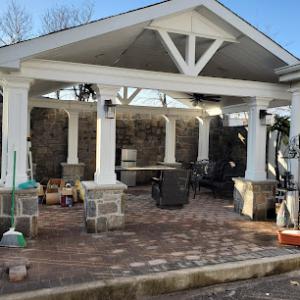
RSB Construction, located on 420 Maple Ave, is the premier roofing contractor in Elizabeth, NJ, with over 35 years of experience under owner Alvaro's expert leadership. Serving Hudson, Union, Bergen, and beyond, our certified team specializes in roof repair, residential and commercial roofing, roof replacement, and installation. Whether you need asphalt, metal, or shingle roofing, we offer customized, affordable solutions backed by lifetime labor warranties and stellar customer service. Trust RSB Construction for top-quality workmanship, from roof leak repairs to complete installations. Contact us today for reliable, precision roofing services tailored to your needs.
Nunez Home Improvement
(908) 992-9261 www.nunezhomepro.com
Serving
4.9 from 142 reviews
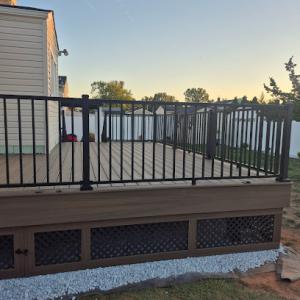
Nunez Home Improvement is a licensed and insured roofing contractor serving Elizabeth, Union County, and surrounding areas in New Jersey. We specialize in roof replacement, roof repair, storm damage roofing, and emergency roof repairs. Our team provides free roof inspections, honest estimates, and high-quality workmanship using top-grade materials. Whether your roof has leaks, wind damage, or needs a full replacement, we deliver reliable and professional service every time. Call today for a free roof inspection and También atendemos en español. Ofrecemos inspecciones gratuitas de techos, reparaciones, reemplazo de techos y trabajos por daños de tormenta en Elizabeth y Union County
New Amerimex Roofing
(347) 213-6756 www.newamerimex.roofing.com
Serving
5.0 from 100 reviews
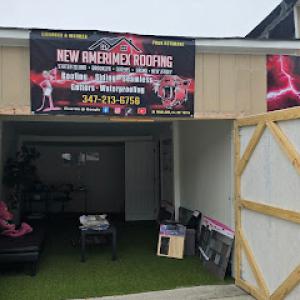
new amerimex roofing llc was founded in 2019 it is a family business that seeks to please each of its clients by providing them with an excellent job you can call robert at 347 213 6756 to make your appointment we make free estimates we are experts in shingles tpo epdm slatestone and rn all types of flat roofing .... in advance we thank you for the support and confidence you give us in doing the work
Top Supreme Construction Roofing & Decking
(201) 749-7627 topsupremeconstruction.com
Serving
5.0 from 57 reviews
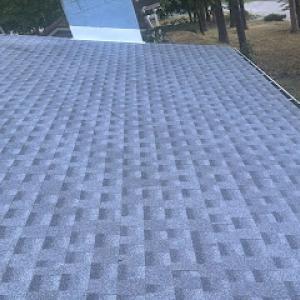
Top Supreme Construction is your trusted source for affordable roofing and construction services in New Jersey. We offer a variety of services, including roof leak repairs, chimney repairs, seamless gutter installations, masonry restoration, stoop and step repairs, retaining wall installations, and custom deck building. We pride ourselves on quality craftsmanship and outstanding customer service, providing free estimates and 24/7 roof repair services, which includes roof leak repair, collapsed chimneys, and roof tarp installation.

Herts Roofing & Construction
(908) 206-4240 hertsroofingnj.com
Serving
4.9 from 114 reviews
Located at 20 Commerce Drive Suite 135, Herts Roofing & Construction is your trusted local roofing contractor, specializing in comprehensive roofing services. Whether you need expert roof repair, seamless roof replacement, or efficient new roof installation, our skilled team ensures exceptional quality for every project. We cater to both residential roofing needs, offering affordable new roof costs and detailed roof inspections. Our experience extends to various materials, including durable metal roofing and versatile flat roofing, adeptly addressing any roofing challenge. For urgent needs, our emergency roof repair services are always ready. Choose Herts Roofing & Construction for unrivaled craftsmanship and reliability.
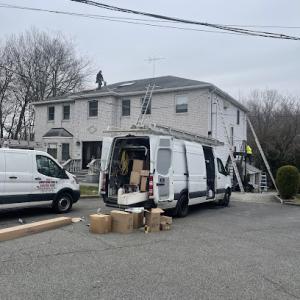
Mark’s Roofing & Construction
(917) 498-6591 marks-roofing.com
Serving
4.7 from 50 reviews
At Marks Roofing, we specialize in delivering expert roofing services in New York and New Jersey with over 24 years of trusted experience. We offer comprehensive residential and commercial roofing solutions, including expert repairs, replacements, and storm damage restoration, as well as gutters, siding, and windows. As a family-owned business, we are dedicated to honesty, affordability, and superior craftsmanship. Our services include 24/7 emergency support, free roof inspections, free estimates, and precise drone inspections. Whether you need routine maintenance or urgent repairs, Marks Roofing delivers reliable, affordable solutions done right the first time. Contact us today!
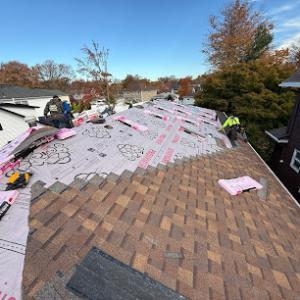
Calco Roofing / Seamless Gutters
(917) 226-0113 www.calcohome.com
Serving
5.0 from 174 reviews
We specialize in high-quality roofing and seamless gutter solutions for both residential and commercial properties. With years of experience and a reputation for excellence, our licensed and insured team is committed to protecting your home with expert craftsmanship and durable materials. Whether you need a full roof replacement, minor repairs, or custom seamless gutters that perfectly match your home’s exterior, we deliver dependable service with honest pricing and clear communication. We work with asphalt shingles, metal roofing, flat roofs, and more—always focusing on long-term performance and curb appeal. ✅ Free Estimates ✅ Storm Damage & Insurance Claims Assistance ✅ Seamless Aluminum & Copper Gutters ✅ Local, Family-Owned Business
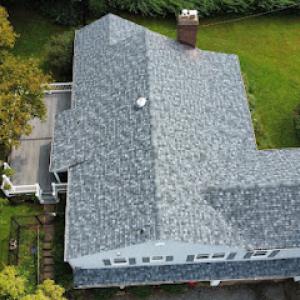
Argyle Roofing
Serving
4.9 from 57 reviews
We are a full service, licensed and insured roofing company serving NJ for over 49 years. We are certified installers for GAF, the largest roof shingle manufacturer in North America, and pride ourselves on using only high-quality roofing materials but also highly skilled workmanship for your roof replacement and any of your other roofing needs.
Skyward Roofing
(917) 979-8704 www.skywardroofing.com
Serving
4.8 from 44 reviews
Skyward Roofing is a premier roofing contractor known for delivering superior roofing solutions. The company stays abreast of the latest roofing technology and techniques advancements, ensuring clients benefit from the most efficient and practical solutions. This forward-thinking approach enables Skyward Roofing to tackle complex roofing challenges with cutting-edge tools and materials, enhancing durability and performance. Moreover, Skyward Roofing places a strong emphasis on environmental responsibility. The company actively promotes and utilizes eco-friendly roofing options, such as energy-efficient materials and sustainable practices. Additionally, the roofing firm is known for its robust training and development programs.
Top Tier Roofing NY
(347) 359-2457 toptierroofingny.com
Serving
5.0 from 95 reviews
Top Tier Roofing NY is your trusted partner for roofing services in New York City, including the Bronx, Queens, Brooklyn, and Staten Island. Specializing in residential and commercial roofing, they offer roof flashing, skylight repair, and installation as well as flat roof repair and replacement. Their team is known for its precision in roof inspections and commitment to using superior materials. Top Tier Roofing NY stands out for its reliable service and dedication to customer satisfaction, ensuring every project is completed to the highest standards.

B&B Roofing & Gutters
(718) 981-7663 bbroofingpros.com
Serving
5.0 from 231 reviews
B&B Roofing is a locally trusted roofing company serving Staten Island, Brooklyn, and New Jersey. With years of experience and thousands of satisfied homeowners and business owners, we specialize in roof replacement, roof repair, gutter installation, skylights, and waterproofing. Our licensed and insured roofers deliver quality work using top-grade materials from leading brands to ensure every roof is built to last. Whether it’s a leaking roof, storm damage, or a complete roof installation, our team provides fast, reliable service with clear communication and spotless cleanup. We take pride in honest pricing, professional workmanship, and customer satisfaction that’s second to none.
Asphalt shingles stay the dominant practical choice for Linden homes, thanks to a balance of durability, availability, and repair ease on older stock. But the North Jersey climate introduces a tough dynamic: freeze-thaw cycling coupled with regular precipitation means that underlayment, ventilation, and flashing quality are as important as the shingle brand you pick. In neighborhoods with mixed slopes, pay particular attention to the transition zones where water can sit and refreeze if drainage isn't solid. A well-sealed, ventilated attic helps minimize moisture buildup that can lead to premature shingle failure, curling, or ice dams along eaves. If choosing asphalt, look for thicker, impact-resistant shingles and confirm that the installation includes a high-quality synthetic or asphalt-saturated felt underlayment with proper overlaps, plusContinuous rake and valley flashing that stays secure through heavy wind-driven rain.
Metal roofing is present in the local market and can perform well in North Jersey weather, including Linden's wind bursts and driving rain. The material itself handles rapid temperature swings and snow melt efficiently, reducing the likelihood of ice dams when paired with solid ventilation. The critical factor is detailing around penetrations-chimneys, vents, and skylights-and edge conditions where wind exposure is highest. In practice, metal systems require precise sealant choices and flashings designed for metal interfaces to prevent leaks at seams and penetrations. On older homes with existing structures, ensure the roof deck can bear the load and that rafter spacing doesn't compromise long-term performance. A thoughtful install around the edge flashings and gutters will help resist wind uplift during stiff spring storms and summer squalls.
Clay tile and concrete tile bring distinctive aesthetics and long service life, but their weight and repair complexity can pose real challenges on Linden's older houses. The added dead load must be accounted for in the existing framing, and the repair and replacement process tends to be more involved than with shingles. Slate and copper offer premium durability and unique appearances, yet insurance scrutiny can be higher on aging structures, where attic and attic insulation conditions influence performance and cost. When these materials appear in the mix, the roof structure should be evaluated for weight-bearing capacity, and flashing details at penetrations, hips, and valleys must be meticulously engineered to handle heavy rain, ice, and freeze-thaw cycles. If opting for any of these materials, plan for careful integration with the current roof plane, especially at transitions between low-slope and pitched sections.
Linden homes often feature a combination of pitched roofs and low-slope sections. This reality elevates the importance of compatible detailing across materials, since different sections may respond differently to rain exposure and temperature shifts. In practice, ensure that flashing and underlayment choices match the predominant slope conditions and that transitions between materials are sealed to resist ponding water. Ventilation strategies should accommodate insulation levels and attic geometry typical of older Linden houses, reducing condensation and moisture-driven deterioration. With any material choice, prioritize a system that integrates with robust, weather-resilient flashing, effective ventilation, and durable underlayment to handle the mix of freeze-thaw cycles and storm events characteristic of the area.
Linden's mix of straightforward re-roof jobs and more complex tear-offs on older homes with multiple penetrations, chimneys, and low-slope tie-ins drives pricing more than you might expect from a generic neighborhood. A simple re-roof on a modest, single-entry home can stay closer to the lower end of the local material cost spectrum, but when the job includes tearing off old layers, dealing with damaged sheathing, or weaving in low-slope sections, crews will hit higher-priced labor and extra material needs. The result is a project that varies not just by material but by the knotty realities of older Linden construction: extra flashing, venting, and careful detailing around chimney stacks.
Asphalt shingles stay the most budget-friendly path, typically ranging from about 400 to 900 USD per square, making them a practical fit for many Linden bungalows and modest stacks. Metal roofing runs higher, roughly 700 to 1,500 USD per square, with added value in a longer life and better performance on low-slope sections. Clay tile comes in around 1,100 to 2,000 USD per square and Concrete tile about 900 to 1,600 USD per square, often chosen for style or durability where roofs aren't overly steep. For premium aesthetics and longevity, Slate spans from 1,400 to 3,000 USD per square, while Copper can begin at 3,000 and climb to 6,000 USD per square. In practice, Linden projects with multiple penetrations or challenging tie-ins push estimates toward the upper ends of these ranges, regardless of material choice.
Start with a baseline for your home's roof area, then add a buffer for tear-off work, damaged sheathing, and extra flashing around chimneys and vents. After a storm, labor availability tightens and scheduling can slip, so build a realistic timeline with buffers for weather pauses and crew backlog. If a porch or low-slope area needs special detailing, expect those items to bend the budget upward but pay off in leak resistance and long-term performance.
Get a clear picture of your project costs upfront - no commitment required.
Top Supreme Construction Roofing & Decking
(201) 749-7627 topsupremeconstruction.com
Serving
5.0 from 57 reviews
A building permit is typically required for a full roof replacement, and the Linden Building Department handles permit issuance. This is not something to treat as an afterthought-missing or late permits can trigger delays, fines, or the need to undo work if inspectors find noncompliant flashing or venting. For homes with older, mixed-slope roofs common in the area, ensuring the permit scope matches the actual job (including any additional ventilation or flashing upgrades) saves headaches down the line.
Inspections in Linden are used to verify proper flashing, ventilation, and overall code compliance during and after installation. A typical sequence includes an initial inspection once the roof deck is ready, a mid-inspection to review underlayment and flashing details around chimneys, skylights, and valleys, and a final inspection to confirm everything is sealed against the elements. If the project involves freeze-thaw prone details or storm-related repairs, inspectors will scrutinize moisture barriers and sealing methods carefully. Missing or skipped inspections can lead to rework and added costs, so plan your schedule to align with the department's checkpoints.
Processing times and permit fees in Linden vary based on project scope and department workload, so scheduling can shift even before materials arrive. It is not unusual for a permit to sit briefly if the plan notes don't clearly address ventilation, attic intake, or flashing details, especially on older homes with unique details. Coordinate with the contractor to file early and to anticipate a few weeks of processing time. Keep in mind that weather, staffing, and seasonal demand can push timelines, so build buffer into the project schedule to avoid a cascade of delays.
Have documentation ready that highlights attic ventilation upgrades, upgraded flashing at valleys and chimneys, and any structural considerations for a mixed-slope roof. If you're working with a contractor who has done Linden projects before, ask them to confirm that the permit package aligns with the actual site conditions and the intended materials. After work begins, stay in touch with the permit liaison or project manager to anticipate inspection windows and to address any corrections promptly, reducing the risk of a re-inspection cycle that stalls the project during a critical stretch of the season.
Linden sits in New Jersey's active storm-claim environment, where insurers commonly ask for roof age, contractor estimates, and photo documentation before approving work. That dynamic means your roof record isn't just a file-it's your first line of defense when a hail hit or a wind-driven leak tests the joints near a dormer or chimney. If your roof survived a winter thaw, you'll want a clear history showing what failed, what was repaired, and when those steps occurred. Without that, adjusters may hesitate, and delays can leave you exposed to further damage.
Adjusters may request both pre-installation and post-installation inspections, which makes organized documentation especially important for Linden homeowners replacing storm-damaged roofs. Keep a simple, dated folder with notes on the roof's slope, flashing quality, and any prior leaks. Photograph all major components-valleys, step and counter-flashing, underlayment, and fascia-and capture close-ups of lift or delamination in asphalt sections or missing fasteners in metal. After work, take again-once photos from multiple angles to demonstrate that the new layer covers the vulnerable zones and that valleys and skylines reflect a sound installation. This practice saves time when the claim moves through the adjuster's queue and can be the difference between quick approval and a drawn-out dispute.
Some carriers have tightened underwriting for aged roofs and certain high-end materials, which can affect replacement decisions for slate, tile, or copper systems. If you own one of these systems, expect closer scrutiny of roof age, the condition of flashings, and compatibility with the proposed fix. In Linden, where storm exposure tests the integrity of old pitch lines and low-slope transitions, meticulous documentation isn't just smart-it's essential to keep the claim moving and to protect the longevity of the repair.
Connect with contractors who help homeowners navigate the claims process from damage assessment to final approval.

In Linden, the timing of a roof project matters as much as the workmanship. Winter work can slow you down because snow, ice, and freeze-thaw conditions complicate tear-offs, drying time, and safe installation. If you're aiming for a solid outcome, plan for shorter work days during cold spells and expect occasional weather holds when temperatures hover near or below freezing.
Spring in Linden brings heavy rainfall and storm interruptions that can increase leak exposure during open-roof phases if scheduling is too aggressive. The moisture load in the air can slow cure times for certain underlayments and can force temporary repairs to hold longer than expected. If a spring storm rolls through, consider staggering critical steps-especially flashing and valley work-to reduce the risk of water intrusion while crews are mid-procedure.
Summer heat and autumn wind events each create different installation risks in Linden, making shoulder-season planning valuable when possible. High midday temperatures can accelerate some adhesives and irritate roof crews, while afternoon gusts complicate nailing and rapid panel adjustments on low-slope sections. By targeting shoulder-season slots, you gain calmer conditions for precise flashing, safer material handling, and better long-term fastening integrity.
Coordinate a rough plan that avoids peak cold snaps and the heaviest autumn storms. Build buffers around expected weather patterns so crews can complete critical sealing steps on a single dry window, rather than pausing mid-flash or mid-securement. Factor in the likelihood of freeze-thaw cycles reactivating small leaks at the first thaw; that reality can influence how many days are allocated for inspection and touch-up.
Communicate a clear access plan with nearby residents and careful staging, since dense neighborhoods in Union County often have limited drive-up space. Establish a reliable daily contact point for weather checks and unexpected delays, and align material deliveries to anticipated dry spells to minimize exposure of vulnerable underlayment.
In a city with many older pitched homes and mixed-slope roofs, you're dealing with freeze-thaw cycles and sudden storms that can exploit weak flashing or aged underlayment. Leaks during a storm or after a cold snap tend to push homeowners toward contractors who promise rapid response and thorough cleanup. The emphasis is on fast arrival, effective small-repair tactics to stem ongoing water intrusion, and meticulous debris management in tight, crowded blocks where post-storm cleanup matters just as much as the fix itself. Look for a crew that outlines a clear plan for immediate containment, a second visit if the first fix shifts moisture paths, and an emphasis on keeping driveways and street gutters clear of shingle shards and stray nails.
Re-roofing dominates the Linden contractor scene more than new construction, so you'll typically be hiring for replacement and repair rather than a first-time install. That means you want a team fluent in common older-roof challenges: aging underlayers, compromised flashing at valleys and chimneys, and the particular stress points on low-slope transitions common in semi-detached and multi-family homes. Long-established, family-owned, licensed, manufacturer-certified, and insured firms have visible footprints around town, and you'll notice that stability often translates into steadier warranty claims, better documentation, and more predictable scheduling. Let your gut gauge of a company's tenure be supported by tangible signs-truck decals, shop storefronts, and a history of recognizable, repeat customers in the same block.
When you're evaluating bids, prioritize contractors who demonstrate a hands-on approach to common Linden issues: accurate roof-age assessment, a step-by-step leak-tracing plan, and a tested method for handling storm debris that can accumulate on overhangs and in eaves. Ask about their process for protecting landscaping and siding during a repair, their plan for a temporary fix if a storm hits while waiting on materials, and their method for coordinating cleanup with neighborhood crews so driveways stay passable. You'll benefit from choosing firms that show clear manufacturer certifications, a visible commitment to proper flashing details, and a schedule that respects the realities of winter weather and unpredictable Nor'easter cycles.